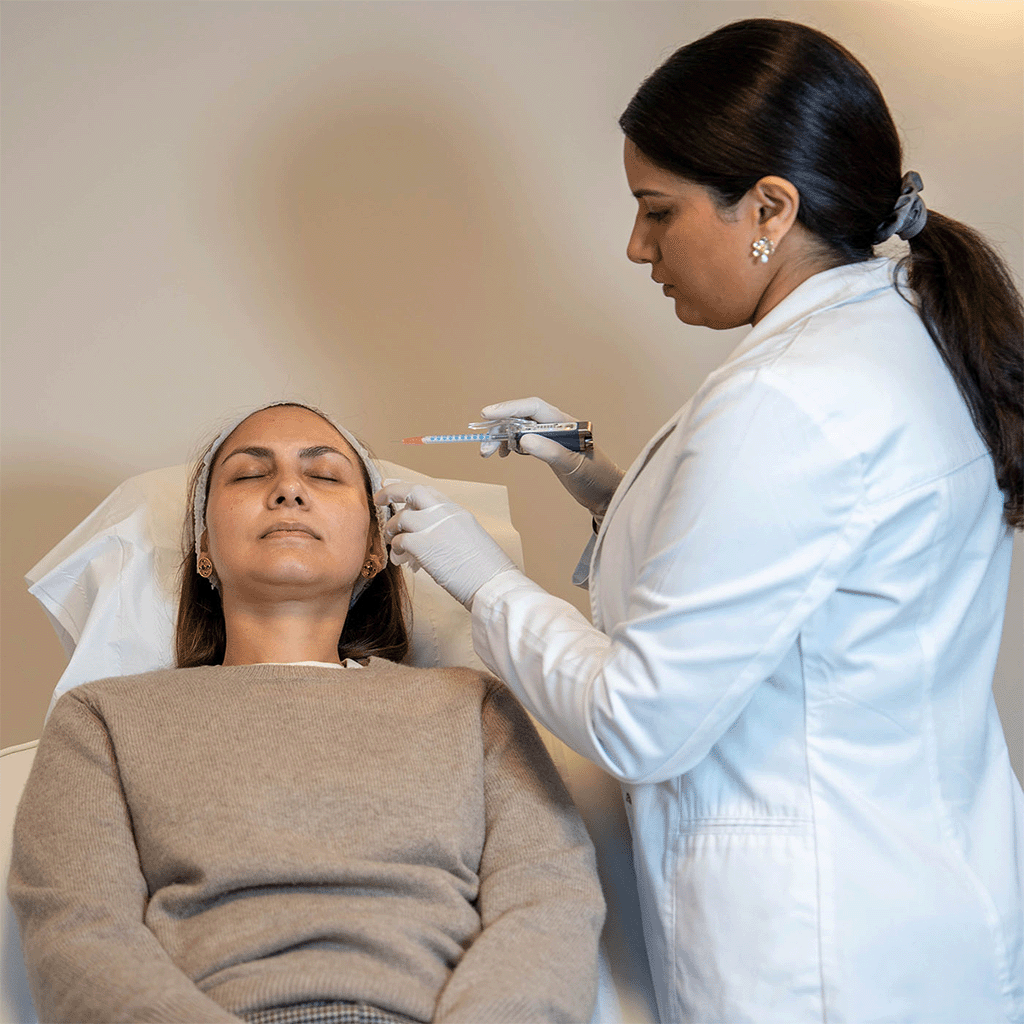

SkinPen Microneedling London — Medical Microneedling at Harley Street
BOOK A CONSULTATION
SkinPen Microneedling London — Medical Microneedling at Harley Street
SkinPen Microneedling in London is a medical skin rejuvenation treatment designed to improve acne scarring, fine lines, enlarged pores, uneven tone, texture and general skin quality. At Dr Ophelia’s Harley Street clinic, SkinPen Precision is used to create controlled micro-injuries in the skin, stimulating the body’s natural repair response and encouraging new collagen production.
Microneedling is widely available, but the quality of treatment can vary significantly. The difference comes down to correct diagnosis, the device used, the depth selected, the technique, and whether the skin has been properly assessed before treatment. At Dr Ophelia’s clinic, your skin is assessed in a consultant dermatology setting before any course is recommended.
What is SkinPen Microneedling?
SkinPen Microneedling is a medical microneedling treatment that uses a precision device fitted with fine needles to create controlled microchannels in the skin. These micro-injuries trigger the skin’s natural wound-healing response, encouraging collagen and elastin production.
This process can help improve the appearance of acne scarring, surgical scars, traumatic scars, enlarged pores, uneven texture, fine lines, post-inflammatory marks and general skin quality.
SkinPen Precision was the first microneedling device to be granted FDA clearance. It uses a sterile single-use cartridge and is designed to deliver consistent, controlled treatment depths across different areas of the face and body.
How Does SkinPen Microneedling Work?
SkinPen works by moving a cartridge of fine needles rapidly across the skin. The needles create tiny, controlled injuries at selected depths, encouraging the skin to repair itself.
This repair process stimulates collagen production and skin remodelling. As collagen develops, the skin can become smoother, firmer and more even in texture. For acne scarring, microneedling can help remodel certain types of scar tissue, particularly rolling and boxcar scars.
The depth of treatment is adjusted depending on the area being treated. For example, the skin on the cheeks, forehead, temples and upper lip is not the same thickness and should not all be treated at the same depth.
The treatment can also be combined with selected regenerative or skin-quality treatments where appropriate, such as PRP, polynucleotides or skin boosters. These are only recommended when they suit the skin concern being treated.

Benefits of SkinPen Microneedling
SkinPen Microneedling is often chosen by patients who want to improve skin quality, texture and scarring without more intensive laser resurfacing.
Potential benefits include:
- Improved acne scarring
- Smoother skin texture
- Improved appearance of enlarged pores
- Support for collagen production
- Improved fine lines and early wrinkles
- More even-looking skin tone
- Improvement in post-inflammatory marks
- General skin rejuvenation
- Can be used on selected scars and stretch marks
- Can be combined with PRP, polynucleotides or skin boosters
- Minimal to moderate downtime compared with resurfacing lasers
- Suitable for carefully selected skin of colour patients
Results depend on the skin concern, scar type, treatment depth, number of sessions and individual healing response.
Conditions SkinPen Microneedling Can Treat
SkinPen Microneedling may be suitable for:
- Acne scarring
- Rolling acne scars
- Boxcar acne scars
- Surgical scars
- Traumatic scars
- Fine lines and wrinkles
- Enlarged pores
- Uneven skin texture
- Uneven skin tone
- Post-inflammatory hyperpigmentation
- Dull skin
- Stretch marks
- Crepey neck skin
Microneedling is not suitable for every type of pigmentation or scarring. Melasma, ice pick scars, deep tethered scars and keloid scarring may require a different approach. Active acne should usually be treated before microneedling is considered.
What to Expect — Step-by-step process
Your SkinPen treatment begins with assessment and diagnosis, not simply booking a course.
Dr Ophelia assesses your skin to establish what is actually going on. For scarring, this means identifying the type of scar and whether microneedling is likely to help. For pigmentation, it means confirming whether the marks are post-inflammatory pigmentation, melasma or another condition.
Standardised images may be taken to monitor progress. The depth, treatment areas, number of sessions and whether PRP, polynucleotides or a booster should be combined are planned at this stage.
The skin is cleansed and topical anaesthetic is applied, usually for around 20–30 minutes. Proper numbing is important for comfort and should not be rushed.
A sterile single-use cartridge and fresh barrier sleeve are fitted. A gliding serum is applied, and the SkinPen device is worked across the treatment area in a systematic pattern. Treatment depth is adjusted according to the area and skin concern.
Most patients describe the sensation as vibrating or scratchy rather than painful. A full face usually takes around 30 minutes of needling time.
If PRP, polynucleotides or a skin booster forms part of your plan, it may be applied or injected at this stage.
Your skin is left clean, and you will be given written aftercare instructions. Sun protection is essential after treatment, and make-up should usually be avoided for the first 24 hours.
A standard course is usually three sessions spaced four weeks apart. Repeat imaging may be used to assess whether further sessions are justified.

Results and Downtime
SkinPen Microneedling has a predictable recovery period. It is more than a facial, but usually less than resurfacing laser downtime.
Immediately after treatment
The skin will usually look red, similar to moderate sunburn. It may feel warm, tight or sensitive.
24–48 hours
Redness usually continues for 24–48 hours. Mild swelling and tightness can occur. Most patients feel comfortable in public the next day, depending on sensitivity and treatment depth.
Days 2–3
The skin typically begins to settle. Redness reduces, although some dryness or tightness may remain.
First week
Some flaking or dryness can occur as the skin renews. Gentle skincare and SPF are important.
1–2 weeks
The skin may look brighter and fresher, although this is not the full result. Early glow often appears before deeper collagen changes.
4–6 weeks
More meaningful collagen remodelling begins around 4–6 weeks after each treatment.
Up to 6 months
Improvements can continue for up to six months after a completed course, particularly for scarring and texture.

Pricing / Number of Sessions
A course of three SkinPen Microneedling treatments spaced four weeks apart is usually recommended for most patients treating general skin quality, fine lines, pores and tone.
Significant acne scarring may require more sessions, sometimes six or more. This should be discussed at the outset rather than extending a course without explanation.
Maintenance for general skin quality is usually one or two sessions per year.
Pricing will depend on the treatment area, number of sessions and whether PRP, polynucleotides or a skin booster is included. Your personalised treatment plan and full pricing will be confirmed during consultation.
Why Dr Ophelia for SkinPen Microneedling in London
Microneedling is available almost everywhere, but treatment quality varies widely. At Dr Ophelia’s Harley Street clinic, your skin is assessed by a Consultant Dermatologist before treatment is recommended.
This matters because acne scarring, pigmentation, active acne, melasma, keloid tendency and inflammatory skin conditions all require different approaches. Microneedling the wrong skin, or needling at the wrong depth, can waste time or create avoidable problems.
At this clinic, Dr Ophelia diagnoses and plans your treatment. The treatment itself is carried out by an experienced clinical team working to that plan, including senior beauty therapist Holly Robertson, who has used SkinPen for four years.
Patients choose Dr Ophelia’s clinic for SkinPen Microneedling in London because the treatment is delivered within a medical framework: consultant-led assessment, SkinPen Precision technology, sterile single-use cartridges, careful depth selection, experienced technique and progress measured with imaging rather than memory.

HELP
FAQs
Topical anaesthetic is applied for around 20–30 minutes before treatment. Most patients describe the treatment as a vibrating or scratchy sensation rather than pain. Bonier areas such as the forehead and jawline can feel more sensitive than the cheeks.
Expect redness similar to moderate sunburn for 24–48 hours, sometimes with mild swelling and tightness. Most people are comfortable in public the following day and back to normal by day two or three. Some flaking may occur later in the week.
Three sessions spaced four weeks apart is the standard course for general skin quality, fine lines, pores and tone. Significant acne scarring may need more sessions, sometimes six or more.
Collagen remodelling takes time. Treating sooner does not accelerate the process and may treat skin that is still recovering. Four-week spacing allows the skin to begin repairing before the next session.
Skin may look brighter within one to two weeks, but collagen-related changes develop more slowly. Improvement usually develops from around four to six weeks after each session and may continue for up to six months after the course.
Yes. SkinPen Precision was the first microneedling device to receive FDA clearance and uses a sterile single-use cartridge with a lockout preventing reuse. Consistency of needle depth and safety controls are important differences.
Microneedling can be suitable for skin of colour because it works mechanically rather than using heat or light. However, post-inflammatory hyperpigmentation is still a risk if the treatment is too aggressive. Conservative settings and experienced technique are important.
Microneedling is not usually a first-line treatment for melasma and may make it worse in some cases. Melasma is a relapsing pigmentary condition that requires proper diagnosis and medical management.
No. Microneedling over active inflammatory acne can spread infection and increase the risk of pigmentation. Active acne should be treated first, and scarring can be addressed once the skin is settled.
PRP stands for platelet-rich plasma. It is prepared from a sample of your own blood and contains platelets and growth factors. When combined with microneedling, it can support the skin’s repair response in suitable patients.
Polynucleotides are purified DNA fragments used as a biostimulator. They can improve hydration, elasticity and skin quality over a course of treatments and may be useful for thin, crepey or poor-quality skin.
Home devices do not perform the same function as medical microneedling. The main concerns are infection, uneven technique and treating skin that should have been diagnosed first. Scarring and pigmentation should be assessed before needling.
Your skin is assessed, diagnosed and planned by Dr Ophelia Veraitch. Treatment is carried out by a member of her clinical team working to that plan, including senior beauty therapist Holly Robertson, who has used SkinPen for four years.
Pores cannot be permanently shrunk, but their appearance can improve. As collagen improves and the skin around the pores becomes firmer, pores may look smaller.
Book Your SkinPen Microneedling Consultation
If you are considering microneedling for acne scarring, skin texture, enlarged pores, uneven tone or general rejuvenation, book a SkinPen Microneedling consultation at Dr Ophelia’s Harley Street clinic in London.
Your skin will be assessed and imaged first, the type of scarring or pigmentation will be identified, and you will be told honestly whether microneedling is likely to achieve the improvement you want.
Book your SkinPen Microneedling consultation today and take the next step towards smoother, healthier-looking skin.
Related Treatments

Polynucleotides for Skin
Learn More
Picosure Pro
LEARN MORE