
Psoriasis
BOOK A CONSULTATIONWhat is psoriasis and what causes it?
- Chronic immune mediated skin condition
- Plaques, scalp, nail and joint involvement
- Genetic and environmental factors
- Systemic health implications
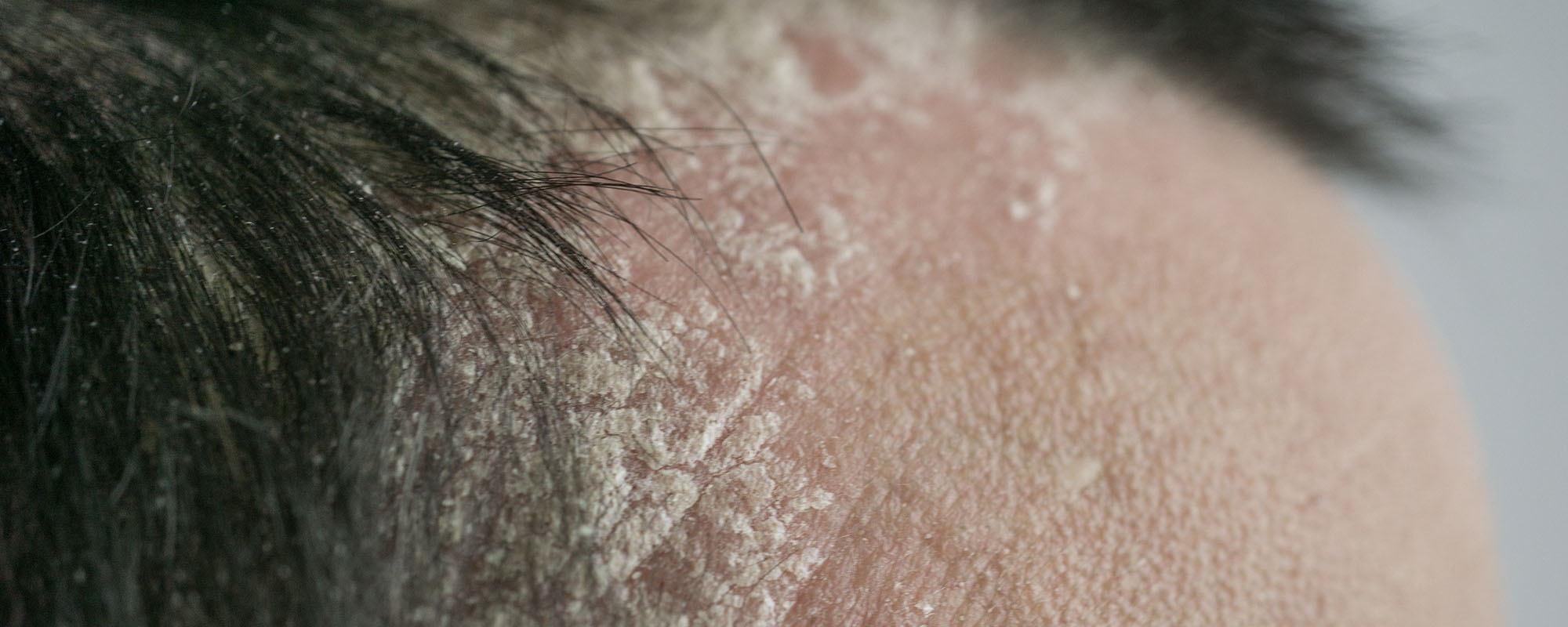
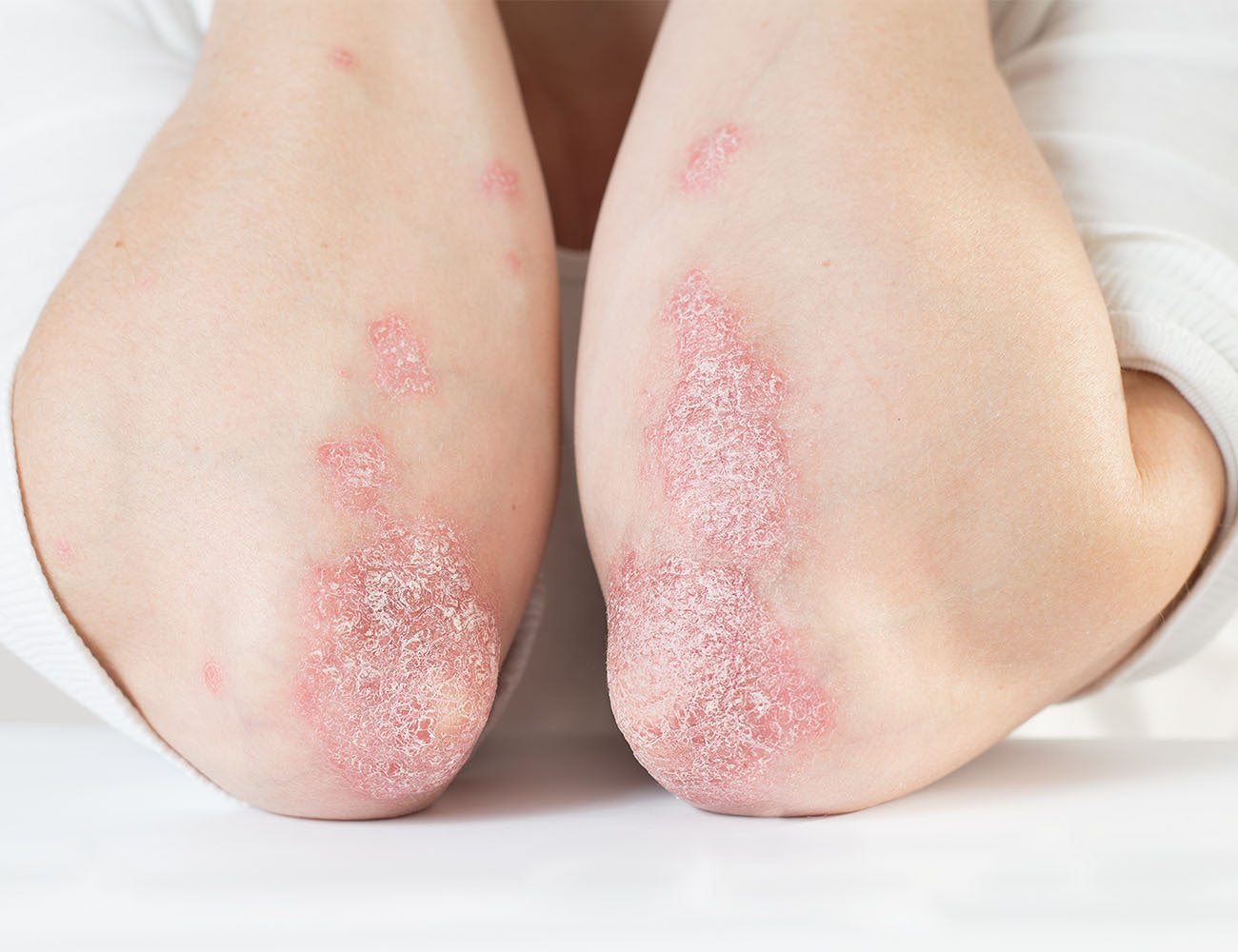
Psoriasis is a common, chronic, immune-mediated skin condition affecting approximately two to three percent of the global population. It is characterised by well-defined plaques of thickened, inflamed skin covered with silvery-white scale, caused by an accelerated skin cell turnover cycle driven by an overactive immune response. In healthy skin this cycle takes around twenty-eight days; in psoriatic skin it is compressed to three to five days, so cells accumulate into the characteristic scaling plaques. Psoriasis most commonly affects the scalp, elbows, knees, lower back, and nails, but can involve any area including the face, palms, soles, and genitalia.

The underlying mechanism involves a dysregulated interaction between the innate and adaptive immune systems, with T lymphocytes and pro-inflammatory cytokines, particularly TNF-alpha, IL-17, IL-23, and IL-12/23, driving the sustained keratinocyte activation that characterises the condition. Genetic predisposition is central, and psoriasis runs strongly in families. Environmental triggers include streptococcal infection (a recognised trigger for guttate psoriasis); physical trauma to the skin (the Koebner phenomenon, in which psoriasis develops at sites of injury); stress; smoking; alcohol excess; obesity; and certain medications including beta blockers, lithium, antimalarials, and NSAIDs.
Psoriasis is now well established as a systemic inflammatory disease, not only a skin condition. Psoriatic arthritis, affecting the joints and entheses, develops in approximately thirty percent of patients. Psoriasis is also independently associated with an increased risk of cardiovascular disease, metabolic syndrome, obesity, type 2 diabetes, and depression.
Plaque psoriasis is the most common, at approximately eighty-five percent of cases. Guttate psoriasis presents as multiple small tear-drop shaped lesions, often triggered by streptococcal infection, and is more common in younger patients. Pustular, erythrodermic, and palmoplantar psoriasis are less common but can be particularly severe, often requiring systemic treatment from the outset.
What are my treatment options for psoriasis?
- Topical therapies
- Phototherapy (NB-UVB)
- Methotrexate and oral immunosuppressants
- Biologic therapies
- Lifestyle and comorbidity management
Psoriasis treatment is stratified by disease severity, extent, subtype, and impact on quality of life, and the best outcomes come when treatment is matched precisely to the clinical picture.
For mild to moderate localised psoriasis, topical therapies form the cornerstone of treatment: potent topical corticosteroids, which reduce inflammation and plaque activity rapidly; vitamin D analogues such as calcipotriol, which slow keratinocyte proliferation and scaling; and combinations of these agents. Calcineurin inhibitors including tacrolimus are preferred for sensitive areas such as the face, flexures, and genitalia, where potent corticosteroids carry risks with long term use.
Narrowband UVB (NB-UVB) phototherapy is a well established, effective, non-immunosuppressive option for moderate to extensive psoriasis not controlled by topical treatment alone. It suppresses the abnormal T lymphocyte activity driving psoriatic inflammation and reduces plaque activity, typically administered two to three times per week over a sustained course.
For moderate to severe psoriasis, oral systemic therapies provide broader immunomodulatory control. Methotrexate is widely used for controlling plaque psoriasis and benefiting psoriatic arthritis, prescribed at weekly doses with monitoring of blood count and liver function. Ciclosporin is a rapid-acting immunosuppressant for severe flares, generally as a short term bridge. Acitretin, a retinoid, is used in subtypes including palmoplantar and pustular psoriasis.
Biologic therapies are the most significant advance in psoriasis treatment, transforming outcomes for moderate to severe disease. These targeted agents block specific cytokine pathways, producing skin clearance previously unachievable with conventional treatments, and include adalimumab (Humira), which targets TNF-alpha; ustekinumab (Stelara), targeting IL-12/23; the IL-17 inhibitors secukinumab (Cosentyx) and ixekizumab (Taltz); and the IL-23 inhibitors guselkumab (Tremfya) and risankizumab (Skyrizi), achieving near-complete or complete clearance in many patients.
Lifestyle factors are an integral part of every treatment plan: smoking, alcohol excess, obesity, and high stress all independently worsen psoriasis and reduce treatment response, and Dr Ophelia provides practical guidance alongside medical treatment, with assessment for psoriatic arthritis, cardiovascular risk, and metabolic syndrome where relevant.
Why should I see Dr Ophelia Veraitch for psoriasis treatment in London?
- Award winning consultant dermatologist. Extensive experience in inflammatory skin disease
- Full biologic prescribing expertise. Stelara, Cosentyx, Skyrizi, Tremfya and more
- Comorbidities assessed. Psoriatic arthritis, cardiovascular and metabolic risk
- Patient-centred and holistic. Quality of life and psychological impact addressed throughout
Psoriasis is a condition in which the breadth of specialist input makes a measurable difference to outcomes. Many patients with moderate to severe disease have spent years on topical treatments insufficient for their disease, or waited for biologics through NHS pathways while their quality of life suffers.
Dr Ophelia Veraitch offers the full spectrum of treatment, from optimised topical regimens for mild disease to the newest biologic therapies for moderate to severe cases, in a private setting without the access barriers of public healthcare. Her assessment is thorough and individualised, and her experience with biologics is extensive across the TNF-alpha, IL-17, IL-12/23, and IL-23 inhibitor classes, with access not restricted by the NICE eligibility thresholds that apply in the NHS. She also addresses the psychological impact of psoriasis directly, as its visibility and chronicity can generate anxiety, affect relationships and work, and contribute to depression.
HELP
Frequently Asked Questions — Psoriasis Treatment
No. Psoriasis is not contagious and cannot be passed on through skin contact, shared clothing, or any other form of contact. It is an immune-mediated condition driven by genetic predisposition and environmental triggers, with nothing to do with infection or hygiene.
Psoriatic arthritis is an inflammatory arthritis developing in approximately thirty percent of patients, affecting the joints, tendons, and entheses, and causing pain, swelling, stiffness, and, if untreated, progressive joint damage. Nail psoriasis is a recognised marker of increased risk, and any joint pain, swelling, or morning stiffness should be assessed early.
Biologics are injectable medications that target specific inflammatory proteins driving psoriasis, producing far higher rates of skin clearance than conventional systemic treatments. The main classes are TNF-alpha inhibitors such as adalimumab (Humira); the IL-12/23 inhibitor ustekinumab (Stelara); the IL-17 inhibitors secukinumab (Cosentyx) and ixekizumab (Taltz); and the IL-23 inhibitors guselkumab (Tremfya) and risankizumab (Skyrizi). They are considered for moderate to severe psoriasis unresponsive to topical and conventional systemic therapy, though in a private setting eligibility is not restricted by NICE thresholds.
Methotrexate is a conventional oral immunosuppressant that broadly reduces immune activity, improving plaque psoriasis and benefiting psoriatic arthritis; it is well tolerated but requires regular blood monitoring for liver function and bone marrow effects. Biologics are targeted agents blocking specific cytokines, producing higher, more consistent clearance in head-to-head trials.
Yes. Scalp psoriasis affects up to eighty percent of plaque psoriasis patients, presenting as thick, scaly plaques that often extend beyond the hairline onto the forehead, neck, and ears, with itching and temporary hair shedding. Treatment uses specific formulations including medicated shampoos, scalp applications, and topical preparations applied without affecting the hair.
Obesity is independently linked to more severe psoriasis and reduced treatment response, and alcohol excess worsens psoriasis and reduces the effectiveness of treatments including methotrexate. An anti-inflammatory diet may have a modest benefit, and gluten sensitivity is a trigger in a subset of patients.
Yes. Psychological stress is one of the most commonly reported triggers, activating the hypothalamic pituitary adrenal axis and neuroinflammatory pathways that worsen psoriatic inflammation, so managing stress is an important component of long term control.
Yes. Nail psoriasis affects up to fifty percent of patients, causing pitting, onycholysis (separation of the nail from the nail bed), subungual hyperkeratosis (thickening of the skin under the nail), and discoloration. It is a recognised marker of increased risk for psoriatic arthritis, and because topical agents penetrate the nail plate poorly, systemic or biologic treatment often produces the best improvement.
Most biologic therapies produce a rapid initial response, with significant improvement within four to twelve weeks. IL-17 and IL-23 inhibitors in particular achieve ninety percent or greater skin clearance in high proportions of patients by sixteen weeks, with the full response continuing to improve over six to twelve months.
A GP can prescribe basic topical treatments, but lacks the specialist training to classify subtypes accurately, manage systemic treatments with monitoring, prescribe biologics, or assess comorbidities including psoriatic arthritis and cardiovascular risk. For psoriasis affecting more than a small area, involving sensitive areas, impairing quality of life, or not responding to topical treatment, a Consultant Dermatologist provides the complete treatment spectrum matched to each patient.