

Rosacea
What is rosacea and what causes it?
- Chronic inflammatory skin condition
- Redness, flushing and papules
- Multiple subtypes requiring different treatment
- Triggers and skincare sensitisation important
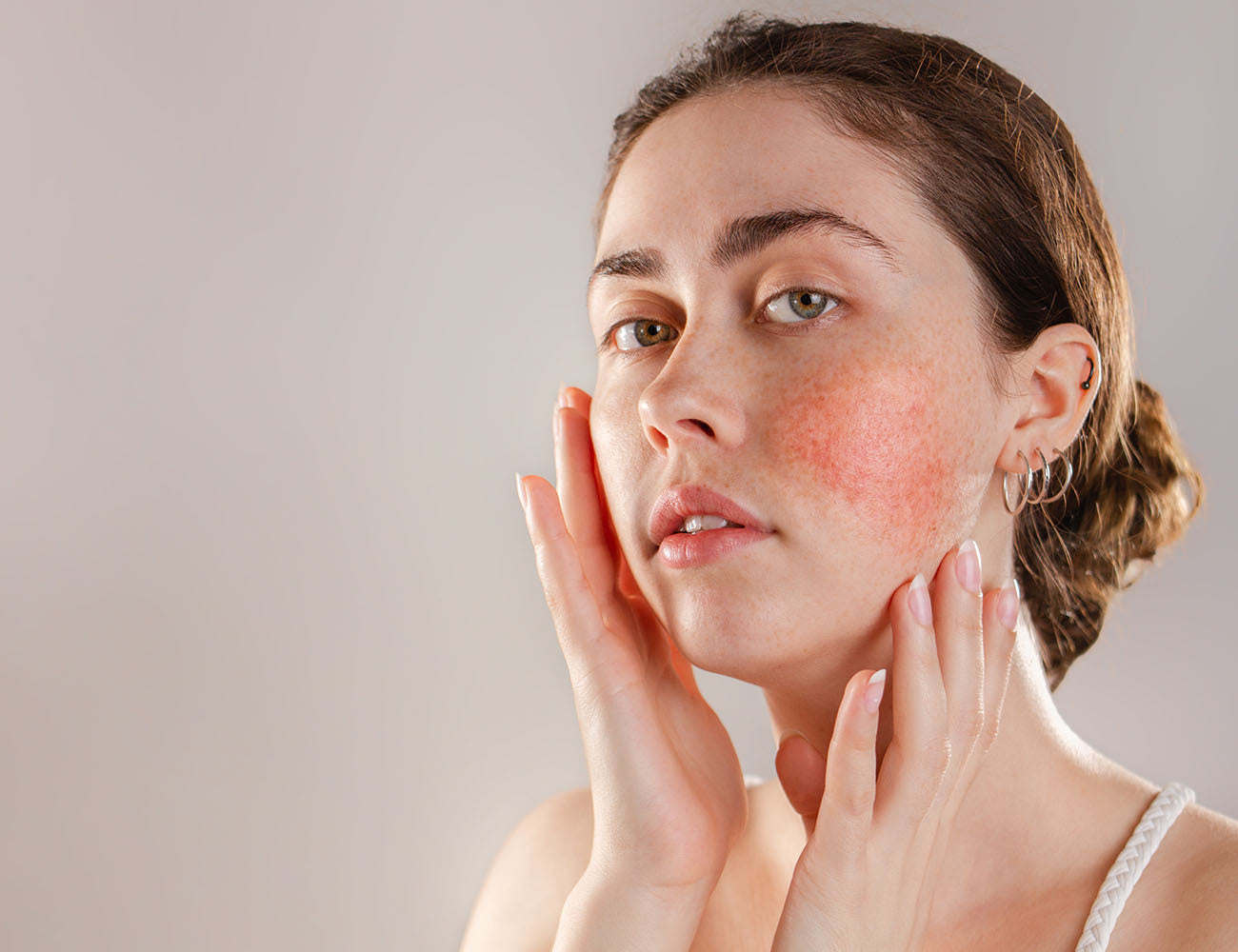
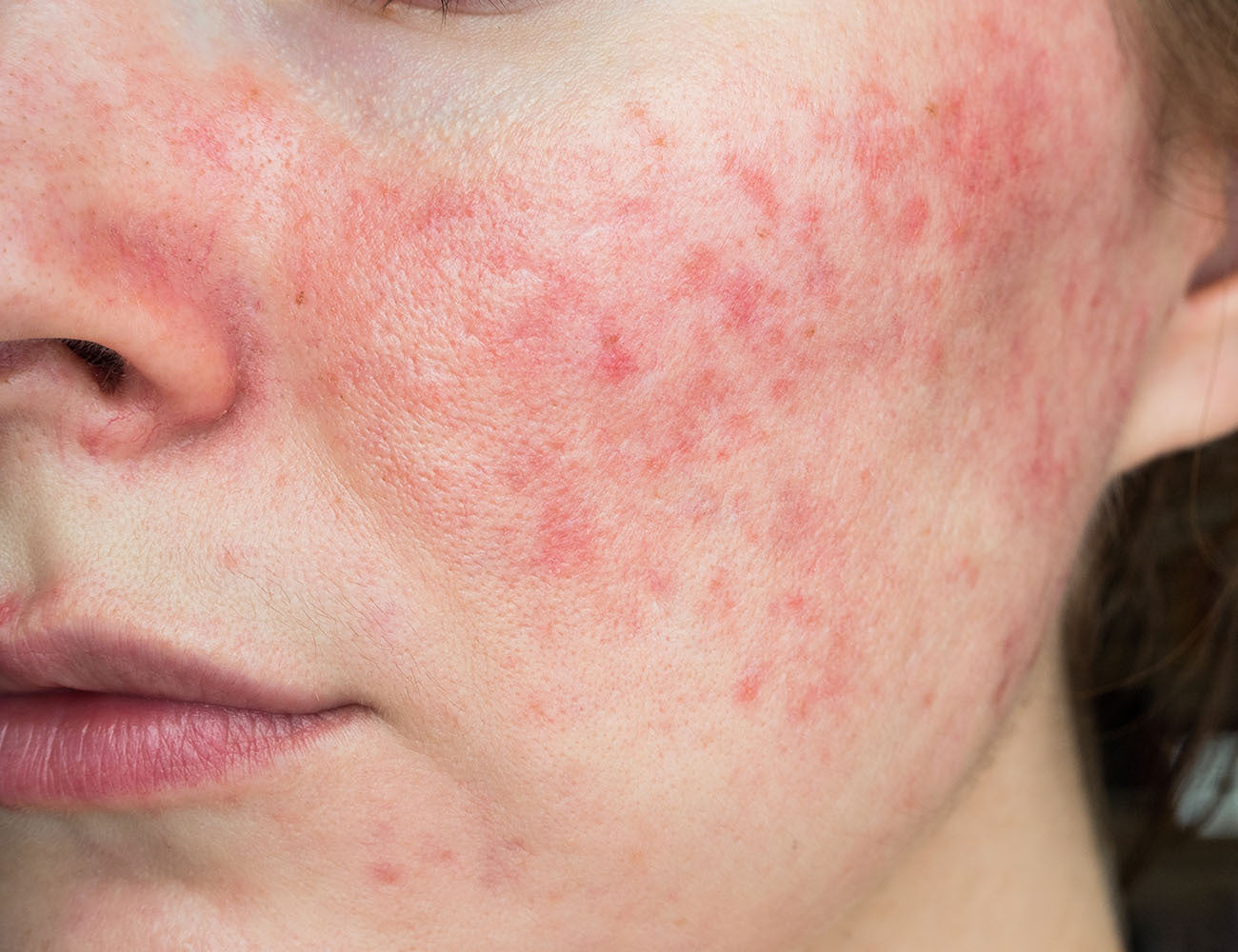
Rosacea is a chronic inflammatory skin condition that primarily affects the central face, causing persistent redness, visible blood vessels, flushing episodes, and inflammatory papules and pustules that can resemble acne. It affects an estimated ten percent of adults, most often fair-skinned people of Northern European heritage, though it occurs across all ethnicities. It typically develops between thirty and fifty and follows a relapsing and remitting course that worsens without long-term management.

Rosacea is classified into four main subtypes. Erythematotelangiectatic rosacea (ETR) is characterised by persistent central facial redness, visible telangiectasia (broken capillaries), and flushing, often with skin sensitivity. Papulopustular rosacea presents with inflammatory papules and pustules on a background of redness and is frequently confused with acne. Phymatous rosacea involves skin thickening and tissue overgrowth, most classically affecting the nose to produce rhinophyma. Ocular rosacea affects the eyes, causing redness, irritation, and a gritty or burning sensation. Many patients have features of more than one subtype, and accurate classification guides treatment.
The underlying mechanisms involve an interplay between neurovascular dysregulation, innate immune activation, skin barrier dysfunction, and microbial factors. The hair follicle mite Demodex folliculorum, which colonises the facial skin of most adults, is found in significantly higher densities in rosacea-affected skin and is thought to contribute to inflammation by triggering innate immune activation. A genetic predisposition and family history are common. Recognised triggers that provoke flares include UV exposure, temperature extremes, alcohol, spicy foods, exercise, stress, and certain skincare products. An important and frequently overlooked contributor is contact sensitisation: patients with rosacea often have a compromised skin barrier that makes them more susceptible to contact allergies to skincare ingredients, which can perpetuate or worsen inflammation independently of the rosacea itself.
Accurate diagnosis requires careful clinical assessment. Rosacea can be confused with acne, seborrhoeic dermatitis, contact or perioral dermatitis, lupus, and carcinoid syndrome, and the treatment implications of each differ significantly. In patients with atypical features, persistent symptoms, or suspected contact sensitisation, patch testing and additional investigation may be needed to establish the diagnosis.
What are my treatment options for rosacea?
- Bespoke prescription day and night serums
- Oral antibiotics and isotretinoin
- IPL and vascular lasers
- Patch testing for contact allergens
- Trigger management and skincare guidance
Effective rosacea treatment requires a personalised, multi-modal approach addressing the subtype, severity, and contributing factors, combining medical therapy, laser or light-based treatment where indicated, skincare guidance, trigger management, and investigation for contact sensitisation where relevant. Dr Ophelia develops a bespoke plan following a thorough consultation.
Medical skincare is the foundation of management: Dr Ophelia prescribes bespoke compounded serums for daytime and night-time use. Her daytime serum combines ivermectin, which targets Demodex-driven inflammation, with vitamin E for antioxidant and barrier support. Her night-time formulation combines metronidazole, an established anti-inflammatory agent for rosacea, with azelaic acid, which reduces papulopustular activity and has a mild effect on associated redness. These formulations are available only through a medical prescriber and tailored to each patient's skin type and disease pattern. Advice on gentle, fragrance-free cleansers, mineral sunscreens, and barrier-supportive moisturisers is provided.
Oral medications are used for moderate to severe papulopustular or inflammatory rosacea, significant flushing, and patients not controlled with topical treatment alone. Tetracycline-class antibiotics including lymecycline and doxycycline, used at sub-antimicrobial anti-inflammatory doses, are the most commonly prescribed oral treatments for papulopustular rosacea. For severe, refractory, or treatment-resistant rosacea, low-dose isotretinoin (Roaccutane) can produce prolonged remission, reduce sebaceous gland activity, and improve skin texture. Beta blockers including propranolol are used where flushing is a dominant feature, reducing the neurovascular response that drives episodic flushing.
Laser and light-based treatments are central to rosacea management for patients with persistent background redness, visible telangiectasia, and broken capillaries that do not respond to topical or oral treatment alone. IPL (intense pulsed light) treats the diffuse redness and pigmentary changes of erythematotelangiectatic rosacea, targeting oxyhaemoglobin in the superficial vessels. For discrete, stubborn, or treatment-resistant telangiectasia, targeted vascular lasers including the Nd:YAG laser and pulsed dye laser (PDL) target individual vessels precisely without affecting surrounding skin. For rhinophyma, ablative CO2 laser resurfacing reduces the thickened skin and restores a more normal nasal contour.
Patch testing is recommended where contact sensitisation is suspected. Patients with rosacea have a compromised skin barrier and frequently develop contact allergies to skincare ingredients, which can perpetuate inflammation and produce flares hard to distinguish from primary rosacea activity. Identifying and removing a relevant contact allergen can produce significant improvement, and is frequently missed in standard management. Psychological support for the emotional impact of rosacea is provided where needed.
Why should I see Dr Ophelia Veraitch for rosacea treatment in London?
- Award-winning consultant dermatologist. Full diagnostic and prescribing expertise for rosacea
- Bespoke prescription day and night serums. Ivermectin, metronidazole, azelaic acid formulations
- IPL, Nd:YAG and pulsed dye laser. Full vascular laser suite for redness and telangiectasia
- Patch testing for contact allergens. Identifying hidden triggers that perpetuate rosacea
Rosacea is one of the most commonly undertreated conditions in dermatology, not because effective treatments do not exist, but because the full range of options is rarely brought together in one plan. Many patients have been prescribed a single topical treatment and left to manage alone, without access to the bespoke formulations, vascular laser technologies, or investigation for contact sensitisation that produce sustained control. Dr Ophelia Veraitch brings all of these together in a specialist private practice.
Her bespoke compounded prescription serums are a particular point of distinction: daytime and night-time serums combining ivermectin with vitamin E and metronidazole with azelaic acid, alongside guidance on cleansers, moisturisers, and mineral sunscreens for rosacea-prone skin. Her laser suite spans IPL for diffuse background redness, Nd:YAG and pulsed dye laser for discrete telangiectasia, and ablative CO2 laser for rhinophyma. Her routine use of patch testing for patients not responding as expected reflects how commonly contact sensitisation complicates rosacea and how transformative identifying a hidden allergen can be. The goal is genuine, sustainable control that addresses all contributing factors.
HELP
Frequently Asked Questions - Rosacea Treatment
Acne is driven by excess sebum, follicular blockage, and Cutibacterium acnes bacteria and begins in adolescence, whereas rosacea is a chronic inflammatory vascular condition of central facial redness, flushing, and telangiectasia that begins in adulthood. Treating rosacea with acne-focused products or harsh exfoliants can worsen it.
Common triggers include UV exposure, temperature extremes, hot drinks, alcohol, spicy food, exercise, stress, emotional flushing, and skincare products containing fragrances or alcohol.
Demodex folliculorum is a microscopic mite in the hair follicles of most adults; in rosacea it is found in significantly higher densities and contributes to inflammation by triggering innate immune activation, which is why ivermectin reduces the papulopustular component.
Compounded topical formulations tailored to each patient: a daytime serum combining ivermectin with vitamin E, and a night-time serum combining metronidazole with azelaic acid; they can only be prescribed by a qualified medical practitioner.
Yes, low-dose isotretinoin is effective for severe, refractory, or treatment-resistant rosacea, particularly papulopustular and phymatous subtypes, reducing sebaceous gland activity and producing prolonged remission, and requires careful monitoring by a Consultant Dermatologist.
Yes, where flushing is a dominant, distressing feature, oral beta blockers including propranolol reduce the intensity and frequency of flushing episodes by dampening the neurovascular response.
Patients with rosacea frequently develop contact allergies to skincare ingredients that produce flares indistinguishable from primary rosacea activity; patch testing identifies the allergen, and removing it can produce significant improvement, so Dr Ophelia recommends it where sensitisation is suspected or response has been poor.
The main options are IPL, Nd:YAG laser, and pulsed dye laser (PDL): IPL treats diffuse background redness and the telangiectasia of erythematotelangiectatic rosacea, while Nd:YAG and pulsed dye laser are targeted vascular lasers for discrete or treatment-resistant broken capillaries and telangiectasia.
Rosacea cannot currently be permanently cured, but it can be very effectively controlled with the right combination of prescription skincare, oral treatment, laser therapy, and trigger management, reducing the frequency and severity of flares.
A gentle, minimal routine focused on barrier support: a mild, fragrance-free, low-pH cleanser; a simple, unfragranced moisturiser; and a daily broad-spectrum mineral sunscreen, avoiding alcohol, fragrances, harsh exfoliants, and high-concentration vitamin C.
A Consultant Dermatologist can accurately diagnose rosacea, prescribe topical and oral treatments including isotretinoin and beta blockers, offer patch testing for contact allergens, and deliver the vascular laser treatments, whereas GPs cannot access bespoke compounded formulations or vascular lasers and aesthetic clinics cannot diagnose or prescribe medically.