

Polynucleotide Treatment London - Regenerative Skin Rejuvenation at Harley Street
BOOK A CONSULTATION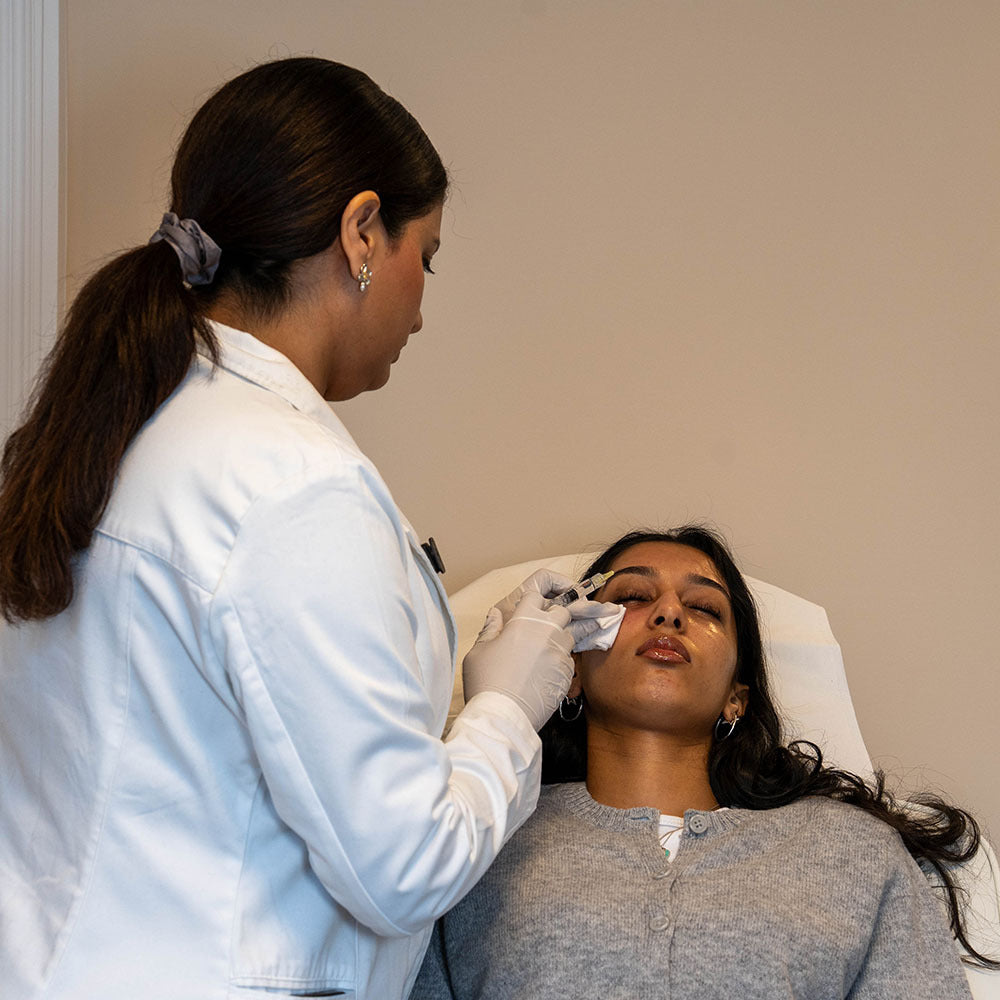
Polynucleotide Treatment London - Regenerative Skin Rejuvenation at Harley Street
Polynucleotide Treatment at Dr Ophelia's Harley Street clinic in London is a regenerative injectable that improves skin quality, hydration, elasticity, and collagen production from within, delivered within a Consultant Dermatologist led approach rather than a standalone course. Polynucleotides are one tool in a wider framework that includes gold standard prescription skincare, medical grade devices including Fraxel, Clear and Brilliant, Thermage FLX, and PicoSure PRO, and a full range of complementary injectables.
Dr Ophelia uses Plinest, selected for its purity, consistency, and clinical results. It can be used across a wider range of areas than many products, including the under eye area, and suits every stage of ageing, from younger patients using it preventatively to mature patients seeking improved skin quality, laxity, and texture.
What is Polynucleotide Treatment?
- Plinest, a premium polynucleotide product selected for purity and clinical performance
- Improves skin quality, collagen, and hydration without adding volume
- Particularly effective around the eyes, face, neck, and hands
- Best results within a full dermatologist led skin health programme
Polynucleotides are regenerative molecules made up of nucleotide chains, the building blocks of DNA and RNA. Once injected, they support cell repair, stimulate fibroblast activity, encourage collagen, and improve hydration and resilience. Unlike dermal fillers, they add no volume and do not alter facial shape. Unlike Profhilo, a hyaluronic acid bio remodelling hydrator, they work through a distinct regenerative pathway of cellular repair and collagen stimulation, and can be used where Profhilo is not suitable, including around the eyes and forehead.
How Does Polynucleotide Treatment Work?
Plinest polynucleotides work through several regenerative pathways. Once injected, they support fibroblast viability and activity, encouraging new collagen and improving the dermis's structural integrity. They also improve hydration and elasticity, and have free radical scavenging properties that neutralise oxidative stress from UV, pollution, and ageing.
For younger patients they are a valuable preventative treatment before visible deterioration. For mature patients, a course can improve fine lines, crepey texture, laxity, and radiance, particularly around the eyes, neck, and hands.
Benefits of Polynucleotide Treatment
Polynucleotide Treatment combines Plinest with the expertise of a Consultant Dermatologist and the best in-clinic devices and skincare. Key benefits include:
- Plinest, chosen for purity, tolerability, and clinical consistency
- Regenerative improvement in skin quality, collagen, and hydration, not volume
- A wider range of areas than most bio remodelling treatments: eyes, forehead, face, neck, chest, hands
- Particularly effective for under eye rejuvenation, where Profhilo is not typically used
- Preventative use in younger patients, rejuvenating use in mature patients
- Free radical scavenging that helps protect against ongoing oxidative damage
- Delivered within a dermatologist led plan combining prescription skincare, laser, and complementary injectables
- Minimal downtime, returning to normal activities immediately
Conditions Polynucleotide Treatment Can Treat
Polynucleotide Treatment may suit a range of skin quality and ageing concerns, including:
- Fine lines and wrinkles
- Crepey or thinning skin
- Skin laxity and loss of firmness
- Dehydrated or dull skin
- Under eye ageing, fine lines, and dark circles with a skin quality component
- Uneven skin texture
- Loss of elasticity and radiance
- Acne scarring and post blemish marks
- Neck ageing and skin crepiness
- Hand ageing and skin thinning
- Chest and décolletage skin quality
Your consultation with Dr Ophelia establishes whether polynucleotides suit you, whether Plinest is used alone or combined, and what skincare and treatments best support your results.
What to Expect — Step by Step Treatment Process
Dr Ophelia assesses your skin hydration, texture, elasticity, fine lines, and laxity, with VISIA skin analysis for baseline data and a review of your history and skincare.
A tailored plan sets out whether Plinest is used alone or combined with Profhilo, laser, tightening, or prescription skincare.
A topical anaesthetic cream can be applied for comfort; injections use fine needles and are well tolerated.
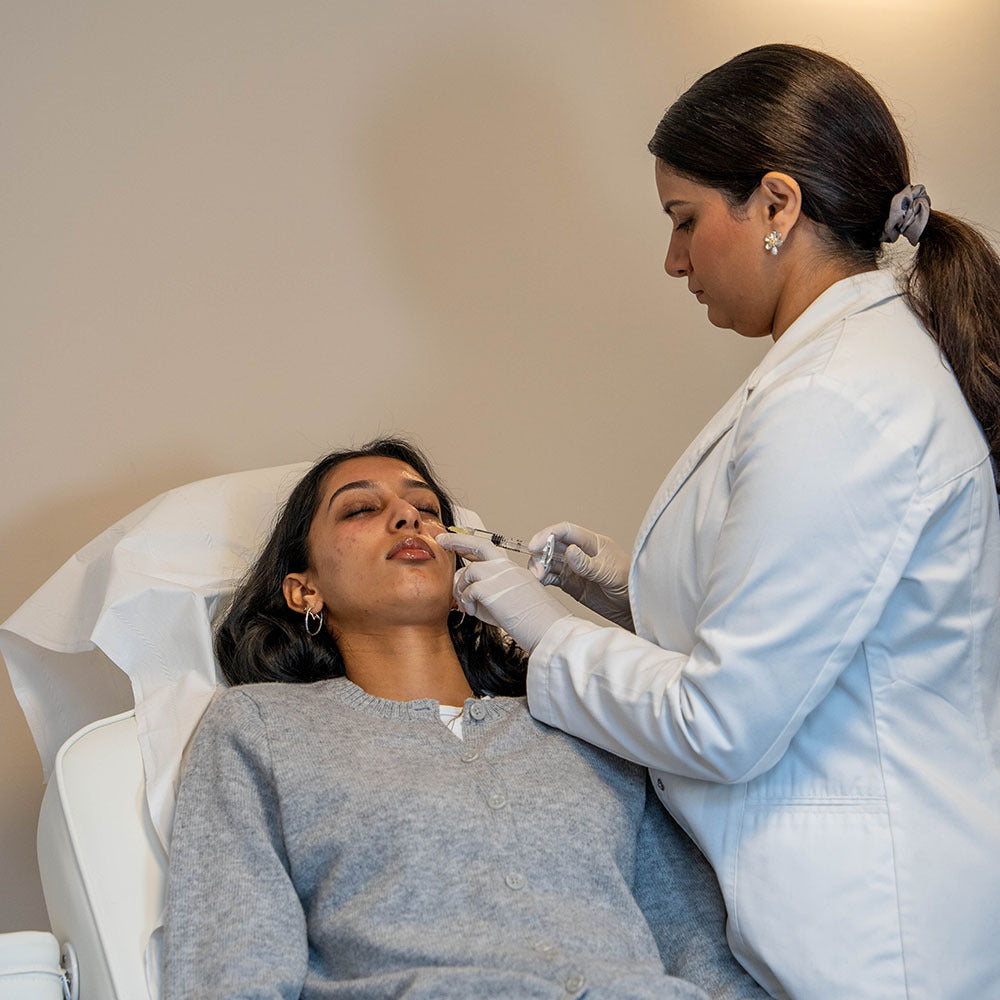
Small amounts of Plinest are injected with fine needles, with particular care over depth and placement around the eyes.
You receive aftercare advice, including avoiding rubbing, intense exercise, heat, and active skincare briefly.
Four weeks apart are recommended for lasting improvement.
Maintenance every three to four months helps sustain results, and Dr Ophelia reviews your skin health plan at each visit.

Results and Downtime
Immediately after treatment small superficial bumps may show at the injection sites; mild redness, swelling, tenderness, or bruising can occur but is usually brief.
24 hours The small bumps typically settle within 24 hours as the product disperses.
4 weeks Results typically begin around four weeks after the first treatment, with skin more hydrated, smoother, and radiant.
8 to 12 weeks Results develop further as collagen and elastin activity increases after the second and third sessions, with skin firmer and more even.
Results from a completed course can last around 6 to 12 months, depending on skin quality, age, lifestyle, and the broader programme. Ongoing skincare and periodic treatments help maintain results.
Pricing and Number of Sessions
A course of three Plinest sessions, four weeks apart, is the standard recommendation, with maintenance every three to four months to sustain results.
Current pricing: Per treatment area, such as face, eyes, or neck: £500 Course of 3 treatments: £1,200
Where polynucleotides are combined with other treatments, the full plan and pricing are confirmed at consultation, with a personalised breakdown beforehand.
Why Dr Ophelia for Polynucleotide Treatment in London?
- Plinest, selected for purity, tolerability, and clinical consistency
- A Consultant Dermatologist who treats skin comprehensively, combining injectables with gold standard prescription skincare and the best devices
- Fraxel, Clear and Brilliant, Thermage FLX, and PicoSure PRO in clinic to complement and extend results.
- A long term skin health approach, not injectables in isolation
Polynucleotides are excellent but rarely the whole answer; prescription skincare matters as much as the injectable course, because skin quality between sessions shapes how skin responds and how long results last. As a Consultant Dermatologist, Dr Ophelia can prescribe pharmaceutical grade topicals not available over the counter: prescription strength retinoids, growth factor formulations, antioxidant combinations, and bespoke compounded serums.
In-clinic devices extend results: Fraxel for collagen resurfacing polynucleotides cannot achieve, Clear and Brilliant for texture and early pigmentation, Thermage FLX for deep dermal tightening, and PicoSure PRO for pigmentation and collagen stimulation. For the delicate under eye area, Plinest is among the most effective, well tolerated options, and Dr Ophelia's periorbital expertise makes her clinic one of London's best for it.

HELP
Frequently Asked Questions - Polynucleotide Treatment London
Plinest, a polynucleotide derived from purified salmon DNA fragments, chosen for purity, tolerability, and consistency.
No volume or reshaping; they improve skin quality by stimulating collagen, repair, hydration, and elasticity.
Profhilo is a hyaluronic acid hydrator; polynucleotides work through a distinct regenerative pathway of cellular repair, fibroblast stimulation, and collagen synthesis, and can be used where Profhilo cannot, such as around the eyes. They are often combined.
Yes. Plinest is well tolerated there and one of the most effective options for fine lines and the skin quality component of dark circles.
Frequently with Profhilo, Fraxel or Clear and Brilliant laser, Thermage FLX, PicoSure Pro for pigmentation, and prescription skincare.
Pharmaceutical grade topicals including prescription strength retinoids, growth factor formulations, antioxidant combinations, and bespoke compounded serums.
Yes, preventatively, to support collagen, hydration, and skin quality before visible deterioration.
Yes, improving fine lines, laxity, crepey texture, and radiance, alongside skincare and devices.
A course of three treatments four weeks apart, with maintenance every three to four months; confirmed at consultation.
Around four weeks after the first treatment, developing further over the three session course.
Around 6 to 12 months, depending on skin quality, age, and lifestyle; skincare and periodic treatments help maintain results.
Minimal. Small bumps settle within 24 hours; mild redness, swelling, or bruising is brief. Most resume normal activities immediately.
Yes, across the face, eyes, forehead, neck, chest, hands, arms, and body where skin quality or laxity is a concern.
Book Your Polynucleotide Treatment Consultation in London
If you are concerned about fine lines, crepey skin, under eye ageing, dehydration, loss of radiance, or skin quality more generally, book a Polynucleotide Treatment consultation at Dr Ophelia's Harley Street clinic in London. Your skin is assessed in full and a personalised plan created combining Plinest with prescription skincare, laser, or injectables where these enhance results.
Related Treatments

Profhilo® Skin Booster
Learn More
Fraxel Resurfacing Laser
Learn More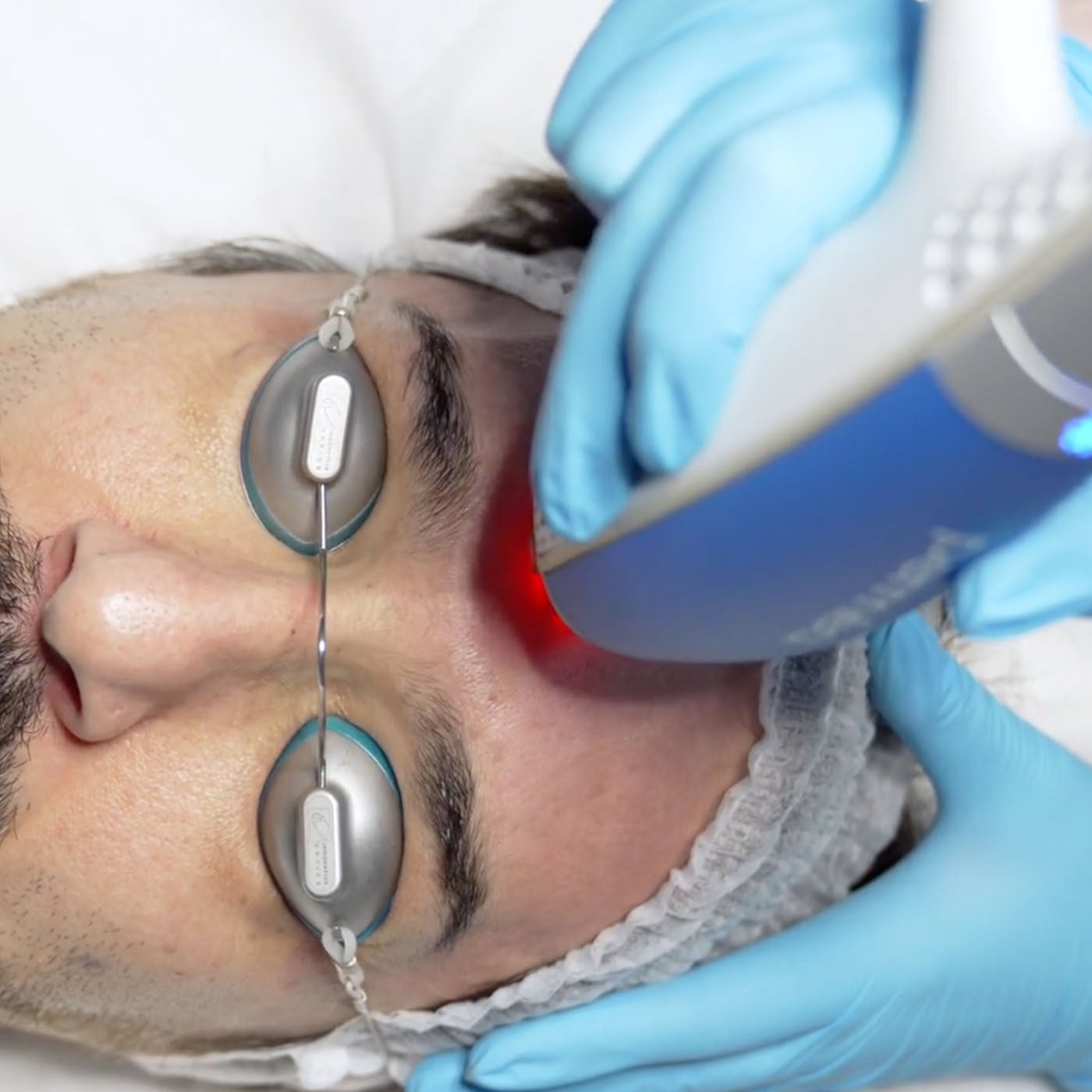
Clear & Brilliant Laser
Learn More
Thermage FLX
Learn More