
Acne Night Serum
One-line proposition
A compounded prescription topical that combines three dermatologist-grade actives into one nightly application, assessed and prescribed for your skin.
Price block
£125 for 15 ml, roughly a two-month supply. Assessed before dispensing; see below.
Primary CTA: [Start Your Free Skin Assessment]
Secondary: Or book a consultation with Dr Ophelia
Credential pill row
Consultant Dermatologist · PhD in Dermatological Research · Personally Reviewed · Made Individually to Order · Fragrance-Free · No Known Contact Allergens
Recyclable Packaging
Suitable for Vegans and Filler Free
Choose options
How Your Formula Is Made For You
- History: How long you've had breakouts, where, what you've tried, your skin type, any hormonal pattern, any known reaction to a skincare ingredient, and any other medication or skin condition. Most of the assessment happens here.
- Examination or photography: In clinic, under proper light; through the online questionnaire, Dr Ophelia reviews photographs personally. We identify scarring risk, cystic lesions, and anything beyond straightforward acne here.
- The formula: We set the concentration and base for each of the three activities based on your skin type and sensitivity, rather than a single default. Drier or reactive skin gets a gentler base and a lower starting concentration; oilier skin can usually tolerate more from the start.
- Then we check in: If your skin isn't tolerating or responding, we revisit the formula instead of leaving it as is.
Start Your Assessment
Online skin questionnaire. Free. For straightforward acne with a clear history and no red flags. Ten minutes, photographs included, reviewed personally by Dr Ophelia. If she can prescribe safely, she'll compound and dispatch your formula. If you'd be better seen in person, she'll say so.
[Start Your Free Skin Assessment]
Skin consultation, 130 Harley Street. £375. Full examination, discussion of your history including any previous treatments, and a treatment plan for your skin as a whole rather than a prescription for one bottle. A combined skin and hair consultation is £500. This is the right route if your acne is severe, cystic, scarring, unresponsive to previous topicals, or if you're weighing up oral isotretinoin, oral antibiotics, oral spironolactone, or AviClear.
[Book a Skin Consultation]
A consultation doesn't always end in a prescription for this formula. Sometimes the honest answer is oral isotretinoin, oral antibiotics, oral spironolactone (particularly for hormonal, jawline-pattern acne in women), AviClear, or scarring treatment. You're paying for an answer, not a bottle. Dr Ophelia is the sole prescriber for every formula in this range.
What Goes In It
Factual information for patients considering treatment. We decide whether this combination is appropriate for you at assessment.
Three actives, each doing a different job, in one fragrance-free base, formulated without the ingredients dermatologists most commonly see cause contact allergy, and compounded individually.
- Tretinoin: A retinoid, a vitamin A derivative, and one of dermatology's most established topical treatments. It normalises how skin cells shed inside the follicle, stopping blockages before they become blackheads or whiteheads, and it also has anti-inflammatory action. Used consistently, it fades the dark marks acne leaves behind over months.
- Side effects: Redness, peeling, dryness and stinging are common in the first two to four weeks, and some notice an initial "purge." This settles for most people. Skin on retinoids is more sun-sensitive, so daily sunscreen isn't optional.
- Pregnancy: Do not use tretinoin during pregnancy or while breastfeeding. If you're planning a pregnancy, this is stopped in advance, not on the day of a positive test.
- Clindamycin: A topical antibiotic, active against the bacteria implicated in inflammatory acne, with some anti-inflammatory effect of its own.
- Why it's never prescribed alone here: Using a topical antibiotic by itself long-term is how bacterial resistance develops. Combining it with a retinoid and azelaic acid, as this formula does, is the recommended approach.
- Side effects: Mostly local dryness, irritation, occasional stinging. Diarrhoea or colitis from a topical antibiotic is rare but recognised; stop and tell me if you get persistent diarrhoea.
- Azelaic Acid: A naturally occurring acid with three relevant actions: it reduces acne-related bacteria, calms inflammation, and inhibits the enzyme responsible for excess pigment production, useful for the dark marks acne leaves on darker skin tones in particular.
- Side effects: Mild stinging, itching or dryness, usually settling within a couple of weeks.
Azelaic acid has a reassuring safety record in pregnancy compared with the other two actives, but this three-active combination isn't suitable in pregnancy because of the tretinoin. If you're pregnant or breastfeeding, the formula built for you is the Pregnancy Safe Acne Serum. [Link.]
The base. Fragrance-free, formulated without the ingredients dermatologists most commonly see cause contact allergies, and adjusted for sensitivity. If you know you react to a specific ingredient, tell me during assessment, and I'll exclude it. This isn't preservative-free; a preservative system keeps it safe over months of use. What it doesn't need is the heavier preservative load a shelf-stable product carries, because this is made fresh and used within months. The pharmacy compounds every bottle individually to my prescription. A separate moisturiser usually isn't needed; the base is hydrating enough on its own.
Compounded fresh. Every bottle carries a six-month shelf life from the date of compounding, comfortable headroom against the roughly two-month supply.
Who This Is For, and Who It Is Not For
People with persistent or moderate inflammatory acne who've tried, or want more than, an OTC regimen. People offered oral isotretinoin who'd like to try a well-built topical first, where clinically appropriate. People with hormonal, jawline-pattern breakouts who haven't yet discussed oral spironolactone. People whose acne is leaving pigmentation behind.
This is not suitable for you if:
You are pregnant, could become pregnant, or are breastfeeding. Tretinoin is not used in pregnancy, without exception. The Pregnancy Safe Acne Serum is built for this. [Link.]
Your acne is cystic, severely scarring, or hasn't responded to a properly used topical regimen; come in for a consultation, as oral or procedural treatment may be more appropriate.
You have very sensitive or already compromised skin, such as active eczema or dermatitis in the treatment area.
What this can and cannot do. Used consistently, this brings many patients to clear or substantially clearer skin over two to three months. Persistent acne after a genuine trial is a signal to escalate rather than keep adjusting a topical. Escalation doesn't mean referral elsewhere — Dr Ophelia delivers oral isotretinoin, oral antibiotics, oral spironolactone, AviClear, and scarring treatment in the same Harley Street clinic, priced separately from this serum.
What a supplement can and cannot do
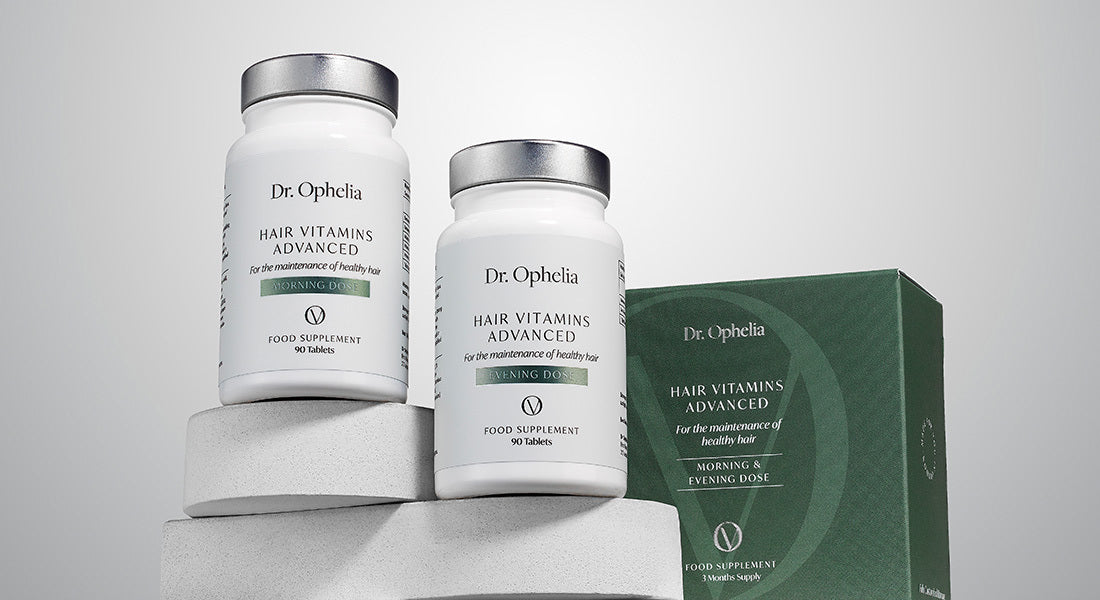
I would rather be straight with you than sell you something on a false premise. A supplement corrects a deficiency. If you have one, correcting it can make a real difference to your hair, and I see that difference regularly in clinic. If you do not have one, no supplement will grow hair that was not going to grow anyway.
Most hair loss has a driver beyond nutrition, whether hormonal, autoimmune, inflammatory or genetic. Nutrition is the foundation underneath whatever else is happening, and getting it right makes every other treatment work better. It is rarely the whole answer by itself.
Please check with a doctor first if
You are pregnant, planning a pregnancy or breastfeeding. You have haemochromatosis or any condition involving iron overload, or a family history of either. You have kidney disease. You take levothyroxine or another thyroid medication, which needs separating from both tablets by at least four hours. You already take a separate iron, zinc or vitamin D supplement, since doubling up on any of those three is the main risk this product carries. Or you take tetracycline or quinolone antibiotics, or bisphosphonates, all of which bind to iron and zinc.
Iron in particular is not something to take speculatively. If you have not had your ferritin, vitamin D, thyroid function and full blood count checked, that is the right first step, and a consultation with me includes it. Knowing your numbers turns this from a reasonable guess into a targeted correction, and it also tells you whether something other than nutrition is driving the loss.
Who This Is For
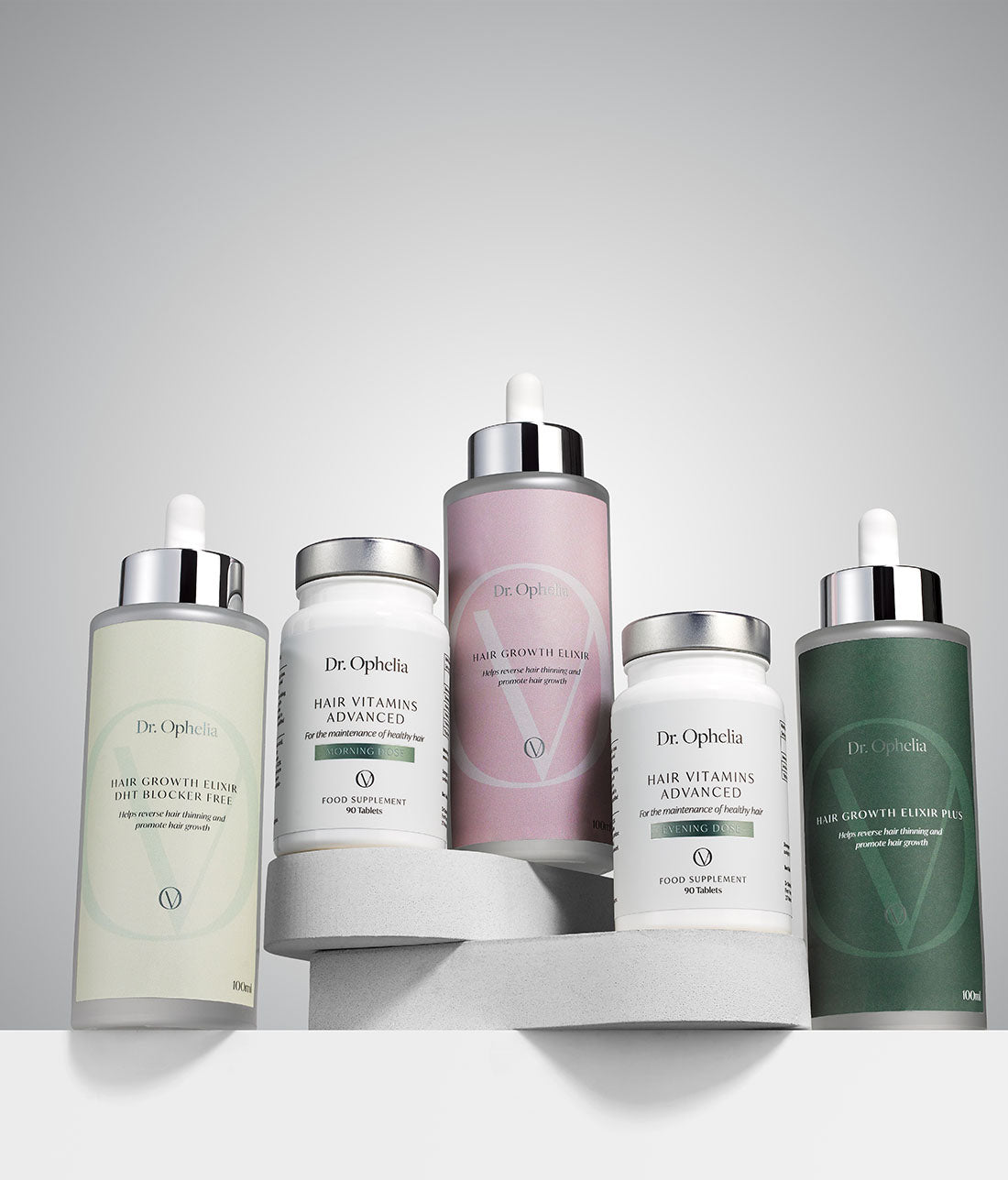
Anyone experiencing hair thinning, increased shedding or reduced density, whether postpartum shedding, post-illness telogen effluvium, or gradual pattern thinning, in men or women. It pairs well with a topical treatment, since unrecognised deficiency often explains why a good treatment underperforms, and being vegan it suits plant-based diets, at higher risk of low iron, B12 and zinc.
A supplement corrects a deficiency; if you do not have one, no supplement will grow hair that was not going to grow anyway. Most hair loss has a driver beyond nutrition, whether hormonal, autoimmune, inflammatory or genetic, so nutrition is the foundation, not usually the whole answer.
Check with a doctor first if pregnant, planning a pregnancy or breastfeeding, if you have haemochromatosis, kidney disease, take levothyroxine, or take tetracycline, quinolone antibiotics or bisphosphonates. A consultation with me includes checking ferritin, vitamin D, thyroid function and a full blood count first.
What a supplement can and cannot do
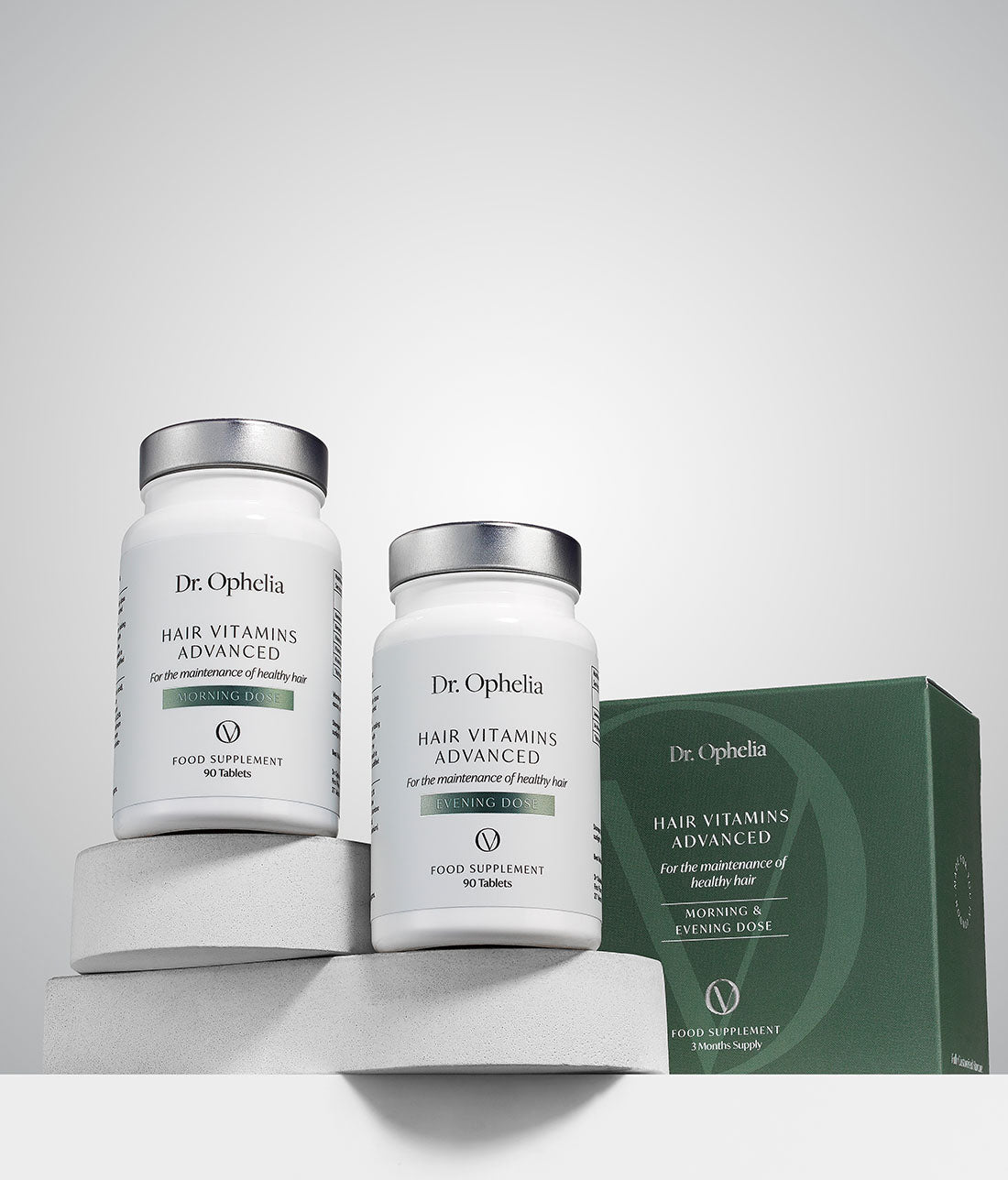
I would rather be straight with you than sell you something on a false premise. A supplement corrects a deficiency. If you have one, correcting it can make a real difference to your hair, and I see that difference regularly in clinic. If you do not have one, no supplement will grow hair that was not going to grow anyway.
Most hair loss has a driver beyond nutrition, whether hormonal, autoimmune, inflammatory or genetic. Nutrition is the foundation underneath whatever else is happening, and getting it right makes every other treatment work better. It is rarely the whole answer by itself.
Please check with a doctor first if
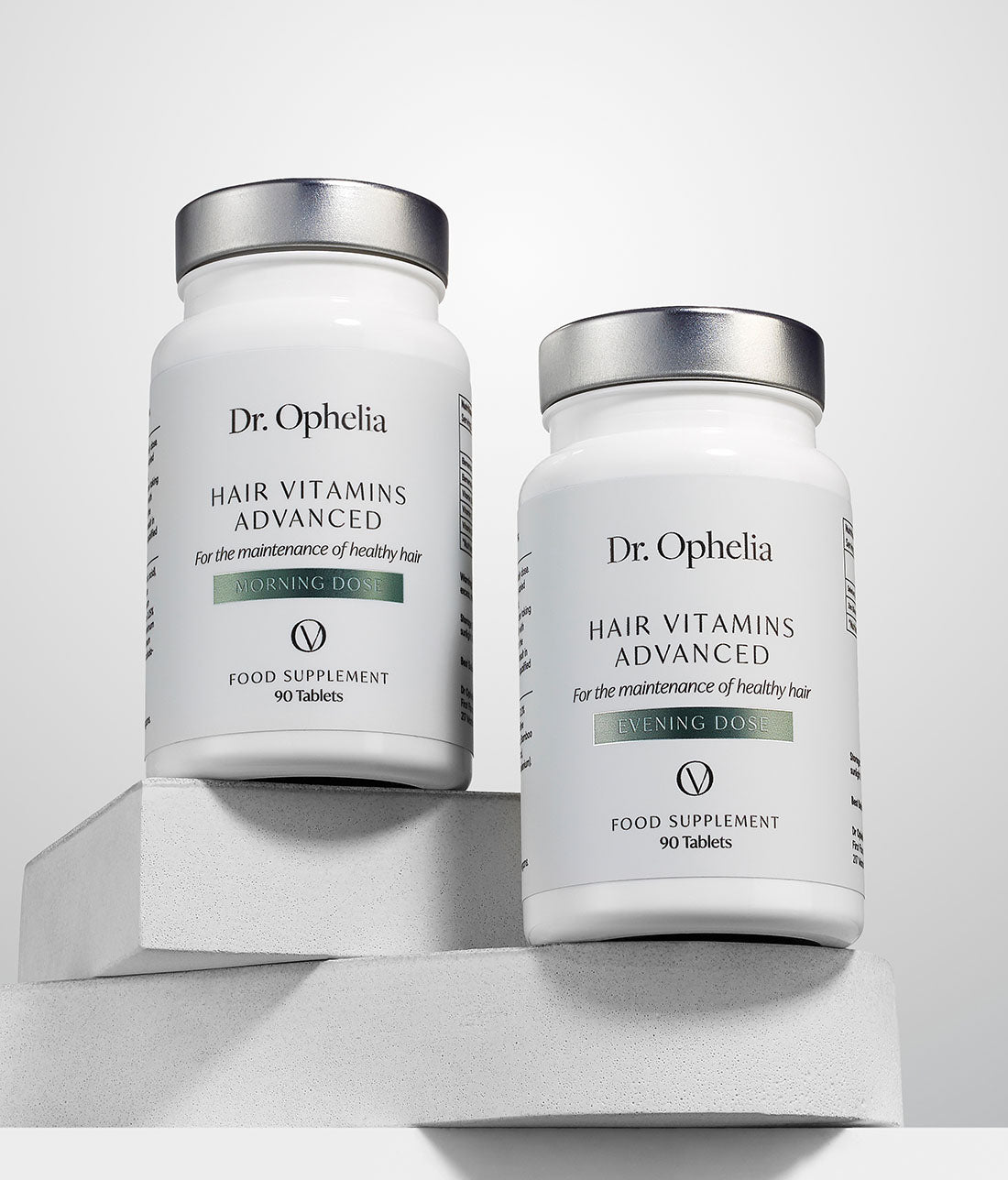
You are pregnant, planning a pregnancy or breastfeeding. You have haemochromatosis or any condition involving iron overload, or a family history of either. You have kidney disease. You take levothyroxine or another thyroid medication, which needs separating from both tablets by at least four hours. You already take a separate iron, zinc or vitamin D supplement, since doubling up on any of those three is the main risk this product carries. Or you take tetracycline or quinolone antibiotics, or bisphosphonates, all of which bind to iron and zinc.
Iron in particular is not something to take speculatively. If you have not had your ferritin, vitamin D, thyroid function and full blood count checked, that is the right first step, and a consultation with me includes it. Knowing your numbers turns this from a reasonable guess into a targeted correction, and it also tells you whether something other than nutrition is driving the loss.
How to Use
Apply to clean, dry skin once nightly. A small amount goes further than it looks; using more increases irritation without improving results. You usually don't need a separate moisturiser. Sunscreen every morning, without exception.
Expect an adjustment period. Redness, peeling and mild stinging in the first two to four weeks are common and usually settle. If it's more than mild, tell me, and we can change the base and concentration rather than you pushing through.
Give it at least eight to twelve weeks before judging the effect, and closer to three months for pigmentation. Come back if it isn't working, rather than waiting it out.
Frequently Asked Questions
Because it contains three prescription-only medicines, the free questionnaire takes ten minutes and is reviewed personally.
Iron and zinc compete for absorption, vitamin C increases iron absorption so belongs with it, and vitamin C degrades selenium so must stay apart from it.
Because using three separate tubes correctly, without one irritating your skin so much you stop, is genuinely hard. Compounding into one nightly application removes most reasons a good prescription fails. What's different here is your bottle is compounded individually, not matched to a fixed batch.
It is, and that's also how resistance develops when you use it alone long-term, which is why dermatology guidance recommends combining.
Possibly, in the first few weeks. Retinoids can bring underlying congestion to the surface faster. It should settle; tell me if it doesn't.
Usually not. The base is hydrating enough on its own.
No, Tretinoin is not used in pregnancy or when breastfeeding. Use the Pregnancy Safe Acne Serum instead.
Not ruled out, but planned. Tretinoin is stopped ahead of trying to conceive.
Tell me in your assessment. Combining isn't usually appropriate. If you've finished a course, this is a common maintenance next step.
It often has a hormonal component that a topical alone won't fully address. Oral spironolactone is often effective and one of the treatments I prescribe, so it's worth discussing at consultation.
Yes, that's the intended system.
Less new congestion within four to six weeks; a clearer picture by two to three months. Pigmentation takes three months or more.
No. Once your skin is clear and stable, you'll step down to the Day Serum, then eventually to OTC maintenance.
Useful information. Either the formula needs adjusting, or oral or procedural treatment is the next step. Consultation £375.
Yes, every bottle is compounded individually to my prescription, and concentrations can be adjusted as treatment goes on.
No. It's compounded as a recognised, lawful route for a prescriber to obtain a medicine not commercially available.
A GPhC-registered UK pharmacy specialising in compounding makes and dispenses it. The clinic is CQC-registered, provider ID 1-27377085712, location ID 1-29095875525. GMC 6149018.
Covers the compounded formula, the assessment, and consultant dermatologist review. Roughly a two-month supply.
7 to 10 working days to compound, then Royal Mail tracked delivery within 24 hours. UK only.
Six months from the date of compounding.
No, dispensed prescription medicines can't be returned, and this is compounded to your own specification. If it isn't working, tell me; adjusting the formula is a better outcome than a refund.
Vitamins ship the next day by 24 hour Royal Mail; serums and elixirs are made to order and take 3 to 5 days, expedited case by case if needed.
28 day returns on vitamins; bespoke serums and elixirs cannot legally be returned.
AWARD WINNING PRIVATE CONSULTANT DERMATOLOGIST
Dr. Ophelia Veraitch is a globally recognised dermatologist with an unparalleled educational foundation and international expertise in both medical and aesthetic dermatology.
As a private consultant on Harley Street, she specialises in diagnosing and treating complex skin and hair conditions while also offering a full range of professional aesthetic treatments.
Alongside her clinical work, Dr. Ophelia has developed her namesake line of prescription-strength skin and hair products, bringing her world-class knowledge and experience directly into patients’ hands, to continue treating their skin at home.

Patients Most Often Pair This With
Skin consultation
£375 the route to oral isotretinoin, oral antibiotics, oral spironolactone, AviClear or scarring treatment.
Know More