

XERF London — Multi-Frequency Radiofrequency Skin Tightening at Harley Street
BOOK A CONSULTATION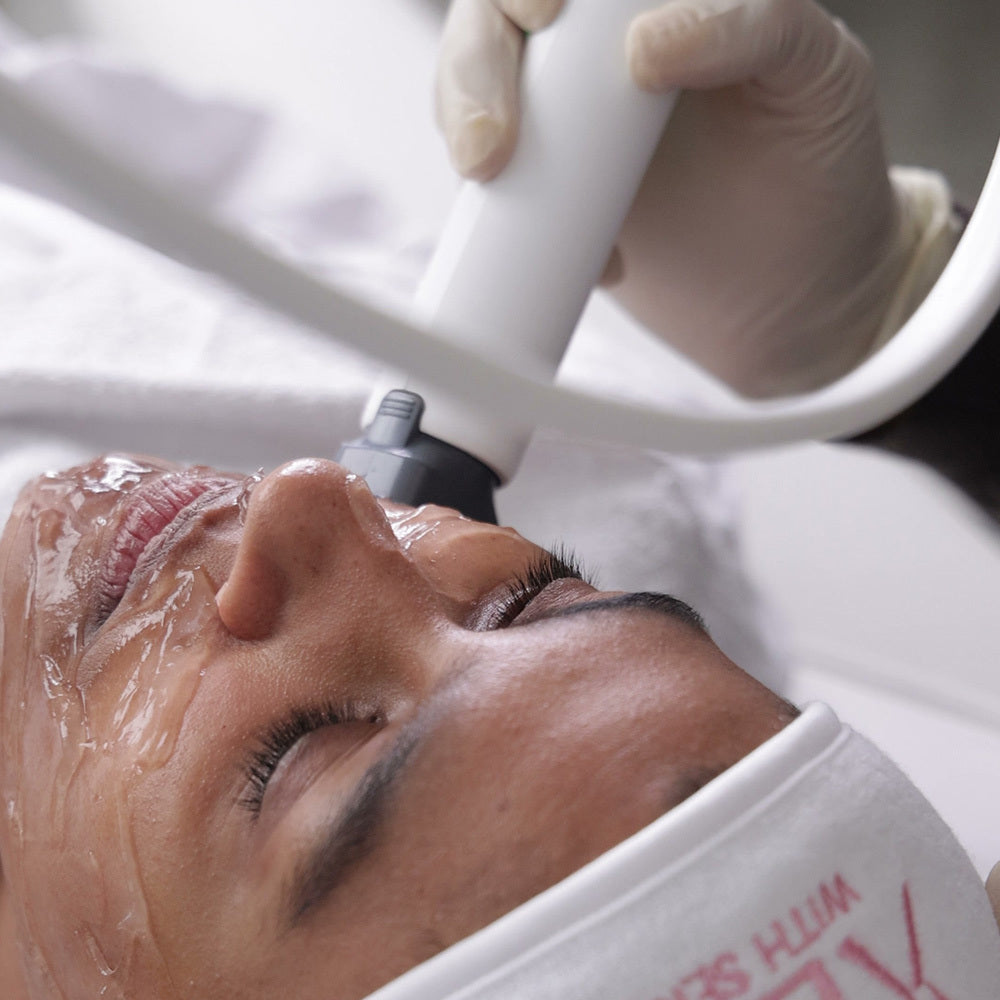
XERF London — Multi-Frequency Radiofrequency Skin Tightening at Harley Street
XERF in London is a multi-frequency monopolar radiofrequency skin tightening treatment designed to improve firmness, laxity and skin support without needles, numbing cream or downtime. At Dr Ophelia’s Harley Street clinic, XERF is used on areas such as the face, jawline, eyes, lips, neck and body, with treatment planned by a Consultant Dermatologist before any device is chosen.
XERF works by heating the deeper layers of the skin, stimulating collagen contraction and new collagen production over time. It is particularly suited to patients who have noticed early loss of firmness, softening along the jawline, laxity under the chin, crepey neck skin or changes around the eyes.
Dr Ophelia Veraitch has used monopolar radiofrequency in her practice for over ten years. This matters because radiofrequency results depend heavily on patient selection, treatment settings and clinical judgement, not simply the machine itself.
What is XERF?
XERF is a monopolar radiofrequency treatment made by Cynosure Lutronic. Radiofrequency treatments pass controlled energy through the skin to heat the tissue beneath it. When collagen is heated to the right temperature, it contracts and the body responds by producing new collagen over the following months.
This process helps improve the appearance of skin laxity, firmness and support.
What makes XERF different from earlier radiofrequency devices is its multi-frequency technology. It delivers energy at two different frequencies, 6.78 MHz and 2 MHz, across three depth settings. This allows energy to be placed at different levels of the skin and underlying support structures, rather than being concentrated at one fixed depth.
That matters because skin laxity is not only a surface issue. Treating the upper skin layers may improve texture slightly, but reaching deeper support structures is what helps improve firmness along areas such as the jawline, lower face and under the chin.
How Does XERF Work?
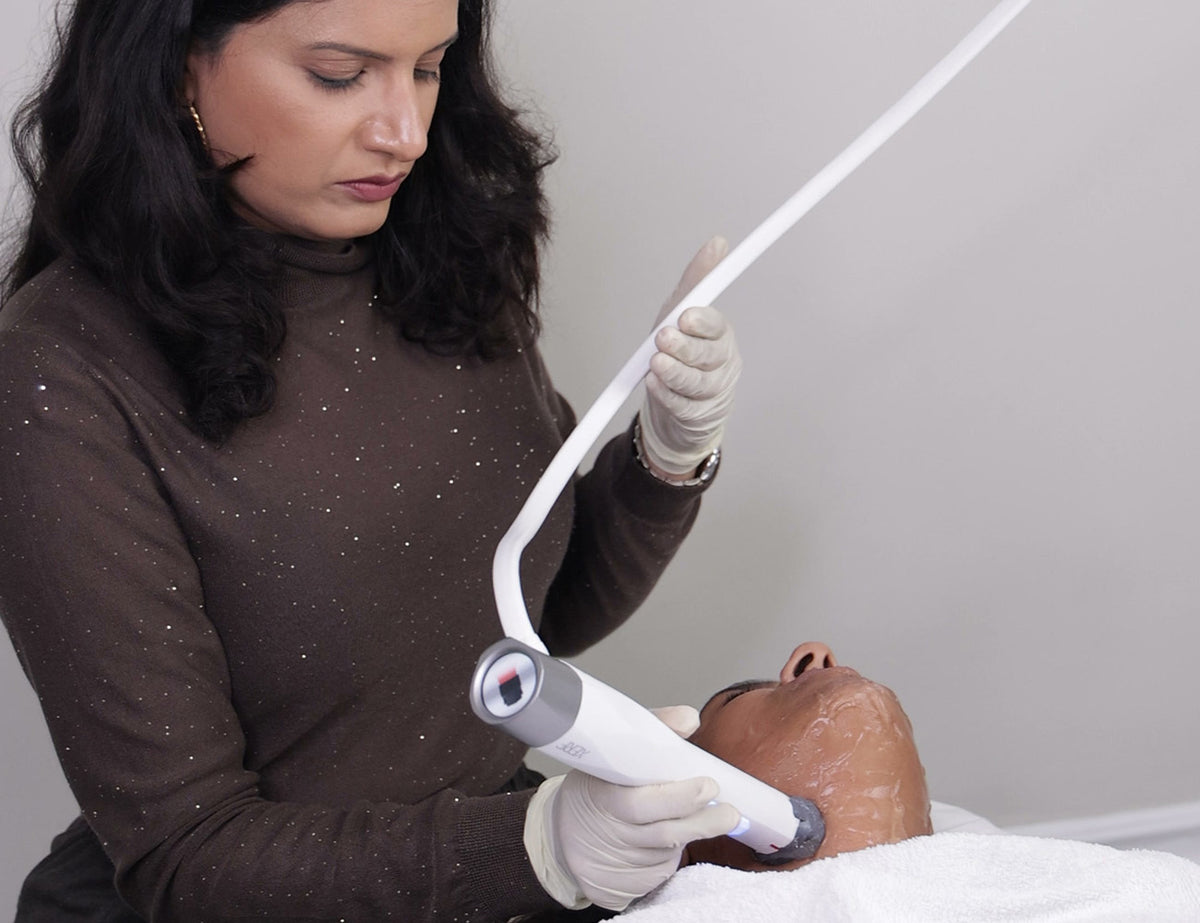
XERF works by using multi-frequency monopolar radiofrequency energy to heat deeper skin layers in a controlled way.
As the deeper tissues are heated, existing collagen fibres contract. This can create some immediate tightening after treatment. More importantly, the heat stimulates new collagen production, which develops gradually over the following weeks and months.
The treatment is designed to build heat in a controlled way while using integrated cooling at the skin surface. The system also monitors the skin during treatment using real-time impedance feedback, helping the operator understand what energy has been delivered to each area.
Radiofrequency treatments have always depended on operator technique. XERF’s tissue feedback and energy display help make the treatment more measured, controlled and repeatable.
Benefits of XERF
XERF is often chosen by patients who want non-surgical skin tightening without injections or recovery time.
Potential benefits include:
- Improved skin firmness
- Natural-looking tightening
- Improvement in early laxity
- Support for collagen production
- No needles
- No numbing cream
- No downtime
- Can be used on the face, eyes, neck and body
- May improve jawline and lower-face firmness
- May help laxity under the chin
- Can support crepey neck and décolletage skin
- Can be used as part of a longer-term maintenance plan
- Suitable across skin types following assessment
XERF is not designed to create a dramatic surgical lift. It is best suited to patients who want improvement in firmness and skin quality without surgery.
Conditions XERF Can Treat
XERF May Be Suitable For Selected Patients With:
- Skin laxity
- Loss of firmness
- Jowls
- Jawline laxity
- Lower face laxity
- Loose skin under the chin
- Neck laxity
- Crepey neck skin
- Décolletage ageing
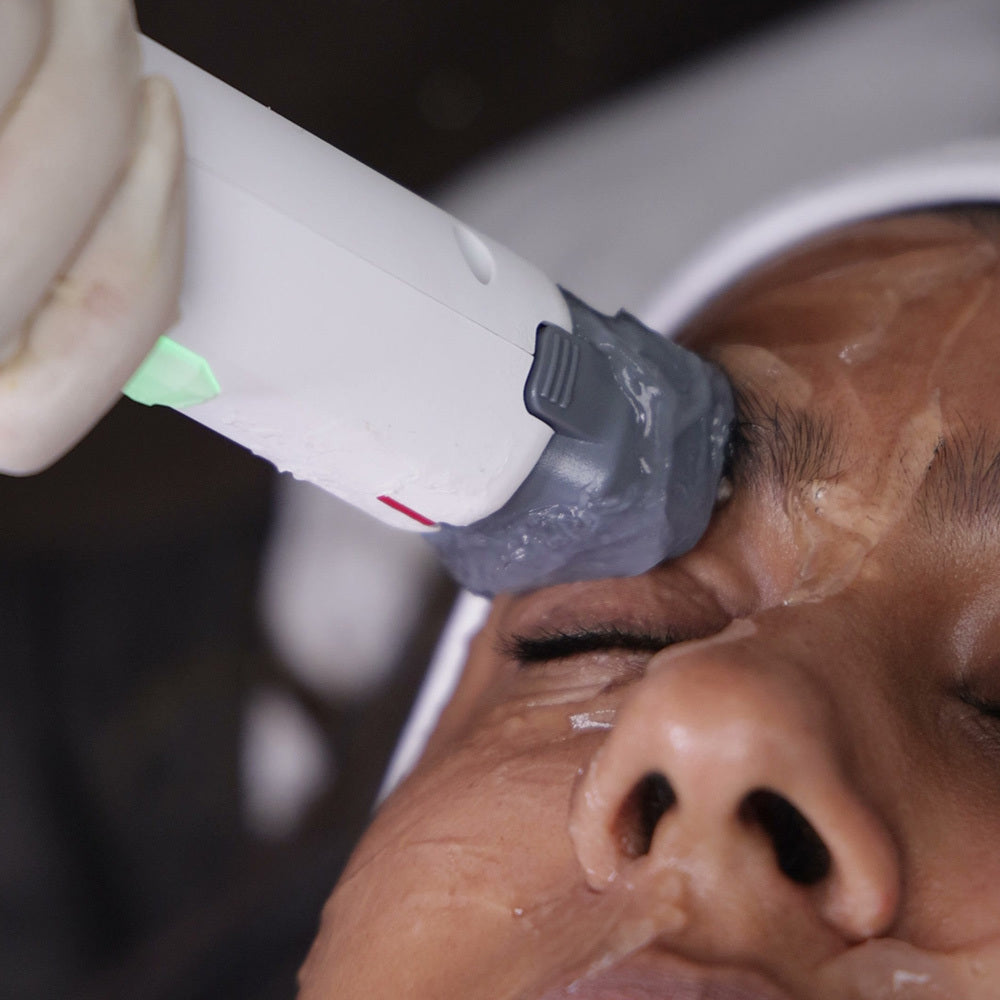
- Eyelid laxity
- Loose skin around the eyes
- Body skin laxity
- Loose skin on arms
- Loose abdominal skin
- Loose skin on knees
XERF treats laxity and firmness. It does not treat pigmentation, redness or surface texture. If pigmentation, tone or texture are also concerns, Dr Ophelia may recommend a different treatment or the Xerfico Pro protocol, which combines XERF with PicoSure Pro.
What to Expect — Step-by-step process
Your XERF treatment begins with a dermatology-led assessment to decide whether radiofrequency is the right treatment for your concern.
Dr Ophelia assesses your skin, including laxity, skin quality, medical history, previous treatments and what you want to improve. Photography may be taken to document your starting point.
This is a dermatological assessment, not a treatment sales appointment. It may conclude that XERF is suitable, or that another treatment would be more appropriate.
The areas to be treated, treatment depth and intensity are planned around your skin. Where more than one concern is present, the plan may involve Xerfico Pro rather than XERF alone.
The skin is cleansed. No numbing cream is needed, and no injections are given.
Ultrasound gel is applied, and the XERF handpiece is worked systematically across the treatment area. Heat builds gradually in passes, then eases between passes.
Most patients describe the sensation as warmth rather than pain.
Treatment time depends on the area. A lower face and jawline treatment usually takes around 45–60 minutes. Larger areas or multiple areas may take longer.
The skin may look slightly pink and feel warm, but this usually settles within a few hours. There is no downtime, and most patients return to normal activity immediately.
You are reviewed as the collagen response develops. Repeat photography may be used so that progress is assessed objectively rather than from memory.

Results and Downtime
XERF results develop in two stages.
Immediately after treatment
Heating causes existing collagen fibres to contract. This can create some visible tightening soon after treatment, although this is not the main result.
First few hours
The skin may feel warm and look slightly pink. This usually settles quickly.
Same day
There is no downtime. You can wear make-up and return to normal activity, including work, immediately.
6–8 weeks
More meaningful improvement usually begins to become noticeable from around 6–8 weeks, as new collagen production develops.
3 months
Firmness and skin quality typically continue to improve up to around three months.
6 months
The result is generally considered to be at its fullest around six months.
Longer term
Results are natural rather than dramatic. XERF can improve firmness and skin quality, but it does not reposition tissue like surgery. Results are not permanent because the skin continues to age. Many patients maintain their result with repeat treatment periodically.
Pricing / Number of Sessions
Many patients see a meaningful change from a single XERF treatment. Some patients benefit from a second treatment, depending on their skin, age and degree of laxity.
Maintenance is usually considered annually or thereabouts, based on how your skin responds rather than a fixed schedule.
Current pricing:
Face: £2500 per treatment
Face and neck: £2800 per treatment
Eyes only: £1200 per treatment
Cost depends on the areas treated and whether XERF is used alone or as part of the Xerfico Pro protocol. Pricing is confirmed after assessment, and your consultation fee and any imaging will be set out clearly.
Why Dr Ophelia for XERF in London?
XERF is available in a number of clinics, but the important question is not only who owns the machine. It is who is assessing your skin, choosing the settings and deciding whether radiofrequency is the right treatment for you.
Dr Ophelia Veraitch is a Consultant Dermatologist at 130 Harley Street with a PhD in hair follicle bioengineering. She has used monopolar radiofrequency in her practice for over ten years and is a Key Opinion Leader for several device manufacturers, including Cynosure.
At Dr Ophelia’s clinic, your skin is assessed by a Consultant Dermatologist and your treatment plan is written around your skin. Treatment is delivered either by Dr Ophelia or by her trained clinical team working to that plan.
This matters because laxity may not be your only concern. What appears to be sun damage may need assessment before treatment. A pigmented lesion should not simply be treated as pigmentation. A medical skin condition may need managing before any device is used.
Patients choose Dr Ophelia for XERF in London because the treatment is delivered within a dermatology-led setting, with careful assessment, appropriate technology selection, long appointments and follow-up over time.

HELP
FAQs
Most patients describe XERF as a warm, comfortable treatment rather than a painful one. It is performed without numbing cream and without injections. The device uses cooling at the skin surface while heat builds in a controlled way.
No. Your skin may look slightly pink and feel warm for a few hours afterwards, but you can wear make-up and return to normal activities, including work, immediately.
There is usually some immediate tightening from the heating itself. The more meaningful change comes from new collagen and develops gradually, becoming noticeable from around 6–8 weeks, continuing to around three months and reaching its fullest around six months.
Results generally last for a year or more, although they are not permanent because the skin continues to age. Many patients maintain results with repeat treatment roughly annually, depending on their skin.
Many patients achieve a good result from one treatment. Some benefit from a second. This is assessed rather than assumed.
All monopolar radiofrequency devices heat deeper skin layers to stimulate collagen. They differ in how energy is delivered, how many frequencies and depths are available, how the surface is cooled and how much feedback the operator receives. XERF is a multi-frequency device working at two frequencies and three depths, with real-time tissue feedback and integrated cooling.
In suitable patients, yes. The eye area requires particular care, and Dr Ophelia and her team have experience using intraocular eye shields for energy-based and laser treatments around the eyes where clinically appropriate.
Yes. Laxity on the abdomen, upper arms, knees and other areas can be treated. Larger areas take longer, and the plan is built around what is realistic for your skin.
No. XERF improves firmness and skin quality, but it does not remove excess skin or reposition tissue. Where laxity is advanced, a surgical opinion may be more appropriate.
Usually, but timing matters. Your treatment plan should take into account what you have had, where and when.
XERF is generally avoided during pregnancy and in patients with implanted electronic devices such as a pacemaker or defibrillator. Metal implants in the treatment area, active skin infection or inflammation, and some autoimmune or connective tissue conditions need discussion first.
Radiofrequency does not target pigment in the skin, so it is generally considered suitable across skin types in a way that some light-based treatments are not. Assessment is still important, especially if pigmentation is also a concern.
XERF is the radiofrequency treatment on its own, designed to address laxity and firmness. Xerfico Pro is Dr Ophelia’s protocol combining XERF with PicoSure Pro picosecond laser, so pigmentation, tone and texture can be addressed alongside firmness.
Your skin is assessed and your treatment plan is set by Dr Ophelia Veraitch, a Consultant Dermatologist. Treatment is carried out either by Dr Ophelia or by a trained member of her clinical team working to her plan and under her direction.
Book Your XERF Consultation
If you have noticed loss of firmness along the jawline, neck, lower face or around the eyes, book a XERF consultation at Dr Ophelia’s Harley Street clinic in London.
Your skin will be assessed properly first, and you will be told honestly whether XERF is the right treatment, whether Xerfico Pro would be more suitable, or whether another approach would serve you better.
Book your XERF consultation today and take the next step towards firmer, more supported-looking skin.
Related Treatments
