

Dark Eye Circles
BOOK A CONSULTATION
What causes dark circles under the eyes?
- Pigmentation, vascular and structural causes
- Often more than one cause at once
- Hormonal contribution in many patients
- Accurate diagnosis guides treatment
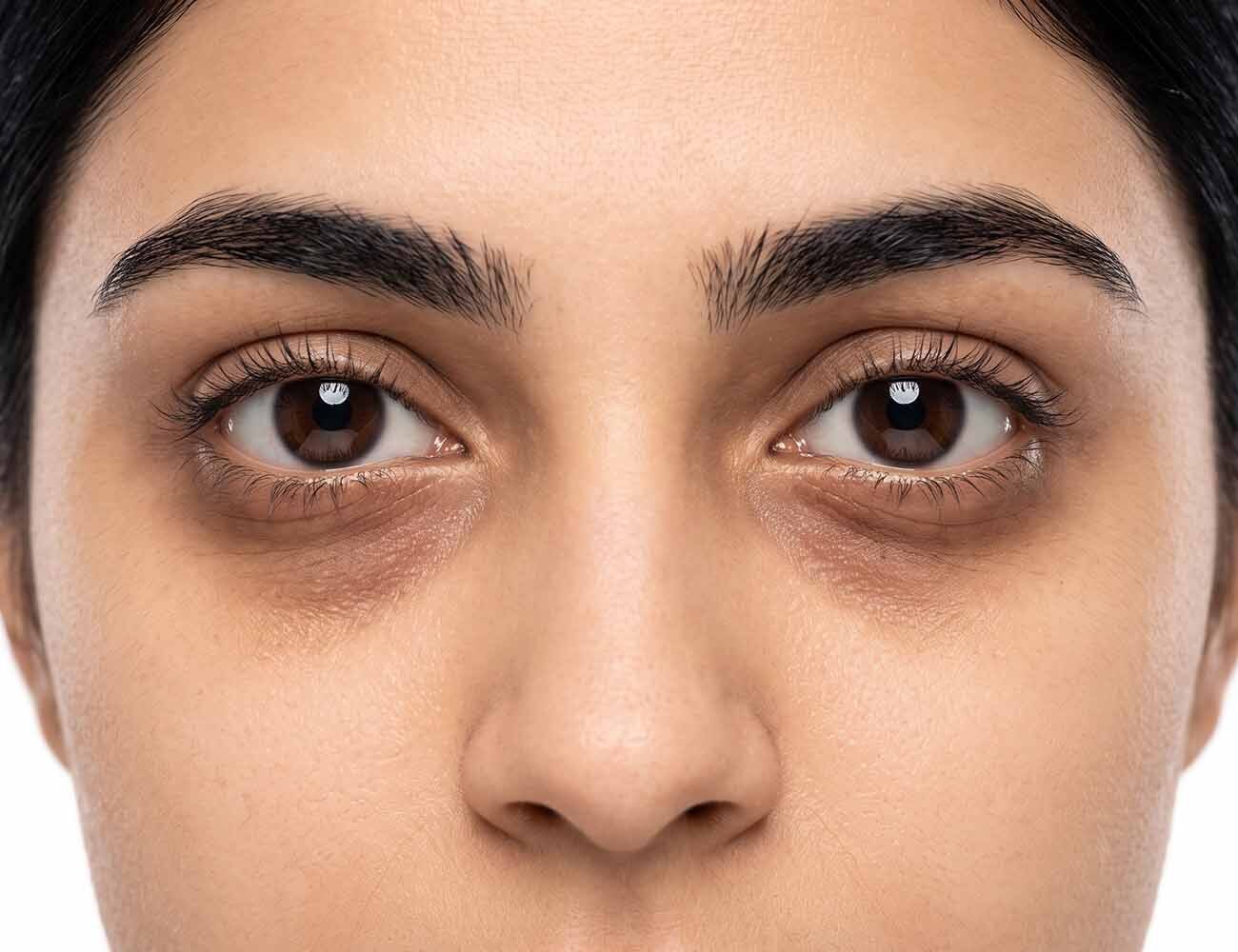
Dark circles are rarely caused by a single factor; effective treatment depends on identifying which underlying mechanism is responsible. The periorbital skin is the thinnest on the body, making it especially vulnerable to visible changes in pigmentation, vessels, and structural support.
The first major cause is pigmentary: periorbital hyperpigmentation, in which excess melanin deposition darkens the skin around the eyes. This is more common in darker skin tones and can be worsened by genetics, sun exposure, eczema or rubbing of the eye area, and hormonal influences. Hormonal fluctuations across the menstrual cycle, pregnancy, and the perimenopause and menopause are an underappreciated contributor to under eye pigmentation in many women. The second cause is vascular: the thin skin allows small blood vessels to show through, producing a bluish or purplish discolouration, more visible in fair or thin skin and worsened by tiredness and dehydration. The third cause is structural: with age, loss of skin elasticity and laxity creates shadowing and a hollowed appearance frequently mistaken for pigmentation but requiring a different approach.
Many patients have a combination of these mechanisms at once, which is why a one size fits all approach so often fails. An accurate assessment, including VISIA® skin analysis where relevant, determines the relative contribution of pigmentation, vascularity, and structural laxity.

What are my treatment options for dark circles?
- Prescription night serum with tretinoin and hydroquinone
- PicoSure Pro, Clear + Brilliant, Fraxel. Vascular laser for visible vessels
- Polynucleotides, anti-wrinkle injections,
- Thermage FLX
- Intraocular eye shields for safe periorbital treatment
Where pigmentation is the dominant factor, Dr Ophelia prescribes a bespoke prescription night serum combining tretinoin with hydroquinone, a formulation genuinely uncommon for the delicate periorbital area. Tretinoin supports cell turnover and collagen production, while hydroquinone, the gold-standard depigmenting agent, directly reduces excess melanin production. Oral tranexamic acid and Fernblock (Polypodium leucotomos) are used in selected patients to reduce pigmentation activity and provide photoprotection from within.
For pigmentation not resolved by topical treatment alone, laser therapy is highly effective. PicoSure Pro, a picosecond laser, targets pigment with precision and minimal thermal injury, making it well suited to the thin skin under the eyes. Clear + Brilliant and Fraxel Dual resurfacing laser improve both pigmentation and skin texture and quality. For vascular discolouration, where visible blood vessels beneath the thin under-eye skin are the primary cause, targeted vascular laser treatment reduces their appearance directly.
A defining feature of these treatments is the routine use of intraocular eye shields. Laser energy risks the eye unless the cornea is protected, and standard safety protocols require a wide margin of avoidance that leaves the area most affected by dark circles untreated. By fitting intraocular shields for PicoSure Pro, Fraxel, and Clear + Brilliant, Dr Ophelia can treat right up to the lash line safely.
Where structural laxity is the primary or a contributing cause, treatment shifts towards improving skin quality and support. Polynucleotide treatments are injected into the periorbital skin to support tissue repair and improve elasticity. Thermage FLX, a radiofrequency device, stimulates collagen production in the deeper layers of the skin, producing a gradual tightening effect that reduces structural shadowing. Anti-wrinkle injections are used where dynamic muscle activity is contributing. Dermal filler is not used in Dr Ophelia's practice; her view is that tear trough filler can stretch the thin, delicate skin under the eyes over time, producing an unnatural, puffy, or migrated appearance. Where concerns are genuinely structural, she refers to trusted oculoplastic and eye surgeons in the UK, Paris, and the United States.
All treatment is tracked using VISIA® skin analysis, so improvement can be measured objectively over time.
Why should I see Dr Ophelia Veraitch for dark circle treatment in London?
- Award winning consultant dermatologist. Accurate diagnosis of pigment, vessel or structural cause
- Bespoke tretinoin and hydroquinone night serum. A genuinely uncommon prescription for the eye area
- Intraocular eye shields. Safe, complete periorbital laser treatment
- Full prescribing authority. Oral tranexamic acid, Fernblock and hormonal guidance
Dark circles are one of the most commonly mistreated cosmetic concerns, because most clinics default to a single approach, most often dermal filler, without establishing the true cause. As an award winning Consultant Dermatologist, Dr Ophelia Veraitch begins every consultation by diagnosing the true cause.
Her bespoke prescription night serum combining tretinoin and hydroquinone for the eye area is genuinely distinctive, as very few practitioners offer a compounded prescription of this kind for the eye. As a Consultant Dermatologist, she has full prescribing authority to use oral tranexamic acid and Fernblock, and to identify the hormonal contributors to under eye pigmentation. Her routine use of intraocular eye shields for PicoSure Pro, Fraxel Dual and Clear + Brilliant allows the periorbital area to be treated safely right up to the lash line, a capability not widely available elsewhere.
Dr Ophelia does not offer tear trough filler, which in her view can stretch the delicate under-eye skin and produce a puffy, unnatural, or migrated appearance. She focuses instead on skin quality, pigmentation, and structural support using polynucleotides, Thermage FLX, and laser, referring genuinely structural cases to trusted oculoplastic and eye surgeons.
HELP
Frequently Asked Questions - Dark Circles Treatment
Three principal causes, often combined: pigmentary (excess melanin in the thin periorbital skin), vascular (small blood vessels showing through as a bluish or purplish tone), and structural (age-related loss of skin elasticity and laxity creating shadowing).
Yes. The menstrual cycle, pregnancy, and the perimenopause and menopause can all influence melanin production under the eyes, an underappreciated contributor to periorbital pigmentation in many women.
A bespoke compounded eye serum combining tretinoin, which supports cell turnover and collagen, and hydroquinone, the gold-standard depigmenting agent that reduces excess melanin. This combination for the eye area is genuinely uncommon.
PicoSure Pro is a picosecond laser that targets excess pigment with high precision and minimal thermal injury, making it well suited to treating pigmentary dark circles in this sensitive area.
They shield the cornea during laser treatment, allowing energy to be delivered safely right up to the lash line with PicoSure Pro, Fraxel, and Clear + Brilliant, reaching the area standard safety margins would leave untreated.
Because filler in this location can stretch the thin, delicate skin beneath the eyes over time, producing a puffy, unnatural, or migrated appearance. She instead improves skin quality, pigmentation, and structural support through non-filler approaches.
Thermage FLX is a radiofrequency device that heats the deeper layers of the skin to stimulate collagen and tighten gradually, addressing the structural laxity behind some dark circles rather than pigment or vessels.
Yes. Where visible blood vessels are the primary cause, targeted vascular lasers reduce their appearance directly. This is a different mechanism from pigment treatments such as PicoSure Pro, so identifying the vascular component at assessment is essential.
Yes, in selected patients. It reduces melanocyte activity systemically and helps significant pigmentary dark circles resistant to topical treatment, alongside Fernblock.
It depends on the cause: pigmentary dark circles often respond very well to topical treatment and laser therapy, while vascular and structural causes can be improved though correction may be more limited. Dr Ophelia gives an honest assessment.
Because effective treatment needs accurate diagnosis first. A Consultant Dermatologist can diagnose the cause, prescribe bespoke topical and oral treatments, deliver laser safely using intraocular eye shields, and refer to a trusted surgeon when appropriate, rather than defaulting to filler.
Yes. Periorbital eczema causes chronic inflammation, dryness, and repeated rubbing that worsen pigmentation through post inflammatory hyperpigmentation, which Dr Ophelia assesses for at every consultation.
Treatment first controls the eczema with topical anti-inflammatory treatment and patch testing for any contact allergy, with systemic treatments or biologics such as dupilumab (used for atopic dermatitis) for severe cases, before the pigmentation is addressed.
Aesthetic clinics cannot diagnose or treat eczema, patch test for contact allergies, or prescribe the medications needed to control inflammation, so only a Consultant Dermatologist can treat the medical cause alongside the cosmetic concern.