
Traction Alopecia
What is traction alopecia and what causes it?
- Caused by repeated tension on hair
- Affects hairline and temples
- Non-scarring if caught early
- Permanent scarring if untreated
Traction alopecia is a form of hair loss caused by repeated and prolonged mechanical tension on the hair shaft and follicle. It develops gradually over months or years, most commonly from hairstyling practices such as tight ponytails, braids, cornrows, weaves, dreadlocks, and hair extensions or hair pieces secured under tension. It is also well recognised in Sikh men who tie and twist their uncut hair (kesh) beneath a turban, and it can occur in anyone, of any sex or ethnic background, whose hairstyling or occupation involves consistent tension on the scalp.
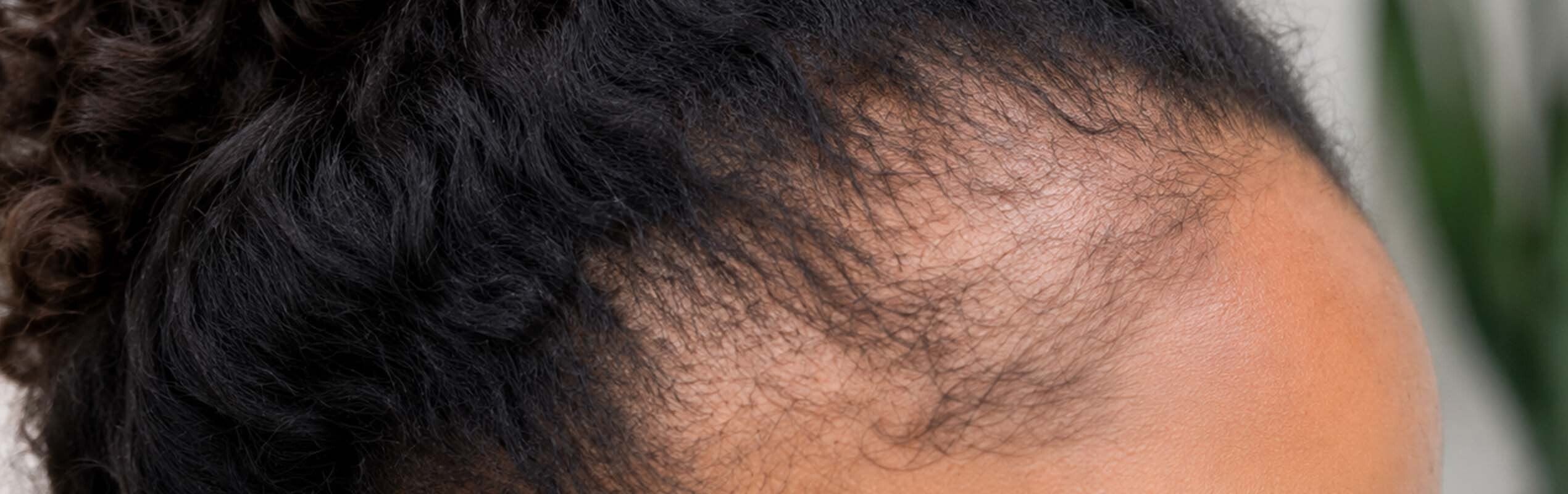
The most common presentation is thinning or loss of hair along the frontal hairline and at the temples, producing the characteristic "fringe sign," a band of fine, sparse hairs retained at the very front of the hairline while density is reduced just behind it.
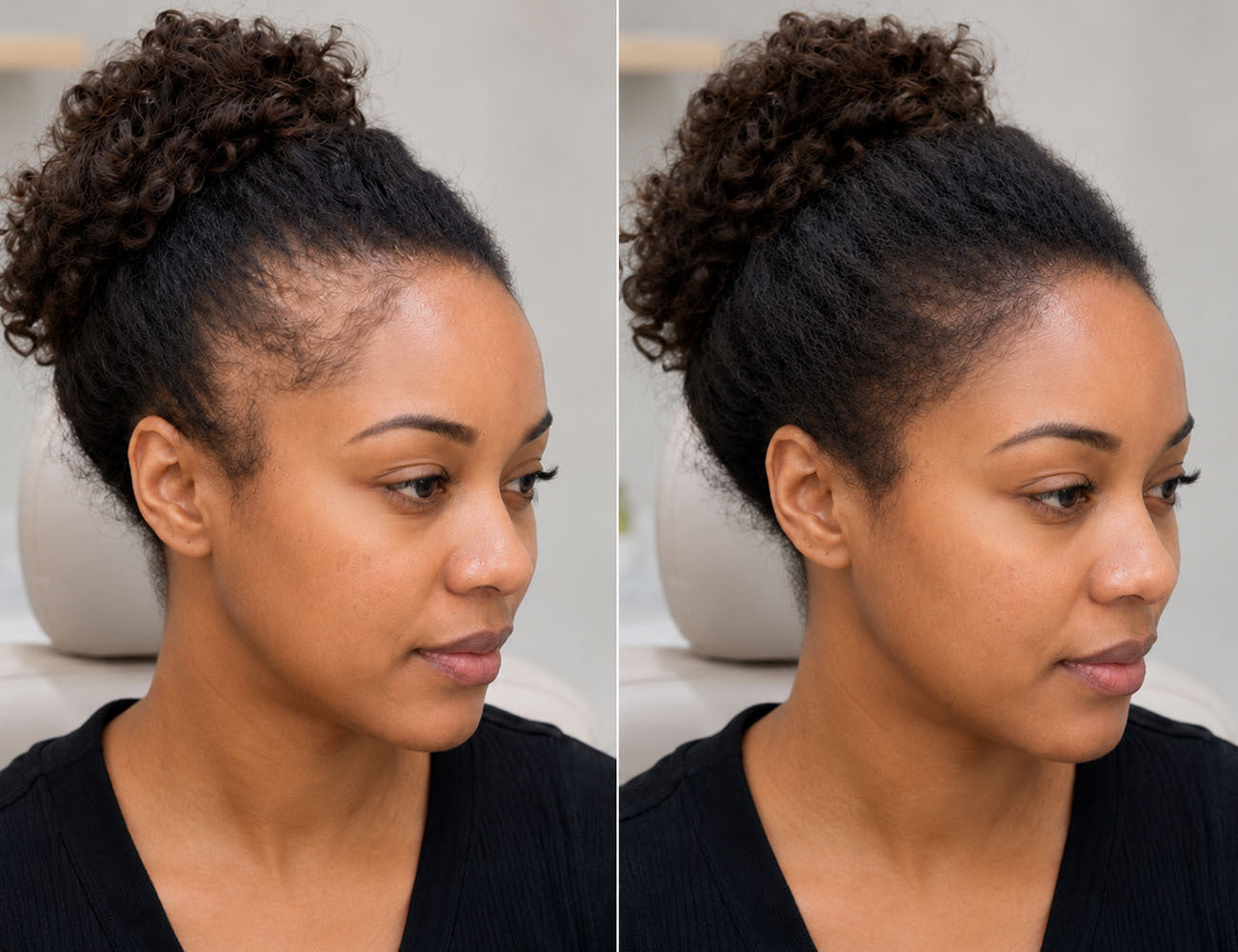
In its early stages, traction alopecia is non-scarring, meaning the follicles remain structurally intact and capable of regrowth once the causative tension is removed. However, sustained or repeated traction causes progressive follicular damage that, if unaddressed, leads to permanent scarring and irreversible destruction of the affected follicles. This transition from a reversible to an irreversible process is the single most important concept in traction alopecia: early intervention, before scarring develops, gives by far the best chance of full recovery.
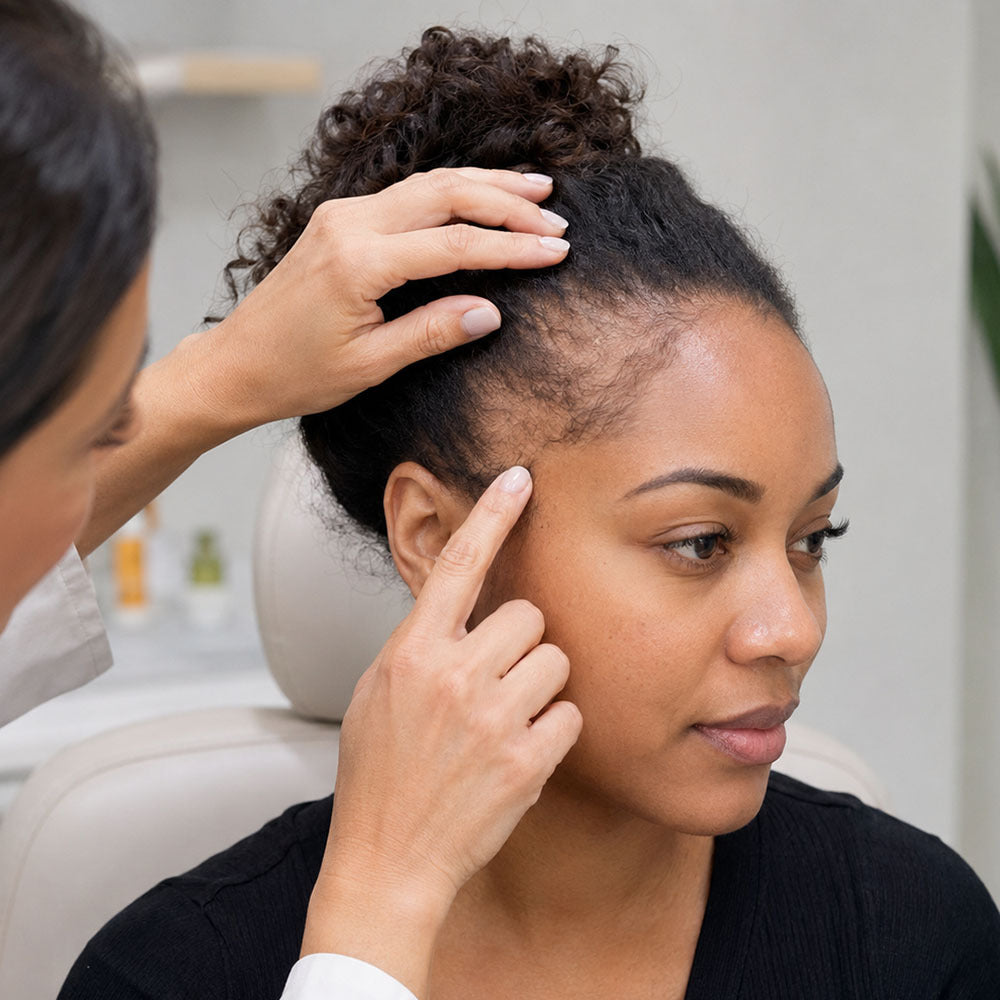
Diagnosis is made through a detailed history of hairstyling practices and a careful clinical examination, supported by dermoscopy to assess follicular density and identify early signs of scarring. HairMetrix and Global Hair Device imaging is taken as part of the initial assessment. Where the picture is ambiguous, a scalp biopsy can confirm the diagnosis. Distinguishing traction alopecia from frontal fibrosing alopecia, alopecia areata, and female or male pattern hair loss is essential, as each requires a different management approach.
Why Treating Acne Early Matters
Acne is not simply a cosmetic concern. Its impact on self confidence, mental health, and quality of life can be profound, particularly for teenagers and young adults, but also for the many adults who find it affects them at an age when they feel they should have left it behind. Early, effective intervention prevents scarring and significantly reduces the long-term burden of the condition.
What are my treatment options for traction alopecia?
- Haircare practice modification
- Topical and oral hair growth treatments
- PRF, mesotherapy, polynucleotides
- HairMetrix monitoring
- Hair transplant where appropriate
The single most important intervention is identifying and modifying the hairstyling practice responsible for the tension before further follicular damage occurs. Dr Ophelia provides personalised, non judgemental guidance on reducing tension at the scalp, including looser styling, alternating hairstyles and parting positions to redistribute tension, modifying or pausing the use of extensions, weaves, or chemical relaxers, and adjusting braiding or styling techniques. It is given the same clinical weight as any prescription treatment, because without it medical therapy alone will not resolve the underlying cause.
Alongside haircare modification, targeted medical treatments support follicle recovery where follicles remain viable. Topical formulations containing minoxidil (over the counter or stronger bespoke formulation), and in selected patients finasteride and melatonin, can be prescribed. Oral treatments, including low dose oral minoxidil and finasteride, may also be considered depending on severity. These are most effective in early to moderate traction alopecia, where follicles have not yet been permanently destroyed by scarring.
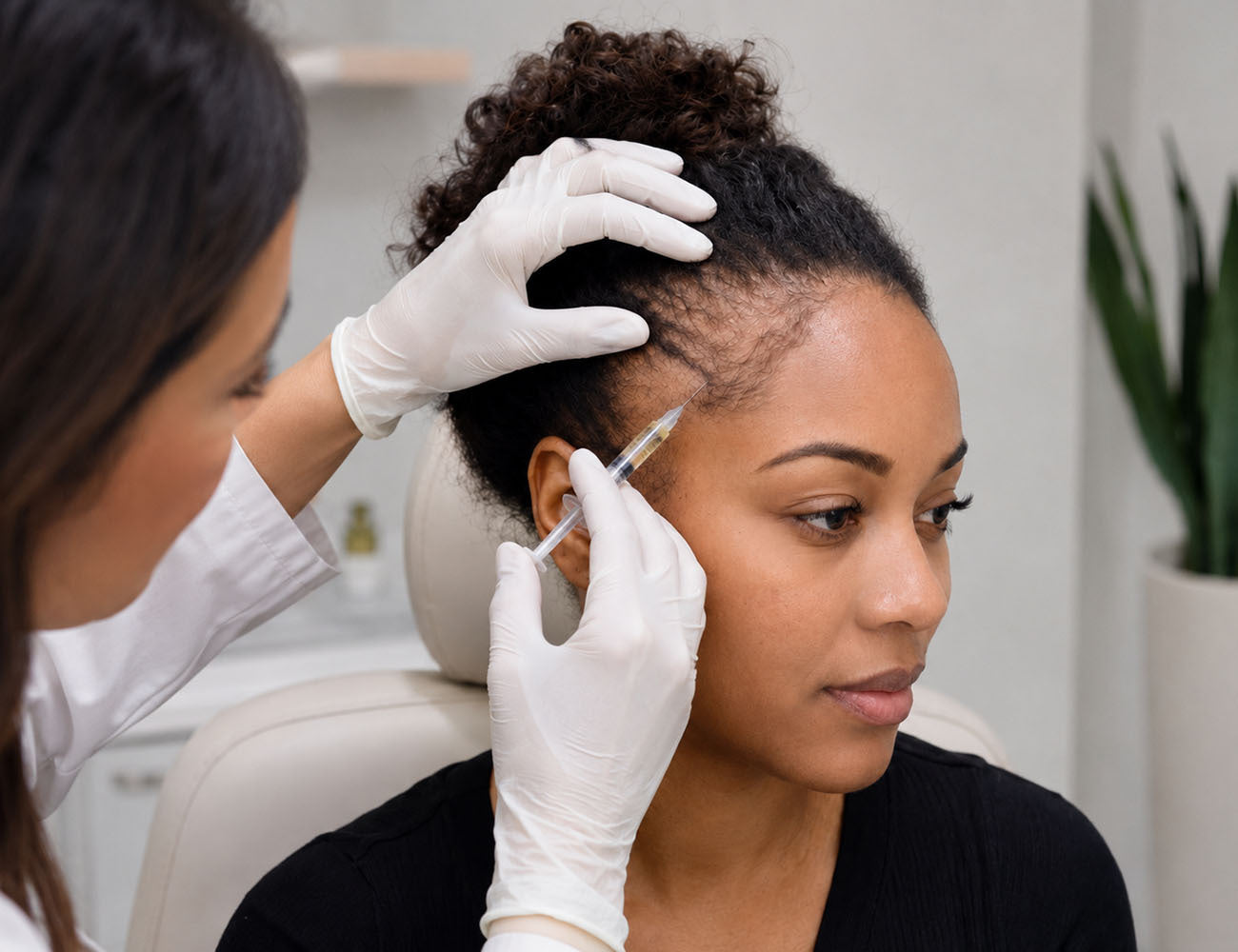
In clinics regenerative treatments are incorporated where appropriate. Platelet rich fibrin (PRF) therapy uses growth factors derived from the patient's own blood to stimulate follicle activity and improve scalp vascularity. Dutasteride mesotherapy delivers a targeted treatment directly into the scalp at the follicle level. Polynucleotide (PDRN) treatments support follicle repair and scalp health at a cellular level.
Every patient is monitored using HairMetrix and the Global Hair Device, providing objective measurement of hair density and follicle calibre at every visit. In patients with established, scarred traction alopecia where regrowth is no longer achievable, hair transplantation can restore density to the affected hairline or temples. Dr Ophelia works in direct collaboration with a plastic surgeon to offer hair transplantation within the same clinical pathway, an integrated dermatologist and plastic surgeon-led service that remains rare in the UK, allowing patients to move from specialist diagnosis through medical treatment to surgical restoration within a single, coordinated team.
Why should I see Dr Ophelia Veraitch for traction alopecia treatment in London?
- Consultant dermatologist, PhD in hair follicle bioengineering. Founder of UCLH tertiary hair clinic
- Every hair patient seen directly by Dr Ophelia. No junior delegation, full personal continuity of care
- HairMetrix and Global Hair Device. Objective monitoring at every visit
- Joint dermatologist and plastic surgeon hair transplant pathway. A genuinely rare model in the UK
As a Consultant Dermatologist with a PhD in Hair Follicle Bioengineering and the founder of the tertiary Hair Clinic at University College London Hospitals (UCLH), Dr Ophelia Veraitch understands the hair follicle at academic and clinical levels, and brings this expertise to every traction alopecia patient at whatever stage they present.
Every hair patient is seen and managed directly by Dr Ophelia herself, rather than being delegated to a nurse, trichologist, or junior team member. This matters in traction alopecia, where diagnosis, the treatment plan, and monitoring all depend on nuanced, individualised clinical judgement. Her haircare advice is informed, practical, and free of judgement, recognising that hairstyling practices are often rooted in cultural identity and personal preference, so that advice ignoring this is unlikely to be followed.
For patients whose traction alopecia has progressed to established scarring, Dr Ophelia offers a hair transplant pathway delivered jointly with a plastic surgeon, a combined dermatologist and plastic surgeon model that remains genuinely uncommon in the UK. It means patients at any stage, from early and fully reversible to established and scarred, can be managed within a single, coordinated pathway, with HairMetrix and Global Hair Device imaging used to track progress.
HELP
Frequently Asked Questions - Traction Alopecia Treatment
The fringe sign is a narrow band of fine, sparse hairs retained along the very front edge of the hairline while density is reduced just behind it. It helps distinguish traction alopecia from frontal fibrosing alopecia and pattern hair loss.
Yes, in its early stages. While follicles have not yet been scarred, traction alopecia is fully reversible once the responsible hairstyling practice is modified or stopped. Once follicles are permanently scarred, the hair loss becomes irreversible with medical treatment alone.
Styles applying sustained, repeated tension carry the highest risk: tight ponytails and buns, cornrows and braids close to the scalp or combined with extensions, weaves and sew-in extensions, dreadlocks, and clip-in or tape-in extensions. It is also recognised in Sikh men who tie and twist their uncut hair beneath a turban.
Diagnosis is based on a detailed history of hairstyling practices and a clinical examination, supported by dermoscopy to assess follicular density and signs of scarring; a scalp biopsy confirms it where uncertain. Distinguishing traction alopecia from frontal fibrosing alopecia, alopecia areata, and pattern hair loss is essential.
Effective management reduces ongoing tension: looser hairstyles, particularly at the hairline and temples; varying partings and the direction of pull; reducing high tension styles such as tight braids, weaves, and extensions; rest periods; and caution with chemical relaxers or heat styling.
For early to moderate traction alopecia where follicles remain viable, topical minoxidil, and in some cases finasteride and melatonin, can support regrowth once tension is addressed. In-clinic platelet rich fibrin (PRF) therapy, dutasteride mesotherapy, and polynucleotide treatments further stimulate follicle activity, most effective alongside modification of the hairstyling practice.
Yes, where traction alopecia has progressed to established, permanent scarring and medical treatment can no longer restore density. Healthy follicles are relocated to the hairline or temples, only once the causative tension is fully addressed. Dr Ophelia offers this jointly with a plastic surgeon.
Once tension is modified and treatment started, early improvement such as reduced shedding and fine new hairs is typically seen within three to six months, with more substantial density gains over six to twelve months. Progress is tracked at every visit using HairMetrix and the Global Hair Device.
Not inherently, but it can become permanent if the causative tension continues unaddressed and the affected follicles scar. Early stage traction alopecia treated before scarring has an excellent prospect of full recovery; established, scarred traction alopecia is permanent in the affected areas and requires hair transplantation to restore density.
Hairdressers and trichologists are not medically qualified and cannot diagnose traction alopecia with certainty, distinguish it from frontal fibrosing alopecia, perform a scalp biopsy, or prescribe medical treatments. A Consultant Dermatologist can diagnose accurately, prescribe the full range of topical and regenerative treatments, and coordinate hair transplantation. As the window for full reversibility is time limited, prompt specialist diagnosis is the single most important step a patient can take.