Tinea Capitis
What is tinea capitis and what causes it?
- Fungal scalp infection
- Most common in children
- Kerion can cause permanent scarring
- Accurate diagnosis essential
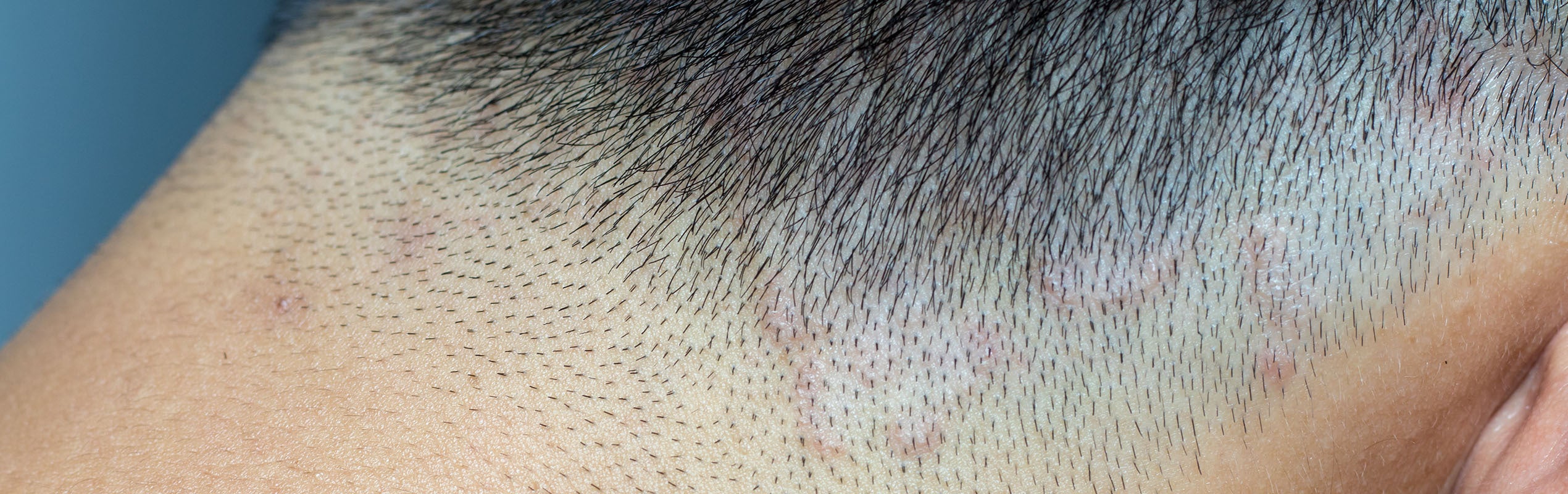
Tinea capitis is a fungal infection of the scalp caused by dermatophyte fungi that invade the hair shaft and skin. It is one of the most common dermatological infections in children, particularly between three and fourteen, though it can occasionally occur in adults, especially those immunosuppressed. The infection is transmitted through direct contact with an infected person or animal, or through contaminated objects including combs, hats, pillowcases, and towels, making it common in households, schools, and nurseries.
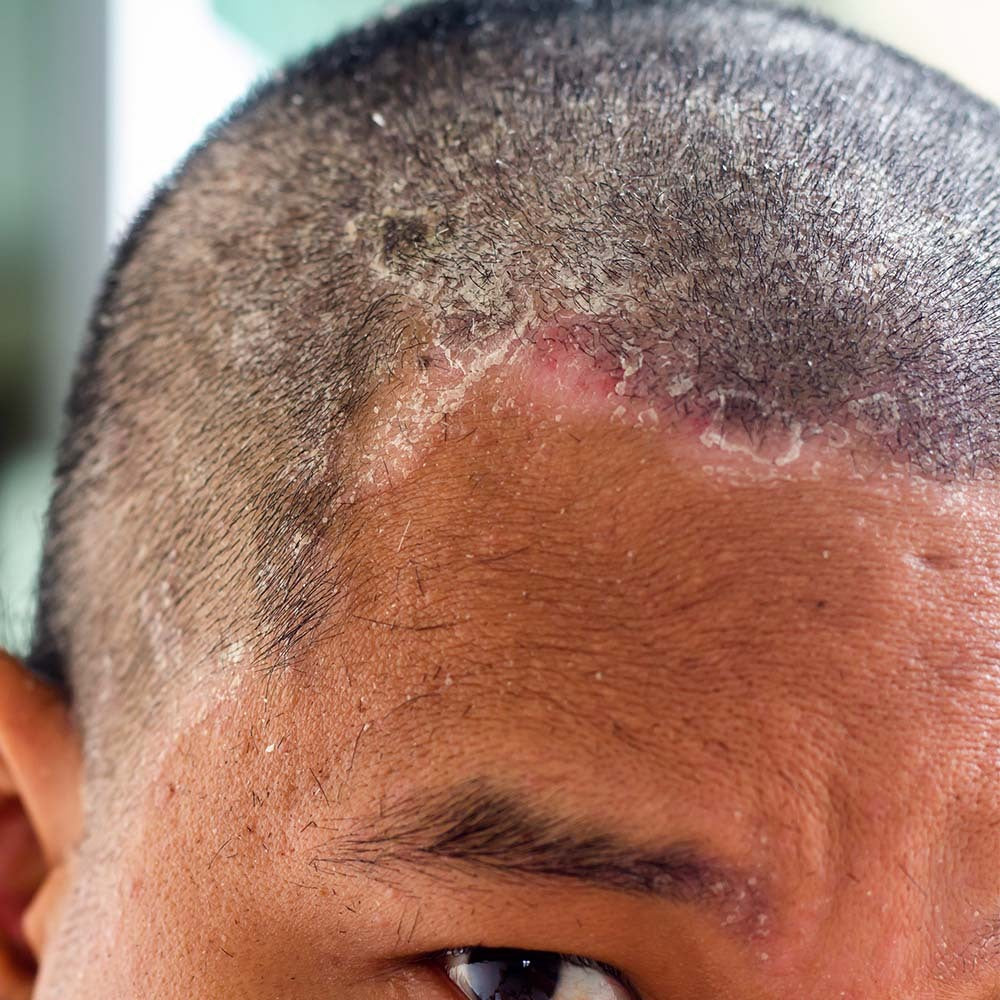
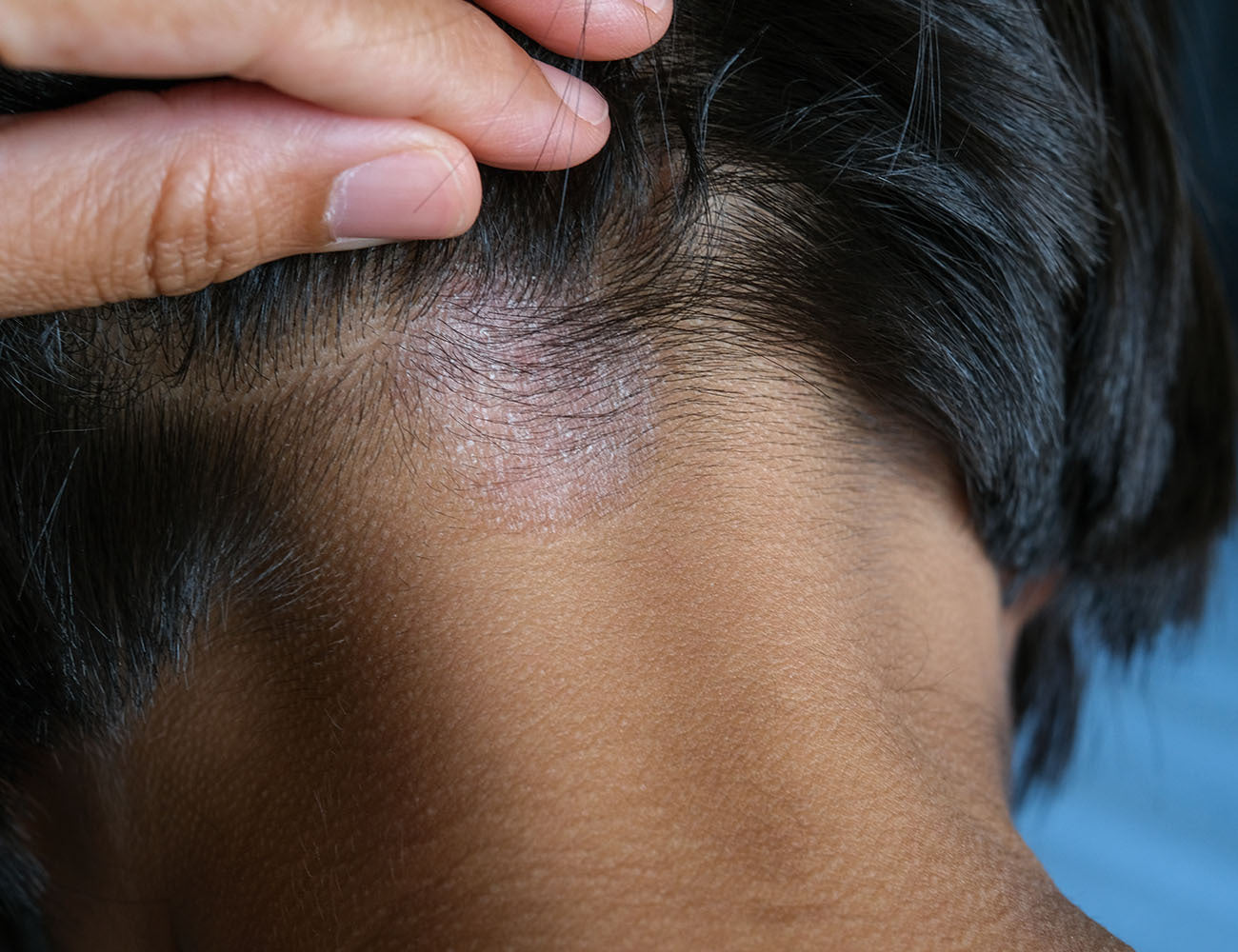
The clinical presentation varies depending on the causative organism and the individual's immune response. Common presentations include patches of fine scaling with broken off hairs, producing apparent hair thinning with a "black dot" appearance where hair shafts have fractured at skin level; smooth, well defined areas of hair loss; and diffuse scaling that can resemble dandruff or seborrhoeic dermatitis. A more severe reaction, known as a kerion, presents as a boggy, painful, pus filled swelling on the scalp, often with significant lymph node enlargement in the neck. A kerion represents a more vigorous immune response and, if not treated promptly, carries a genuine risk of permanent scarring and irreversible hair loss, which is why prompt recognition of any inflammatory scalp swelling in a child is so important.
Tinea capitis can closely resemble several other causes of patchy hair loss and scalp scaling, including alopecia areata, seborrhoeic dermatitis, and, in some presentations, scarring alopecias. Distinguishing it from these conditions is essential, as misdiagnosis can result in inappropriate treatment, including topical corticosteroids, which can worsen a fungal infection and increase the risk of progression to a kerion. Diagnosis is supported by careful clinical examination, dermoscopy, and microbiological sampling, including scalp scrapings and hair pluck samples sent for fungal microscopy and culture, to identify the causative organism and confirm the diagnosis.
What are my treatment options for tinea capitis?
- Oral antifungal treatment
- Accurate microbiological diagnosis
- Household and contact screening
- HairMetrix monitoring of recovery
Tinea capitis requires oral antifungal treatment, as topical preparations alone cannot penetrate the hair shaft sufficiently to eradicate the infection. Dr Ophelia finds that tinea capitis responds reliably well to appropriately selected oral antifungal therapy, with the choice of medication, dose, and duration determined by the causative organism, the patient's age, and the severity.
Oral griseofulvin and oral terbinafine are the most commonly used treatments, typically continued for a number of weeks to fully clear the infection rather than only suppress it. Adjunctive antifungal shampoo is often used alongside oral treatment to reduce the fungal load on the scalp surface and limit transmission during treatment.
Accurate diagnosis underpins effective treatment: where tinea capitis is suspected, scalp scrapings and hair samples are taken for fungal microscopy and culture so the organism can be identified and the most appropriate antifungal agent selected. In cases presenting with a kerion, prompt oral antifungal medication is essential, and a short course of oral corticosteroid may be added to reduce inflammation and lower the risk of permanent scarring. Because tinea capitis is contagious, screening and where appropriate treating close household contacts, and identifying sources of transmission including pets, helps prevent reinfection or onward spread.
Recovery is monitored carefully throughout treatment. Dr Ophelia uses HairMetrix and the Global Hair Device to objectively measure hair density and follicle health as the infection clears. This helps distinguish expected, temporary hair loss from early signs that scarring may be developing, prompting a more proactive approach. In the rare cases where a kerion causes localised scarring, regenerative options can be considered to support hair density once the infection has resolved and the scalp is stable.
Why should I see Dr Ophelia Veraitch for tinea capitis treatment in London?
Consultant dermatologist, PhD in hair follicle bioengineering. Founder of UCLH tertiary hair clinic Every hair patient seen directly by Dr Ophelia. Full personal continuity of diagnosis and treatment HairMetrix and Global Hair Device. Objective monitoring of recovery and scarring risk Accurate fungal diagnosis. Avoiding the treatment delays that risk scarring
Speed and accuracy of diagnosis genuinely affect the outcome, as misdiagnosis or delayed recognition of an evolving kerion risks leaving a child with permanent, scarred hair loss that prompt antifungal treatment could have prevented. As a Consultant Dermatologist with a PhD in Hair Follicle Bioengineering and the founder of the tertiary Hair Clinic at University College London Hospitals (UCLH), Dr Ophelia Veraitch brings diagnostic precision and clinical experience in scalp disease to every case, confirming the diagnosis quickly and starting the right treatment without delay.
Every hair and scalp patient at Dr Ophelia's clinic, including children with tinea capitis, is seen and managed directly by Dr Ophelia herself rather than a nurse or junior team member. This matters particularly in paediatric scalp infections, where the presentation can be subtle and the threshold for suspecting a developing kerion must be low, so any change is recognised promptly by the same experienced clinician throughout.
Her approach combines accurate microbiological diagnosis with confident, appropriately dosed oral antifungal treatment, while recovery is tracked using HairMetrix and the Global Hair Device to give objective evidence of improvement and identify early any rare case where scarring is developing. Her aim is to resolve the infection quickly, protect the affected follicles, and give every family confident reassurance.
HELP
Frequently Asked Questions - Tinea Capitis Treatment
Yes. It spreads through direct contact with an infected person or animal, or through contaminated combs, hairbrushes, hats, pillowcases, and towels, and readily among young children in households, nurseries, and schools, so screening and, where appropriate, treating close household contacts and identifying any potential animal source is important.
A kerion is a severe inflammatory reaction presenting as a boggy, tender, pus filled swelling on the scalp, often with surrounding redness and enlarged lymph nodes. It carries a genuine risk of permanent scarring and irreversible hair loss if not treated promptly with oral antifungal medication, sometimes with a short course of oral corticosteroid, and should be assessed urgently.
No. Topical antifungal treatments cannot penetrate sufficiently into the hair shaft and follicle to eradicate the infection, so oral antifungal medication is required, with antifungal shampoo used alongside it as a supportive measure rather than a standalone cure.
The two most commonly used are griseofulvin and terbinafine, with the choice, dose, and duration depending on the dermatophyte species responsible, the patient's age and weight, and the severity. Treatment typically continues for several weeks, guided by the clinical picture and, where available, fungal culture.
In most cases, hair grows back fully once the infection resolves, as the hair loss in uncomplicated tinea capitis is typically temporary rather than permanent follicle damage. However, where a kerion has developed and not been treated promptly, scarring and permanent hair loss can occur, which is why early, accurate diagnosis is so important.
Diagnosis is suspected from the appearance of the scalp, typically scaling, hair breakage, and patchy hair loss, sometimes with the characteristic black dot appearance of fractured hair shafts. To confirm it, scalp scrapings and hair pluck samples are sent for fungal microscopy and culture, and dermoscopy can support the assessment.
Yes, although it is considerably less common than in children, and is more frequently seen in those who are immunosuppressed, in close contact with an infected child, or with risk factors that increase susceptibility. The presentation and treatment are broadly similar, though it can be overlooked in adults because it is less expected in this age group.
Oral antifungal treatment is typically continued for a number of weeks, often between six and twelve weeks depending on the medication and causative organism, and it is important to complete the full course even if symptoms improve earlier, as stopping prematurely increases the risk of relapse. Dr Ophelia monitors progress throughout using HairMetrix imaging.
Guidance depends on the circumstances and school policies, but once oral antifungal treatment has started, the risk of transmission reduces significantly and exclusion is not usually required. Practical hygiene measures such as avoiding the sharing of combs, hats, and pillows are recommended, and Dr Ophelia advises on screening household members if appropriate.
A GP can treat straightforward cases, but microbiological diagnosis, prompt recognition of a developing kerion, and management of complex or treatment resistant presentations benefit from specialist expertise. Misdiagnosis or treatment with topical corticosteroids, in the belief that it is eczema or seborrhoeic dermatitis, can worsen the infection and increase the risk of a kerion and permanent scarring.