
Seborrhoeic Dermatitis
BOOK A CONSULTATIONWhat is seborrhoeic dermatitis and what causes it?
- Common inflammatory scalp and skin condition
- Driven by Malassezia yeast overgrowth
- Affects scalp, face and body folds
- Can resemble scarring alopecia
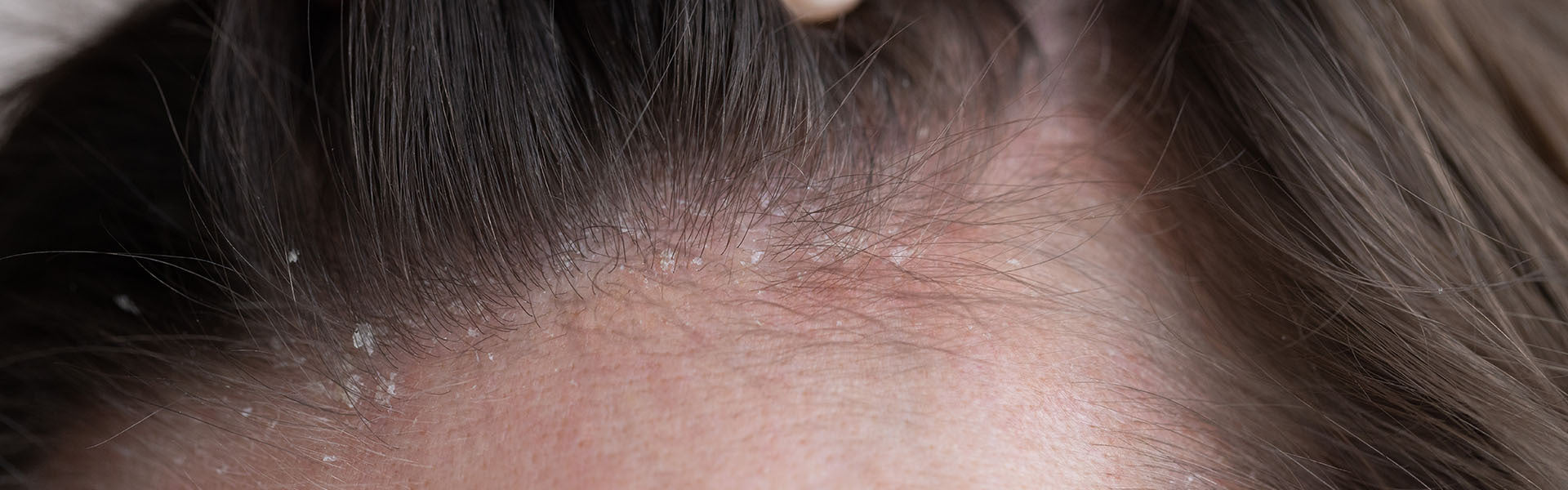
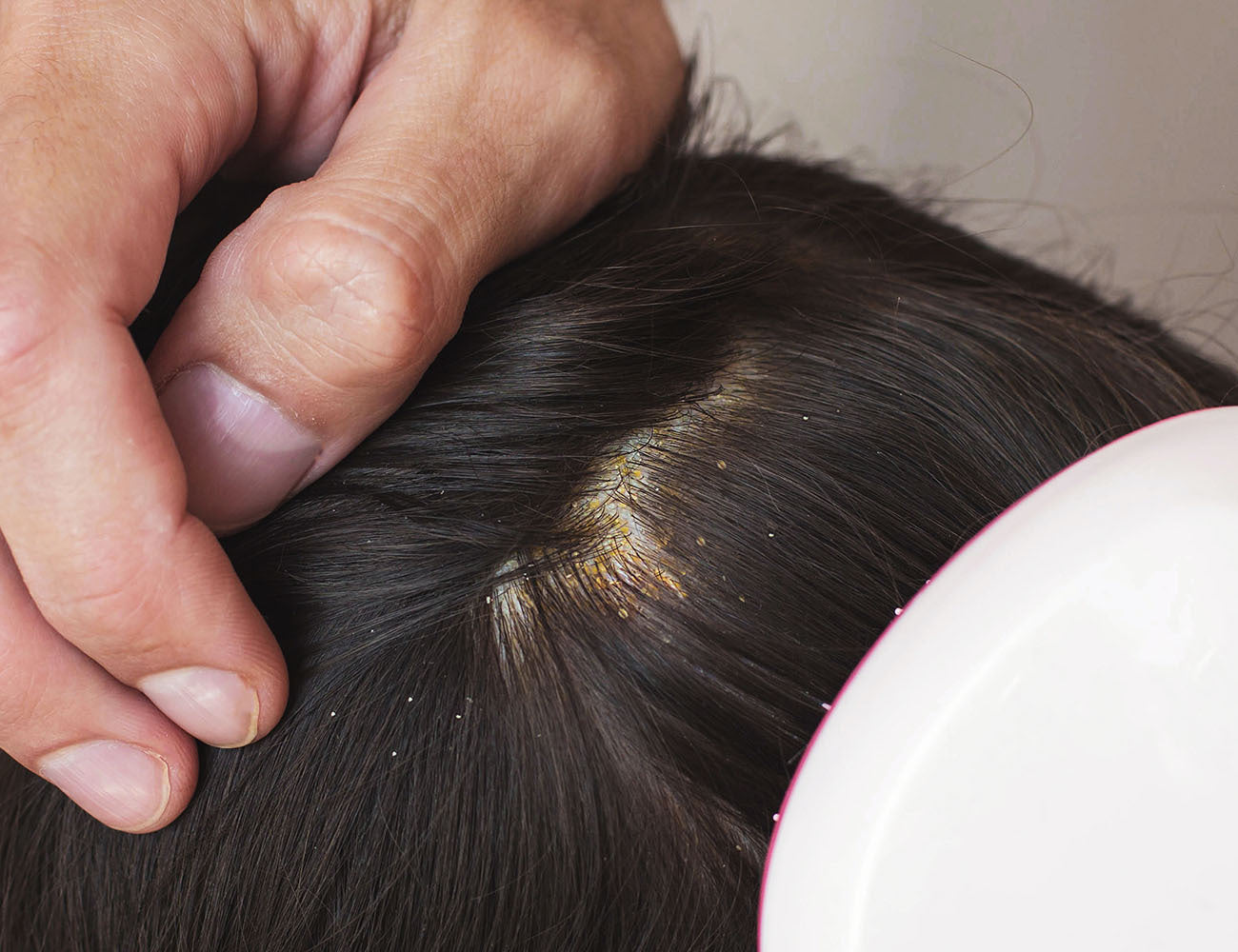
Seborrhoeic dermatitis is a common chronic inflammatory skin condition that causes red, flaky, and often itchy skin on the sebaceous (oil-producing) areas of the body. On the scalp, mild seborrhoeic dermatitis presents as dandruff, the familiar fine white or yellow flaking; more significant involvement produces thicker, greasier scale on a background of redness and can affect the frontal hairline, behind the ears, and the nape of the neck. Beyond the scalp, it commonly affects the central face, particularly the eyebrows, nasolabial folds, sides of the nose, and external ear canals, as well as the central chest and body folds. It can also affect infants, in whom it typically presents as a cradle cap.

The underlying mechanism involves an eczema-like inflammatory reaction to an overgrowth of Malassezia, a yeast that lives naturally on the skin of most adults. In susceptible individuals, Malassezia metabolises sebum and produces free fatty acids that disrupt the skin barrier and trigger an immune inflammatory response, producing the characteristic redness, scaling, and itch. Sebaceous gland activity explains why the condition favours oily areas, and it frequently worsens with increased sebaceous output, cold or dry weather, stress, fatigue, and immune suppression. Neurological conditions including Parkinson's disease are strongly associated with severe seborrhoeic dermatitis.
An important point is that seborrhoeic dermatitis of the scalp can closely resemble other, more serious conditions. Scalp psoriasis, frontal fibrosing alopecia, lichen planopilaris, and other scarring alopecias can all produce scalp scaling, redness, and inflammation that overlaps clinically with seborrhoeic dermatitis. In scarring alopecias in particular, the consequences of a missed diagnosis are irreversible, as the inflammatory process destroys hair follicles permanently if left untreated. Distinguishing these conditions requires the clinical experience, dermoscopic skill, and in some cases the scalp biopsy that a Consultant Dermatologist with specialist hair loss expertise can provide.
What are my treatment options for seborrhoeic dermatitis?
- Medicated shampoos and topicals
- Prescription anti-fungal and anti-inflammatory agents
- Scalp biopsy where needed
- HairMetrix monitoring
The first and most important step is establishing an accurate diagnosis. A thorough clinical examination, including dermoscopic assessment of the scalp, allows Dr Ophelia to confirm the diagnosis and, critically, to exclude the conditions that can mimic it. Where the picture is ambiguous or standard treatments have failed, a scalp biopsy provides histological confirmation and definitively guides treatment.
Once the diagnosis is confirmed, most patients respond well to a structured topical treatment plan. Medicated shampoos containing ketoconazole, selenium sulphide, zinc pyrithione, or coal tar target Malassezia directly and reduce the inflammatory response. For facial and body seborrhoeic dermatitis, topical antifungal creams and mild anti-inflammatory agents are used, with calcineurin inhibitors such as tacrolimus preferred for sensitive areas. For more significant or persistent disease, prescription-strength topical antifungals and short courses of topical corticosteroids are incorporated under medical supervision.
In clinic regenerative treatments add a dimension standard care does not routinely provide. Platelet rich fibrin (PRF) therapy delivers concentrated growth factors from the patient's own blood into the scalp, supporting follicle health and reducing inflammation. Dutasteride mesotherapy delivers a 5-alpha reductase inhibitor directly to the follicle with minimal systemic exposure, and polynucleotide (PDRN) treatments support cellular repair. These are most valuable in early to moderate disease where follicles remain viable.
Where seborrhoeic dermatitis is associated with hair thinning, shedding, or reduced density, objective monitoring with HairMetrix and the Global Hair Device is used to assess the impact and track recovery as the inflammation is controlled. Uncontrolled disease can contribute to telogen effluvium and, in susceptible individuals, may exacerbate an underlying predisposition to hair loss. Any coexisting hair loss condition is addressed alongside, and appropriate hair growth treatments can be incorporated once the primary condition is controlled.
Why should I see Dr Ophelia Veraitch for seborrhoeic dermatitis treatment in London?
- Consultant dermatologist, PhD in hair follicle bioengineering. Founder of UCLH tertiary hair clinic
- Distinguishes seborrhoeic dermatitis from scarring alopecia
- Scalp biopsy available where needed
- HairMetrix and Global Hair Device. Objective scalp and hair monitoring at every visit
- Holistic scalp health assessment. Coexisting hair loss identified and addressed
Seborrhoeic dermatitis of the scalp is one of the most common conditions for which patients self-treat with over-the-counter products for months or years without adequate improvement. The most clinically important reason to see a dermatologist with specialist hair loss expertise is the need to distinguish seborrhoeic dermatitis from scarring alopecias such as frontal fibrosing alopecia and lichen planopilaris, which look similar but cause irreversible hair loss if missed. Dr Ophelia's PhD in Hair Follicle Bioengineering, her experience founding and running the tertiary Hair Clinic at UCLH, and her daily practice in scarring and non-scarring alopecias mean she is exceptionally well placed to make this distinction accurately and promptly.

Where the examination leaves diagnostic uncertainty, she performs a scalp biopsy to establish a definitive histological diagnosis, confirming whether a scalp condition is seborrhoeic dermatitis, psoriasis, a scarring alopecia, or another condition. Where hair thinning or shedding is present, HairMetrix and the Global Hair Device provide objective data on hair density and follicle calibre at every visit, so any hair loss is identified and treated alongside the seborrhoeic dermatitis itself.
HELP
Frequently Asked Questions - Seborrhoeic Dermatitis Treatment
Dandruff is the mild form of seborrhoeic dermatitis affecting the scalp, producing fine white or yellow flaking without significant redness. Seborrhoeic dermatitis encompasses a broader spectrum, from mild dandruff through to thicker scale, redness, and itch, as well as involvement of the face, chest, and body folds. Both are driven by the same Malassezia yeast mechanism, though more significant disease typically requires prescription-strength therapies and a structured plan.
Seborrhoeic dermatitis does not directly destroy hair follicles, but significant inflammation can contribute to a telogen effluvium, an increased shedding triggered by inflammatory stress on the scalp. This is usually temporary and reverses once the condition is controlled. However, in patients with an underlying predisposition to female pattern hair loss, ongoing inflammation can accelerate existing thinning, which is why Dr Ophelia assesses scalp health and hair density together using HairMetrix and the Global Hair Device.
This is one of the most important questions in scalp dermatology, because several conditions that resemble seborrhoeic dermatitis, particularly frontal fibrosing alopecia and lichen planopilaris, cause permanent, irreversible hair loss if not treated promptly. Features that may suggest a more serious condition include a receding frontal or temporal hairline, loss of eyebrows, visible scarring or absence of follicular openings, or a lack of response to standard antifungal treatments. If any of these are present, specialist assessment with dermoscopy and, where needed, a scalp biopsy is essential.
Medicated shampoos contain active ingredients that target Malassezia and reduce inflammation, including ketoconazole, an antifungal with a strong evidence base; selenium sulphide; zinc pyrithione; and coal tar. The choice of shampoo, frequency, and application method are tailored to each patient, and Dr Ophelia provides a personalised scalp care plan rather than simply recommending a product, which significantly improves adherence and outcomes.
Yes. Facial seborrhoeic dermatitis commonly affects the eyebrows, nasolabial folds, sides of the nose, central forehead, external ear canals, and the skin behind the ears, producing red, scaly patches often mistaken for dry skin, eczema, or rosacea. Facial skin is more sensitive, so topical antifungal creams and calcineurin inhibitors are preferred rather than the stronger agents used on the scalp.
Common triggers include stress and fatigue, cold or dry weather, changes in season, illness, hormonal fluctuations, certain skincare and hair products that disrupt the skin barrier, and immune suppression from any cause. Identifying and managing individual triggers is part of Dr Ophelia's consultation, alongside topical treatments for active disease and maintenance therapy to reduce flares.
A scalp biopsy is not required for most patients with straightforward seborrhoeic dermatitis, where the clinical and dermoscopic picture is clear. It is recommended where the diagnosis is uncertain, where features suggest a possible scarring alopecia, where the condition has not responded as expected, or where the picture raises concern about a different diagnosis. It is a minor procedure performed under local anaesthetic in clinics that provides definitive histological information to guide treatment.
Seborrhoeic dermatitis is a chronic condition that tends to persist long term, though its severity typically fluctuates. It cannot be permanently cured, but it can be effectively controlled with the right combination of maintenance treatments and trigger management. Many patients achieve excellent long-term control with a consistent regime of medicated shampoo, skincare, and topical treatments during flares.
The most important reason is accurate diagnosis. Seborrhoeic dermatitis can be confused with scalp psoriasis, contact dermatitis, and, most critically, scarring alopecias including frontal fibrosing alopecia and lichen planopilaris, which cause permanent hair loss if not treated promptly. A Consultant Dermatologist with specialist hair loss expertise can confirm the diagnosis, exclude more serious conditions, perform a scalp biopsy where needed, and prescribe the full range of topical and systemic treatments.