
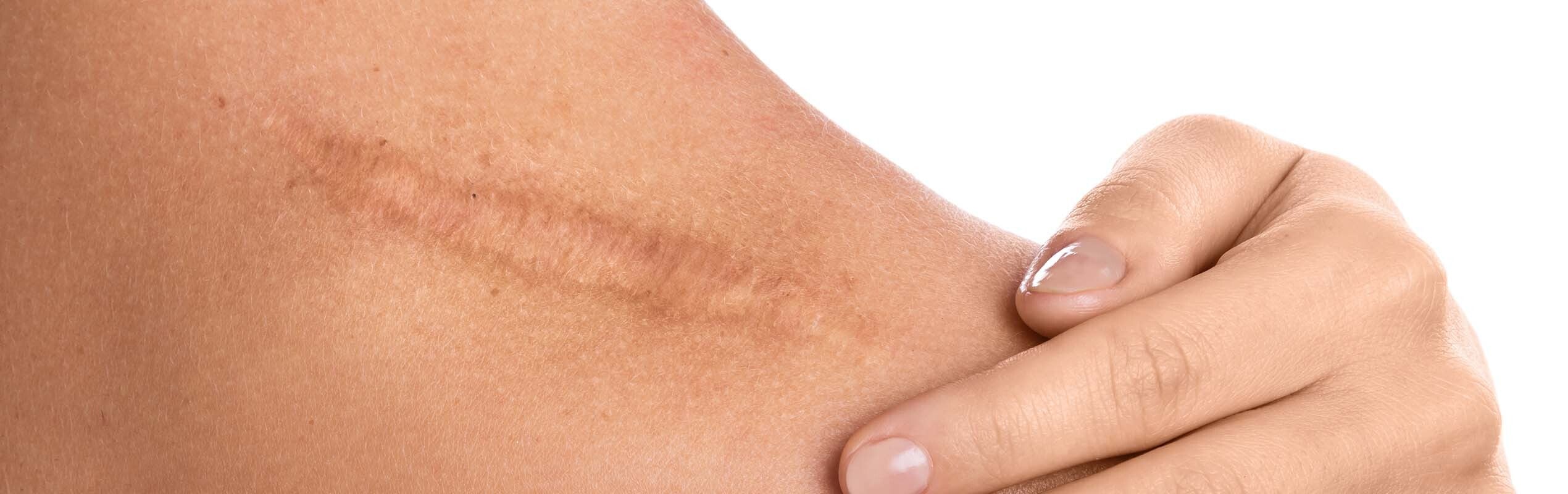
Hypertrophic And Keloid Scar
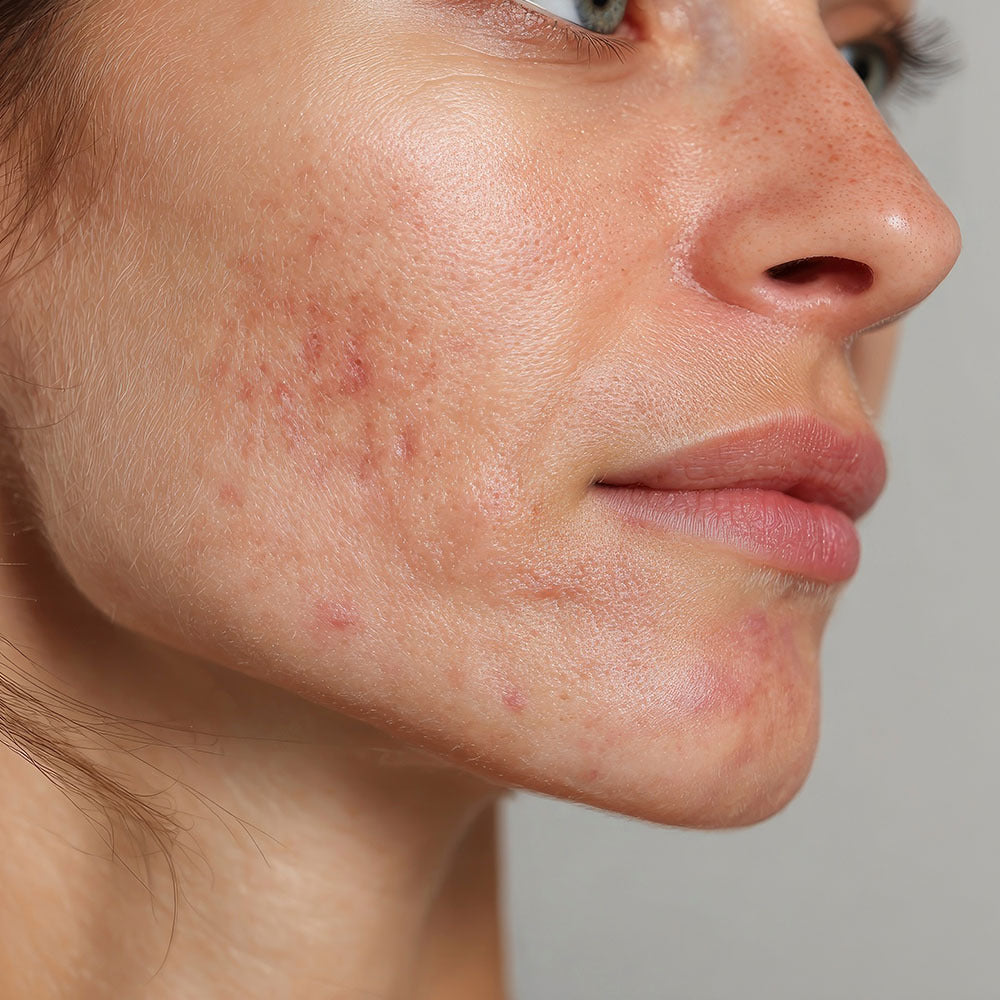
What is a hypertrophic or keloid scar?
- Raised, abnormal scar tissue
- Follows injury or surgery
- Hypertrophic vs keloid distinction matters
- Early treatment improves outcome
Hypertrophic and keloid scars are related but distinct forms of abnormal scarring, in which the skin's healing response produces excess collagen at the site of injury, surgery, or inflammation. A hypertrophic scar is raised, often red or pink, and can be itchy or tender, but stays within the boundaries of the original wound and tends to soften and flatten gradually over months to years, even untreated.
A keloid scar, by contrast, extends beyond the original wound margins, can continue to grow, is typically firmer and more persistently symptomatic, rarely improves without active intervention, and recurs more readily after simple excision. Distinguishing between the two matters because it affects both the natural course of the scar and the most appropriate treatment strategy.
Scarring of this type can follow any skin injury, including surgical incisions, traumatic wounds, burns, animal bites, piercings, vaccination sites, and acne lesions. Certain sites, including the chest, shoulders, upper back, and earlobes, are particularly prone, due to the tension and movement at these locations. Genetic predisposition plays a significant role, and darker skin tones carry a higher incidence of keloid scarring. Inflammation during wound healing is a key driver of abnormal scarring, so managing it actively rather than passively influences the outcome.
An important, often overlooked principle is that the underlying cause should also be addressed where relevant: for scarring from acne, eczema, or another inflammatory condition, ongoing inflammation keeps generating new scarring, so treating the active condition and the scar tissue together gives a far better long-term outcome than treating the scar in isolation.
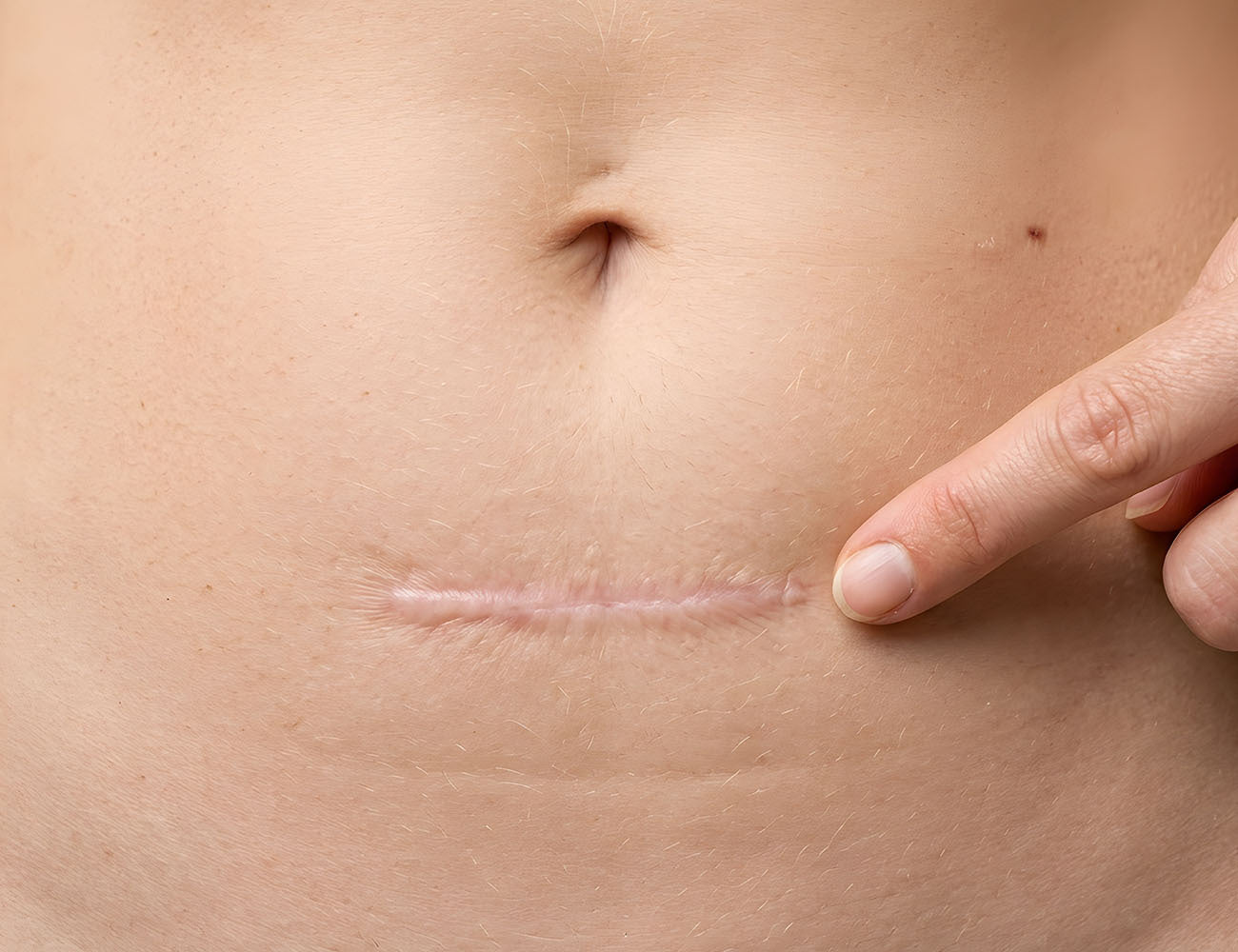
What are my treatment options for hypertrophic and keloid scars?
- Early post-healing laser intervention. Nd:YAG, PicoSure Pro, Fraxel Dual, Clear + Brilliant
- Steroid and polynucleotide scar injections
- Bespoke prescription scar serums
- Underlying condition treated alongside the scar
Effective scar treatment is most successful when it begins early and combines complementary technologies for each scar's features. Dr Ophelia starts laser treatment as soon as a wound or surgical incision has fully healed, using the active remodelling phase before the abnormal features of a hypertrophic or keloid scar become established.
A combination of laser technologies is typically used, each targeting a different component of the scar. The Nd:YAG vascular laser targets the redness and blood vessel formation of an actively forming scar. PicoSure Pro, a picosecond laser, addresses any pigmentation or discoloration within or around the scar, particularly in darker skin tones or sun-exposed scars. For texture, Fraxel Dual resurfacing laser or Clear + Brilliant remodel collagen, soften raised or thickened areas, and improve contour, the choice depending on the depth, thickness, and maturity of the scar.
For more raised, firm, or symptomatic scars, particularly established keloids, intralesional treatment is added alongside laser therapy. Steroid injections into the scar tissue reduce collagen production and can significantly flatten and soften raised scars when given at the right stage and repeated at appropriate intervals. Polynucleotide (PDRN) injections support tissue repair and improve the quality of the healing skin at a cellular level, and are increasingly used alongside steroid therapy where skin quality and texture, rather than scar height, are the primary concern.
For established, large, or treatment-resistant keloid scars, surgical re-excision may be considered. Because removing a keloid alone frequently triggers an even larger recurrence, re-excision is only undertaken alongside an adjuvant treatment to suppress the abnormal healing response typically intralesional steroid injections into the surgical site after excision, or, in more resistant cases, a short course of superficial radiotherapy, which has a well-established evidence base for reducing recurrence. Whether re-excision is appropriate is judged case by case, based on the scar's size, location, and treatment history.
Medical skincare plays an important supporting role. Dr Ophelia recommends over-the-counter products including silicone-based preparations and broad-spectrum sun protection, alongside bespoke compounded prescription scar serums where a targeted approach is needed for pigmentation, persistent redness, or skin sensitivity. For acne-related scarring, she treats the active acne directly, including with AviClear, which controls breakouts and independently improves scarring. The same principle applies to eczema and psoriasis: treating the underlying condition is an integral part of the plan, not a separate issue.
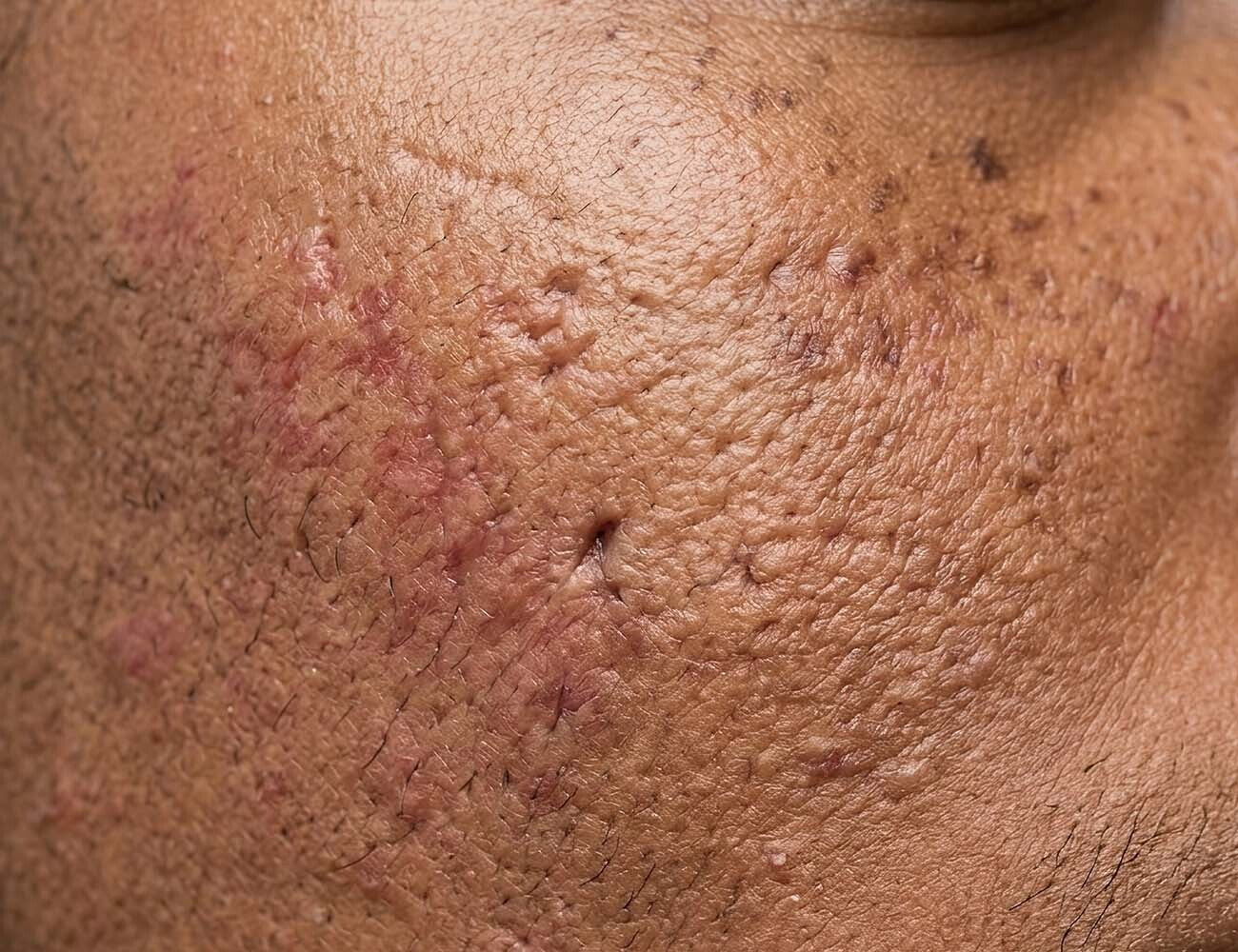
Why should I see Dr Ophelia Veraitch for hypertrophic and keloid scar treatment in London?
- Award-winning consultant dermatologist. Full medical and procedural scar treatment expertise
- Full in-house laser suite. Nd:YAG vascular laser, PicoSure Pro, Fraxel Dual, Clear + Brilliant under one roof
- International plastic surgeon referrals. Early post-surgical scar laser protocols
- Treat the underlying cause. Acne, eczema and psoriasis managed alongside scarring
Very few Consultant Dermatologists in the UK have a full in-house selection of lasers, and Dr Ophelia Veraitch's clinic is unusual in offering the Nd:YAG, PicoSure Pro, Fraxel Dual, and Clear + Brilliant lasers together under one roof, so the vascular, pigmentary, and textural components of a scar can be treated in a single, coordinated programme rather than referring patients between providers.
Her early-intervention approach, starting laser treatment as soon as a wound or surgical incision has fully healed rather than waiting many months, reflects her clinical judgement and a growing body of evidence, and has produced strong results across many cases, including a high-profile scar case following a dog bite injury. She is also regularly referred to patients by plastic surgeons based overseas, where early laser treatment after surgery is more established practice than among UK surgical teams.
As a Consultant Dermatologist, Dr Ophelia brings a depth of understanding of skin healing, inflammation, and scar biology that informs every treatment decision, from selecting laser settings to deciding when intralesional steroid or polynucleotide injection will add benefit a medical foundation combined with hands-on procedural expertise that is genuinely uncommon.
For patients whose scarring is connected to an ongoing condition such as acne, eczema, or psoriasis, her ability to diagnose and treat that condition alongside the visible scar is a significant advantage over providers who can only address the scar itself. Treating active acne, including with AviClear acne laser, while addressing existing scarring produces a more complete and lasting improvement than treating either in isolation.
HELP
Frequently Asked Questions - Hypertrophic and Keloid Scar Treatment
A hypertrophic scar stays within the original wound boundaries and softens over time, even untreated, whereas a keloid grows beyond the margins and rarely improves on its own, which is why keloid excision is combined with adjuvant steroid injection or radiotherapy.
As soon as the wound or surgical incision has fully healed and closed, rather than the many months traditionally advised, the active remodelling phase can guide the scar towards a flatter, less red, less pigmented result before it becomes fixed.
High-tension sites such as the chest, shoulders, upper back, and earlobes are most prone, and keloid scarring, which is partly genetic, occurs more frequently in darker skin tones.
The Nd:YAG vascular laser targets redness and blood vessels, PicoSure Pro (a picosecond laser) targets pigmentation, and Fraxel Dual and Clear + Brilliant remodel collagen to soften raised tissue and improve texture; used together they treat every component.
Yes, intralesional corticosteroid injections reduce collagen production and can significantly flatten and soften raised hypertrophic and keloid scars, and are often combined with laser therapy.
Polynucleotide (PDRN) injections deliver molecules derived from purified DNA fragments that support cellular repair, and are used alongside steroid injections and laser therapy where skin quality and texture are a concern.
Yes, with better long-term results than treating either alone. Dr Ophelia treats active acne directly, including with AviClear laser therapy; once it is inactive, Clear + Brilliant, vascular lasers, Fraxel Dual, VI PEEL, and chemical peels can improve acne scarring.
Yes, but the underlying eczema or psoriasis must be controlled first, which as a Consultant Dermatologist Dr Ophelia treats directly while addressing any resulting scarring or pigmentation with laser therapy.
No, older, mature scars can still respond to laser treatment, intralesional injections, and medical skincare, even years later, though improvement may be more gradual. Dr Ophelia assesses each scar individually.
Unlike an aesthetic clinic offering a single laser or injectable, a Consultant Dermatologist can diagnose and treat the underlying condition driving scarring, prescribe bespoke compounded scar serums, and give intralesional steroid injections in a medically supervised setting, addressing every component of a scar within one coordinated plan.