
Male Pattern Hair Loss
BOOK A CONSULTATIONWhat is male pattern hair loss and androgenetic alopecia?
- Most common cause of hair loss in men
- Affects 50% of men over 50
- DHT-driven follicle miniaturisation
- Treatable at all stages
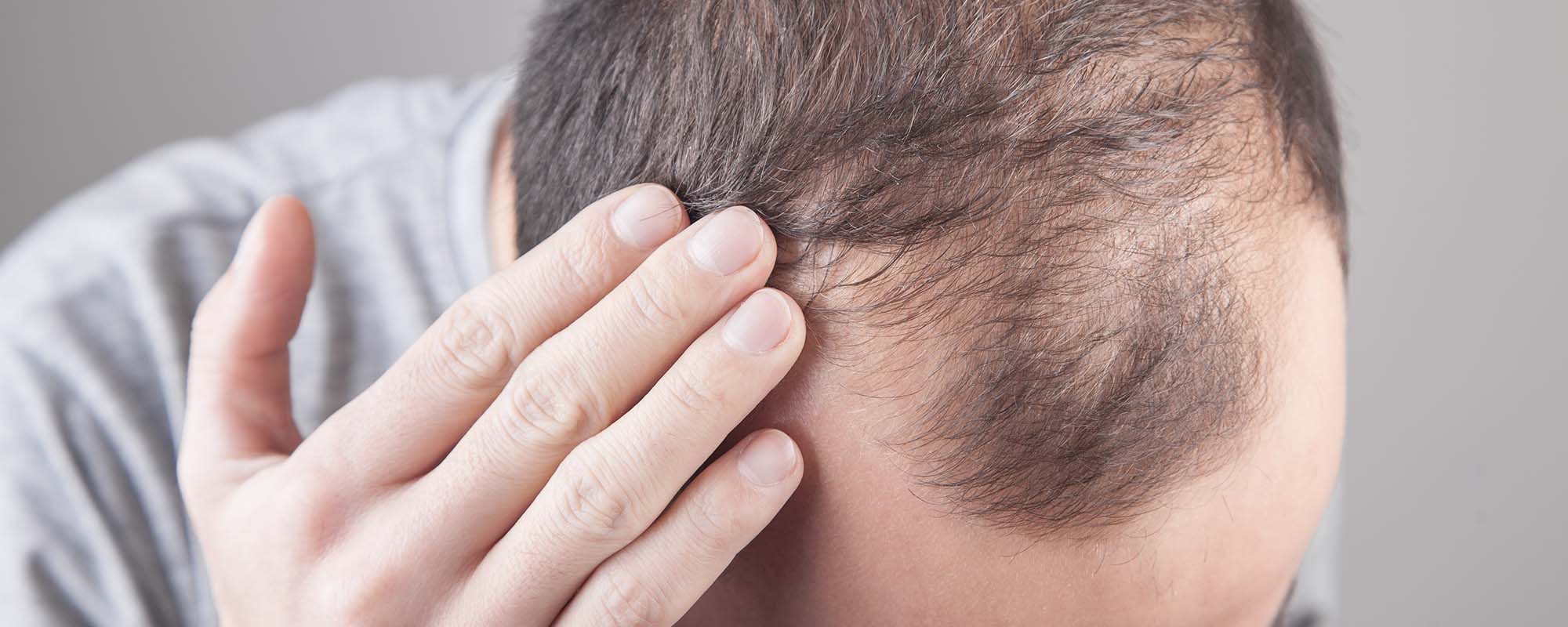
Male pattern hair loss (MPHL), also known as androgenetic alopecia, is the most common cause of hair loss in men, affecting about half of all men over fifty and many in their twenties and thirties. It arises from genetic predisposition and follicle sensitivity to dihydrotestosterone (DHT), a potent androgen derived from testosterone. In susceptible follicles, DHT shortens the growth cycle and miniaturises the follicle, producing progressively finer hairs until visible hair stops.

The pattern is characteristic, most commonly classified using the Norwood-Hamilton scale, typically beginning with recession at the temples and frontal hairline, progressing to crown thinning, and in advanced cases diffuse thinning across the vertex that merges with the hairline. Some men think diffusely rather than in the classic pattern, needing specialist assessment to distinguish from other causes.
Although genetic at its core, MPHL does not exist in isolation. Nutritional deficiencies, thyroid dysfunction, stress, androgenic medications, and scalp conditions such as seborrhoeic dermatitis can all accelerate it, so addressing these alongside the genetic cause produces better outcomes than DHT suppression alone. Loss that is atypical, or comes with scalp symptoms, significant shedding, or rapid progression, needs evaluation to exclude alopecia areata, telogen effluvium, or scarring alopecias.
Most importantly, early treatment produces significantly better results than treatment started later, because medical treatments preserve existing hair and prevent further miniaturisation but rarely restore a fully miniaturised follicle. Seeking assessment at the first signs of thinning or recession gives the best chance of maintaining density and slowing progression.
What are my treatment options for male pattern hair loss?
- Finasteride and dutasteride
- Oral and topical minoxidil
- PRF, mesotherapy, polynucleotides
- Bespoke compounded formulations
- HairMetrix and Global Hair Device monitoring
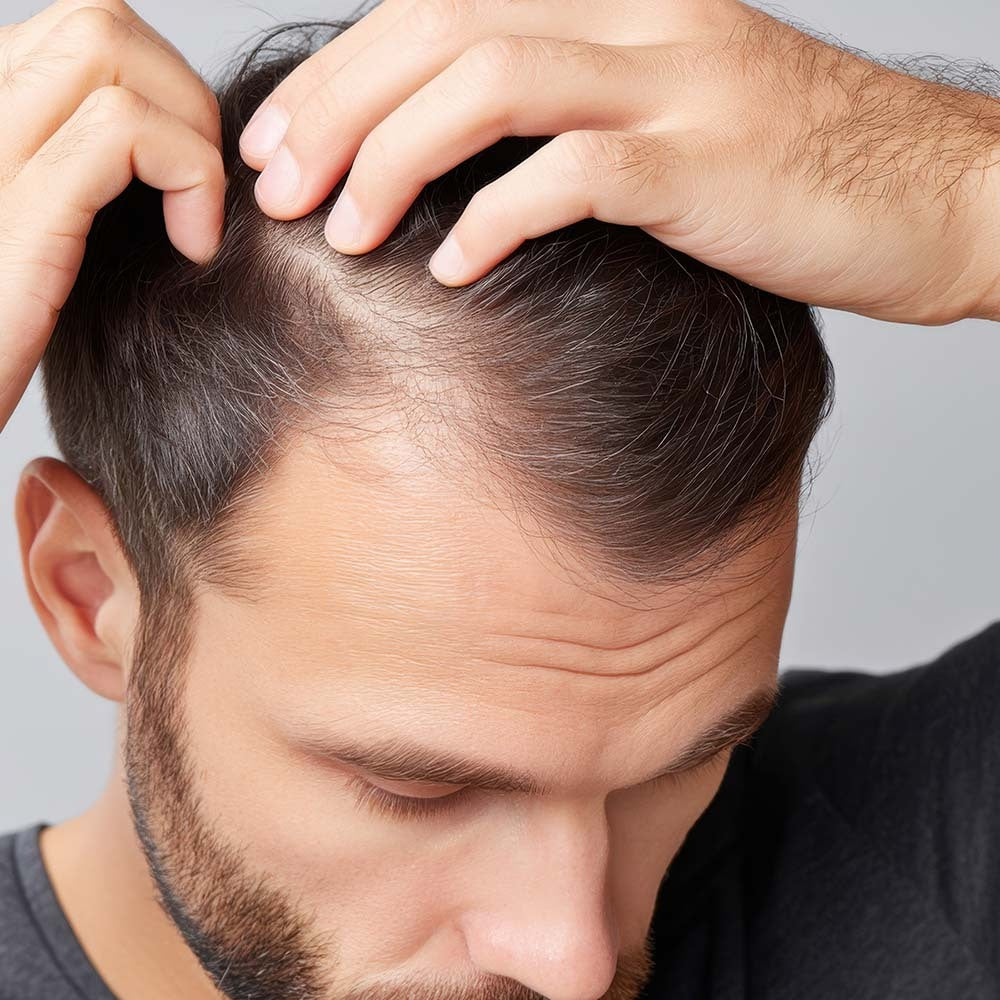
Effective treatment requires a personalised plan reflecting each patient's stage, rate of progression, scalp health, lifestyle, and goals, combining approaches that target the androgenetic process from several angles. Dr Ophelia develops bespoke strategies after a thorough consultation and scalp assessment, adjusting them promptly as needed.
Oral medications that suppress DHT are the cornerstone of treatment. Finasteride, a 5-alpha reductase inhibitor taken daily, reduces serum DHT with a well established evidence base for slowing progression and improving density. Dutasteride, a more potent dual inhibitor of type I and type II, reduces DHT more comprehensively with superior efficacy in studies, and is preferred when finasteride is insufficient, or first-line in rapidly progressive loss.
Low dose oral minoxidil is an important addition, promoting growth through mechanisms independent of DHT suppression and complementing finasteride or dutasteride rather than replacing them; topical minoxidil remains an option for those who prefer it. Where standard formulations irritate the scalp, bespoke compounded topicals can combine minoxidil with actives such as finasteride and melatonin, tailored to the patient's skin type.
In clinic regenerative treatments complement medical therapy for patients wanting to maximise results. Platelet-rich fibrin (PRF) therapy delivers growth factors from the patient's own blood to the scalp, stimulating follicle activity. Dutasteride mesotherapy delivers a potent inhibitor into the scalp for targeted DHT suppression with minimal systemic exposure, and polynucleotide (PDRN) treatments support follicle repair at a cellular level.
Progress is documented objectively at every visit using HairMetrix and the Global Hair Device, measuring density, shaft diameter, and miniaturisation. Because changes are gradual and hard to judge subjectively, this ensures any progression is answered promptly.
Why should I see Dr Ophelia Veraitch for male pattern hair loss treatment in London?
- Consultant dermatologist, PhD in hair follicle bioengineering. Founder of UCLH tertiary hair clinic
- Bespoke compounded formulations. Personalised beyond standard prescribing
- PRF, dutasteride mesotherapy, polynucleotides. Advanced in clinic treatments for MPHL
- HairMetrix and Global Hair Device. Objective monitoring at every visit
MPHL is extremely common, but the standard of care varies considerably. Many men spend years cycling through over-the-counter products, online prescriptions, and GP consultations without thorough assessment or the full range of treatments. Dr Ophelia Veraitch combines a PhD in Hair Follicle Bioengineering, founding and running the tertiary Hair Clinic at University College London Hospitals (UCLH), and a private practice offering the full range of medical, compounded, and regenerative treatments.

Her approach goes beyond pattern recognition. She takes a detailed history, reviews relevant medications and hormonal factors, assesses scalp health for co-existing conditions, and establishes an objective baseline with HairMetrix and the Global Hair Device, so every modifiable contributor is addressed, not just the genetic cause.
The breadth of options sets her clinic apart. She prescribes both finasteride and dutasteride by clinical profile, combines oral inhibitors with oral minoxidil and bespoke compounded topicals, and adds in-clinic regenerative treatments such as PRF, dutasteride mesotherapy, and polynucleotides where they add benefit.
Many of her male patients previously tried finasteride through a GP or online provider, found the response disappointing, and assumed nothing more could be done. In most cases, a more thorough assessment and comprehensive strategy produces a significantly better result, with monitoring to prove it is working.
HELP
Frequently Asked Questions — Male Pattern Hair Loss Treatment
Male pattern hair loss can begin any time after puberty; many men notice a receding hairline or crown thinning in their twenties, and by fifty about half are affected. Earlier onset often means faster progression, so starting treatment sooner preserves more hair.
DHT, or dihydrotestosterone, is a potent androgen produced from testosterone by the enzyme 5-alpha reductase. In genetically predisposed men, scalp follicles are sensitive to DHT, which shortens the growth phase until visible hair stops. Reducing DHT is therefore the basis of the most effective treatments, finasteride and dutasteride.
Both inhibit the 5-alpha reductase enzyme that converts testosterone to DHT, but differ in potency. Finasteride reduces serum DHT by about seventy percent; dutasteride, inhibiting both type I and type II, reduces it by about ninety percent, with superior efficacy in studies. Dr Ophelia will advise which suits you.
Sexual side effects including reduced libido, erectile dysfunction, and reduced ejaculatory volume are the most commonly discussed concerns; trial data suggests these occur in a minority of patients and are reversible on stopping in most cases. Post finasteride syndrome remains under debate, and Dr Ophelia discusses the evidence openly before treatment.
Yes. Low dose oral minoxidil offers systemic growth stimulation that complements DHT suppression, working independently of DHT by prolonging the anagen phase. It is typically used alongside finasteride or dutasteride, the combination producing better outcomes than either alone.
These are advanced in clinic regenerative treatments that complement medical therapy. PRF uses growth factors from the patient's own blood to stimulate follicles; dutasteride mesotherapy delivers a potent DHT-suppressing agent into the scalp with minimal systemic exposure; and polynucleotide (PDRN) treatments support follicle repair at a cellular level.
Male pattern hair loss is a progressive, genetic condition, so long-term treatment is required to maintain results. If DHT suppressing medication is stopped, DHT returns to baseline and miniaturisation resumes, bringing a gradual return of hair loss over 12 to 24 months. Once density is achieved, ongoing treatment is usually well tolerated as maintenance.
It depends on the extent of loss and whether viable follicles remain. Medical treatment best preserves existing hair and is less effective at restoring follicles lost for many years, but even in advanced loss it can preserve remaining hair and improve density where miniaturisation is partial. Where its scope is limited, hair transplantation can be discussed.
Trichologists are not medically qualified and cannot diagnose conditions, interpret blood tests, prescribe medications, or perform in-clinic procedures. A Consultant Dermatologist is a fully qualified medical doctor with specialist training in skin and hair disorders who can prescribe finasteride, dutasteride, and oral minoxidil, perform in-clinic regenerative treatments, and exclude other medical causes of hair loss. For progressing loss, or when men want the full range of evidence-based options, specialist dermatological care is the appropriate route.
Medical treatments typically take three to six months to produce visible improvement, with the best results at twelve months and beyond. Often the first sign that treatment is working is stabilisation of hair loss rather than regrowth, which is itself a meaningful outcome, and HairMetrix and the Global Hair Device detect these objective changes at every visit before they are clearly visible.