
Lichen Planopilaris (LPP)
BOOK A CONSULTATIONWhat is lichen planopilaris (LPP)?
- Scarring inflammatory hair loss
- Permanent if untreated
- Related to frontal fibrosing alopecia
- Early diagnosis critical
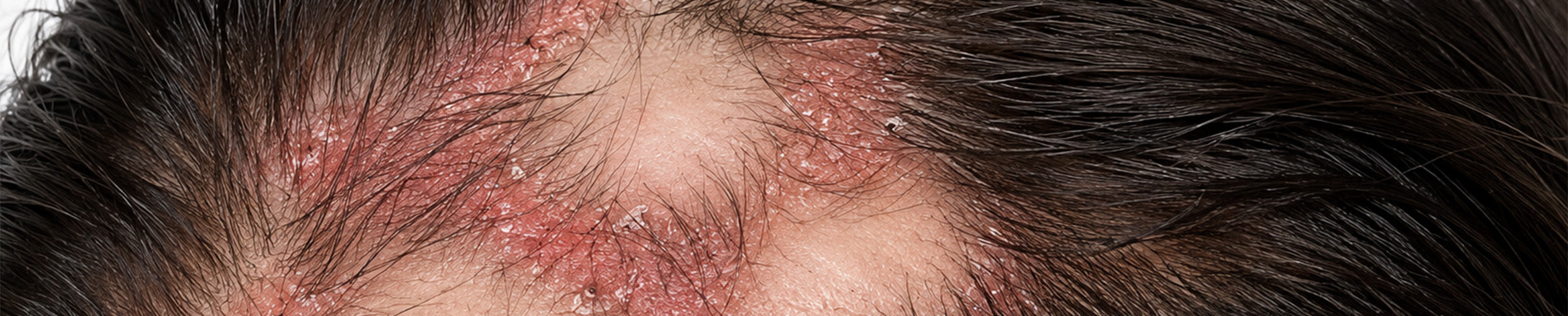
Lichen planopilaris (LPP) is a rare but serious inflammatory condition that causes scarring hair loss. It belongs to the family of lymphocytic cicatricial alopecias, in which the immune system attacks the hair follicle, causing irreversible destruction and replacement with fibrous scar tissue if untreated during the active phase. LPP is closely related to frontal fibrosing alopecia (FFA), considered by many a variant of the same condition, and both fall within the spectrum of lichen planus, which can also affect the skin, nails, and mucous membranes.

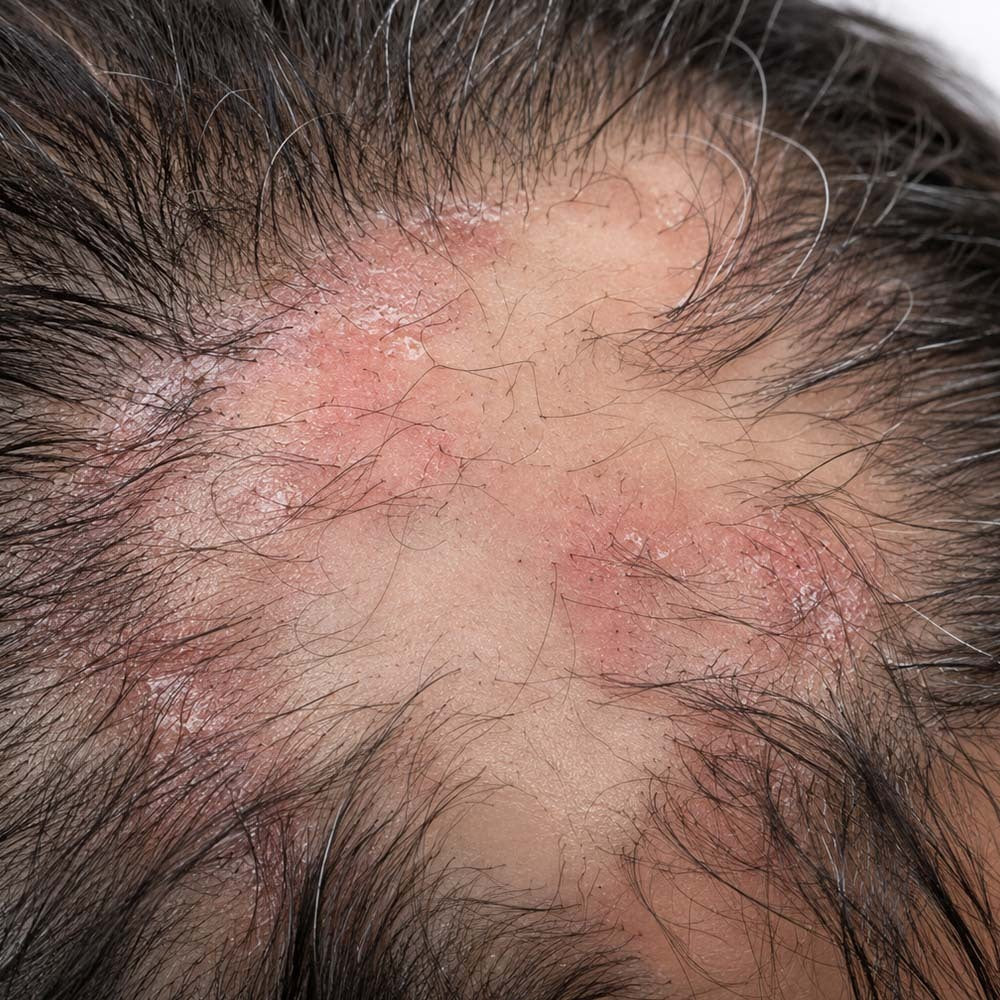
LPP most commonly affects the scalp, causing patchy scarring hair loss with perifollicular redness, scaling, and inflammation. Symptoms vary: some experience itching, burning, tenderness, or pain, while others have little discomfort, delaying recognition. The patchwork distribution and gradual progression mean early changes are easily missed, making specialist assessment essential for anyone with unexplained patchy loss and scalp symptoms.
The exact cause is not fully understood but is thought to involve a T-lymphocyte mediated attack on the follicle, triggered by genetic susceptibility combined with environmental or immune factors. Unlike non-scarring hair loss, LPP permanently destroys the follicle in affected areas, so hair lost to scarring cannot regrow. LPP can enter a natural period of quiescence, sometimes called burning out, but this is unpredictable and cannot substitute for active treatment during the inflammatory phase, when the window for preserving follicles is open.
Diagnosis is made through clinical history, scalp examination, and dermoscopy. Where uncertain, or to assess active inflammation versus scarring, a scalp biopsy provides definitive histological confirmation.
What are my treatment options for lichen planopilaris?
- Anti-inflammatory topicals and orals
- Bespoke hair growth tonics
- PRF, mesotherapy, polynucleotides
- HairMetrix and Global Hair Device monitoring
- Latest evidence-based approaches
The goal of treatment is to suppress inflammation as promptly as possible, halting follicle destruction before irreversible scarring occurs. Because follicles lost to scarring cannot be recovered, early intervention best preserves density.
Anti inflammatory treatment forms the cornerstone of management. Topical high potency corticosteroids and calcineurin inhibitors such as tacrolimus suppress local inflammation, and intralesional corticosteroid injections target active sites. For widespread, rapidly progressive, or treatment-resistant disease, systemic oral medications are required: hydroxychloroquine, which has a well-established role; tetracycline class antibiotics including lymecycline and doxycycline for their anti-inflammatory properties; and metformin, which has emerging evidence. Oral corticosteroids may be used for acute flares.
Alongside this, Dr Ophelia incorporates hair growth supporting therapies that go beyond what most dermatologists offer for LPP. Bespoke compounded tonics containing finasteride, melatonin, and minoxidil are prescribed where viable follicles remain, and oral spironolactone and oral minoxidil are considered based on each patient's hormonal profile. Vitamin and nutritional supplementation is added where deficiencies are identified, alongside anti-inflammatory treatment.
In clinic regenerative treatments add a dimension standard care does not routinely provide. Platelet rich fibrin (PRF) therapy delivers concentrated growth factors from the patient's own blood into the scalp, supporting follicle health and reducing inflammation. Dutasteride mesotherapy delivers a 5-alpha reductase inhibitor directly to the follicle with minimal systemic exposure, and polynucleotide (PDRN) treatments support cellular repair. These are most valuable in early to moderate disease where follicles remain viable.
All patients with LPP are monitored at every visit using HairMetrix and the Global Hair Device, giving objective, high resolution measurements of hair density, shaft diameter, and follicle status over time. This is essential where changes in activity are subtle and accurate data is needed to judge whether treatment is working. In patients who reach genuine burned out stability, hair transplantation may be considered following careful assessment.
Why should I see Dr Ophelia Veraitch for lichen planopilaris treatment in London?
- Consultant dermatologist, PhD in hair follicle bioengineering. Founder of UCLH tertiary hair clinic
- Internationally current in hair research. Rapid access to new treatments in a private specialist setting
- Bespoke tonics and regenerative treatments. Going beyond standard dermatological care
- HairMetrix and Global Hair Device. Objective disease monitoring
In LPP the gap between average and specialist care can be wide, with direct consequences for how much hair a patient retains. As an award winning Consultant Dermatologist with a PhD in Hair Follicle Bioengineering and founder of the tertiary Hair Clinic at University College London Hospitals (UCLH), Dr Ophelia Veraitch has dedicated her career to scarring and non-scarring hair loss at the highest level. She regularly receives referrals from fellow dermatologists for complex or treatment-resistant cases.

A key advantage is her ability to act quickly on new evidence. Because her independent private practice is not constrained by NHS formulary restrictions or institutional delays, she can incorporate a promising new approach for appropriate patients without waiting for guidelines to catch up.
Beyond standard anti-inflammatory management, Dr Ophelia adds bespoke compounded hair growth tonics and nutritional supplementation; regenerative treatments including PRF, dutasteride mesotherapy, and polynucleotides; and oral therapies including spironolactone and oral minoxidil. These reflect her commitment to giving each patient every tool for preserving their hair.
Monitoring with HairMetrix and the Global Hair Device ensures decisions are guided by data rather than clinical impression alone. Many of her patients have previously seen multiple practitioners without adequate control; her goal is to identify what has not been addressed and give each patient the most complete management their condition can receive.
HELP
Frequently Asked Questions - Lichen Planopilaris Treatment
LPP and FFA are closely related scarring alopecias sharing the same mechanism of immune mediated follicle destruction, and are considered variants of the same condition by many. The main distinction is distribution: LPP causes patchy scarring across the scalp, while FFA predominantly affects the frontal and temporal hairline, eyebrows, and facial hair.
Follicles fully destroyed by scarring cannot regenerate, so loss in scarred areas is permanent. Where follicles remain viable and inflammation is suppressed, hair can be preserved and density may improve with hair-growth-promoting therapies — which is why early treatment matters.
LPP is diagnosed through clinical history, scalp examination, and dermoscopy, with features including perifollicular scaling, perifollicular erythema, and absent follicular openings; where uncertain, a scalp biopsy provides definitive confirmation. Dr Ophelia uses HairMetrix and the Global Hair Device for an objective baseline.
Oral treatments are used in more active, widespread, or treatment-resistant disease. Hydroxychloroquine has a well established role and is often first line; tetracycline class antibiotics including lymecycline and doxycycline are used for their anti-inflammatory properties; metformin has emerging evidence; and oral corticosteroids give rapid control in acute flares.
In clinic regenerative treatments include platelet-rich fibrin (PRF) therapy, using growth factors from the patient's own blood; dutasteride mesotherapy, delivering a 5-alpha reductase inhibitor with minimal systemic exposure; and polynucleotide (PDRN) treatments. These are most valuable in early to moderate disease.
Bespoke compounded hair growth tonics are topical formulations containing prescription-strength finasteride, melatonin, and minoxidil at therapeutic levels not available in standard products. They support follicle health and optimise density in viable areas alongside anti-inflammatory treatment, with nutritional supplementation added where relevant.
LPP can enter a period of natural quiescence, sometimes called burning out, but this is unpredictable and the permanent loss by that point cannot be controlled without active treatment. Relying on spontaneous remission to delay treatment is inadvisable, as every month of untreated inflammation causes further irreversible destruction.
Transplantation is not appropriate while LPP is actively inflamed, as transplanted follicles are unlikely to survive. In patients genuinely stable for a sustained period, typically at least one to two years without progression, transplantation may be considered to restore density in scarred areas. Dr Ophelia assesses suitability carefully and refers to surgeons with scarring alopecia expertise.
LPP is a complex scarring alopecia requiring accurate diagnosis, the full range of systemic and topical treatments, in-clinic regenerative procedures, and long-term objective monitoring. A general dermatologist seeing LPP infrequently may lack the experience to manage treatment-resistant disease, access to newer approaches including metformin, PRF, and dutasteride mesotherapy, and objective monitoring with HairMetrix and the Global Hair Device. Dr Ophelia's expertise and independent private practice offer care not available in most general settings.
In a private specialist practice, decisions are not constrained by NHS formulary restrictions, referral delays, or limited appointments. Dr Ophelia can incorporate new evidence-based treatments as they emerge, prescribe bespoke compounded formulations, and see patients at the frequency their condition requires. For LPP, where the pace of treatment directly affects how much hair is preserved, this depth can make a meaningful clinical difference.