
Frontal Fibrosing Alopecia (FFA)
BOOK A CONSULTATIONWhat is frontal fibrosing alopecia (FFA)?
- Scarring hair loss at the frontal hairline, eyebrows and facial hair
- Most common in postmenopausal women
- Early diagnosis essential
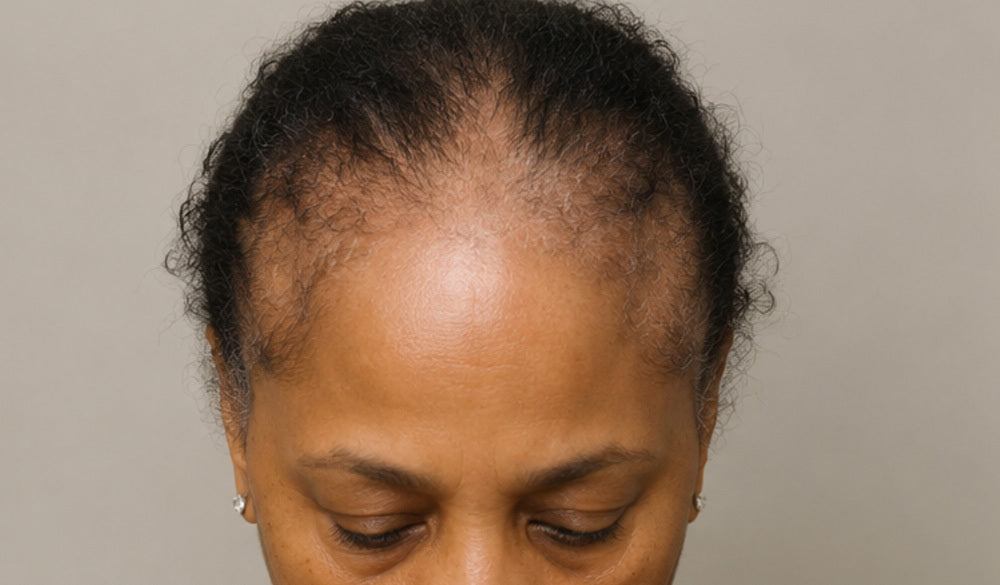
Frontal fibrosing alopecia (FFA) is a form of scarring hair loss that causes progressive recession of the frontal and temporal hairline, loss of eyebrows, and in some patients loss of eyelashes, facial hair, and body hair. It belongs to the same family as lichen planopilaris: persistent immune mediated inflammation destroys the follicles and replaces them with fibrous scar tissue, producing permanent hair loss if not treated early.

It most commonly affects postmenopausal women, though it is increasingly seen in premenopausal women and, less often, in men. Emerging research suggests environmental factors, including contact sensitisers in sunscreens and facial skincare, alongside hormonal factors such as declining oestrogen at the menopause.
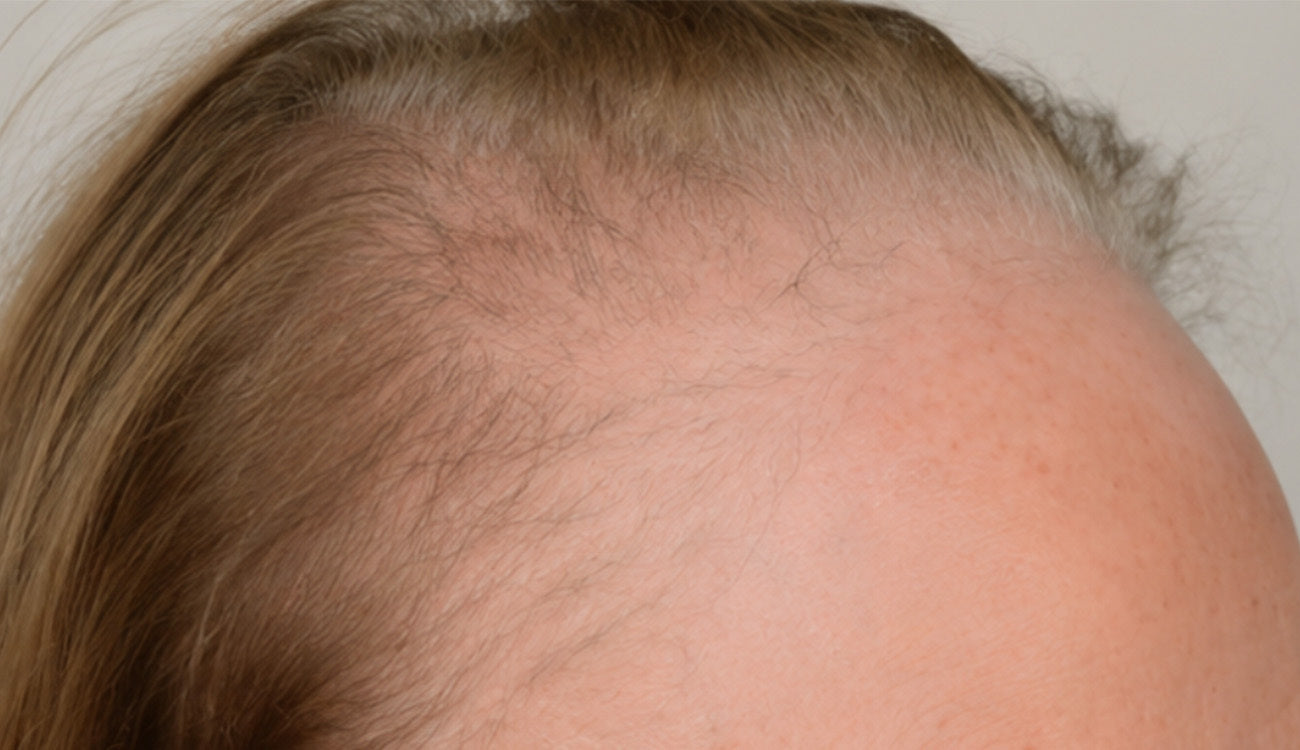
Early signs are subtle and frequently missed: a band of pale, slightly shiny skin at the receding hairline, loss of follicular openings, and perifollicular redness or scaling. Eyebrow thinning or loss often precedes visible recession and is an important early warning sign. Because the scarring is irreversible, any woman noticing a receding hairline, unexplained eyebrow thinning, or scalp symptoms should seek specialist assessment without delay.
FFA is diagnosed through detailed clinical history, scalp examination, dermoscopy, and in selected cases scalp biopsy. Distinguishing active, progressive disease from burned-out, stable FFA is clinically important because it directly informs treatment and the urgency of intervention.
What are my treatment options for frontal fibrosing alopecia?
- Anti-inflammatory medications metformin, lymecycline, hydroxychoroquine
- Compounded hair growth tonics, PRF, mesotherapy, polynucleotides
- Patch testing for contact allergens
- HairMetrix monitoring
The primary goal is to suppress inflammation, halt progression, and preserve as many follicles as possible before irreversible scarring occurs. Because scar tissue cannot be reversed, treatment in active disease is urgent; where disease is stable, the focus shifts to monitoring for reactivation and restoring density.
Anti inflammatory treatment forms the backbone of management. Topical therapies include high potency corticosteroids and calcineurin inhibitors such as tacrolimus, with intralesional corticosteroid injections to target inflamed zones. For more active disease, oral treatments are often required: hydroxychloroquine, with a well established role in FFA; tetracycline class antibiotics including lymecycline and doxycycline; metformin, with emerging evidence where there are metabolic risk factors; and oral corticosteroids for rapidly progressive disease.
Alongside this, Dr Ophelia incorporates therapies to support hair growth: bespoke compounded topical formulations containing finasteride, melatonin, and minoxidil at therapeutic concentrations not available in standard products, and oral treatments including spironolactone, finasteride, and oral minoxidil based on the patient's hormonal profile and goals. These are used alongside anti-inflammatory treatment to preserve density where follicles remain viable.
In-clinic regenerative treatments add a further dimension: platelet rich fibrin (PRF) therapy uses growth factors from the patient's own blood to stimulate follicle activity and improve scalp vascularity; dutasteride mesotherapy delivers a potent anti-androgen into the scalp with minimal systemic exposure; and polynucleotide (PDRN) treatments support follicle repair. These are most valuable in the early to mid stages, where follicles remain viable.
An important and often overlooked component is patch testing. Evolving research has linked FFA with contact sensitisers in sunscreens, facial moisturisers, and haircare products, and ongoing exposure may perpetuate inflammation. Dr Ophelia recommends it routinely, particularly where inflammation persists despite treatment; this reflects the current direction of evidence and can make a material difference to outcomes.
Treatment response is monitored at every visit using HairMetrix and the Global Hair Device, giving objective measurements of hairline position, hair density, and follicle calibre. Because changes can be subtle and gradual, objective imaging is valuable for detecting early progression or stabilisation.
Why should I see Dr Ophelia Veraitch for frontal fibrosing alopecia treatment in London?
- Consultant dermatologist, PhD in hair follicle bioengineering. Founder of UCLH tertiary hair clinic
- Bespoke compounded topical formulations with finasteride, melatonin and minoxidil combinations
- PRF, dutasteride mesotherapy, polynucleotides. Advanced regenerative treatments for FFA
- Routine patch testing. Contact allergen identification in line with evolving FFA evidence
As an award-winning Consultant Dermatologist with a PhD in Hair Follicle Bioengineering and founder of the tertiary Hair Clinic at University College London Hospitals (UCLH), Dr Ophelia Veraitch has expertise in scarring alopecias, including FFA and lichen planopilaris, among the most comprehensive in the UK, and regularly receives referrals for complex or treatment-resistant cases.

What distinguishes her approach is the breadth of treatment options. Most dermatologists offer conventional anti-inflammatory treatments, but fewer offer the full combination of bespoke compounded topical formulations, oral therapies including spironolactone and oral minoxidil, and in-clinic regenerative treatments such as PRF, dutasteride mesotherapy, and polynucleotides, tailored to each patient's stage, profile, and response.
Patients whose inflammation has a contact allergen component may not respond to anti-inflammatory treatment alone, and removing the trigger can allow the condition to stabilise.
FFA often affects women at a stage of life when changes in appearance already feel significant, and the visible loss of the frontal hairline and eyebrows can profoundly affect confidence and self image. Dr Ophelia approaches every consultation with time, honesty, and sensitivity, giving each patient a clear understanding of their disease and a realistic, evidence based plan.
HELP
Frequently Asked Questions — Frontal Fibrosing Alopecia Treatment
FFA is a scarring hair loss condition causing progressive recession of the frontal and temporal hairline, often with loss of eyebrows, eyelashes, and facial hair. Unlike non scarring forms, it permanently destroys the follicles, so hair in fully scarred areas cannot regrow.
FFA most commonly affects postmenopausal women, though its incidence in premenopausal women has increased and it can also occur, less often, in men. Contact sensitisers in sunscreens and skincare and hormonal changes of the menopause are thought to contribute.
Early signs include gradual recession of the hairline, a band of slightly pale, shiny skin at the margin, and loss of follicular openings, with eyebrow thinning or loss a common feature that precedes recession.
Hair loss where scarring is fully established cannot regrow, as the follicles are permanently destroyed, but where follicles remain viable and inflammation is controlled, treatment can preserve existing hair and may improve density.
Emerging research has linked FFA with contact sensitisers in sunscreens, facial moisturisers, and haircare products, and ongoing exposure may perpetuate inflammation. Dr Ophelia therefore recommends patch testing routinely, as removing a relevant allergen can meaningfully improve disease control.
Conventional treatments include potent topical corticosteroids and calcineurin inhibitors such as tacrolimus; intralesional corticosteroid injections into active inflammation; and oral medications including hydroxychloroquine, tetracycline class antibiotics such as lymecycline and doxycycline, metformin, and oral corticosteroids for rapidly progressive disease.
Dr Ophelia adds hair-growth-promoting therapies: bespoke compounded topical formulations of finasteride, melatonin, and minoxidil; oral treatments such as spironolactone, finasteride, and oral minoxidil where appropriate; and in-clinic regenerative treatments including platelet-rich fibrin (PRF), dutasteride mesotherapy, and polynucleotide (PDRN) treatments.
Platelet-rich fibrin (PRF) uses growth factors from a small sample of the patient's own blood to stimulate follicle activity. It carries no risk of allergic reaction as it uses the patient's own material, and works best in earlier stages where follicles remain viable.
Dr Ophelia uses HairMetrix and the Global Hair Device at every visit for objective measurements of hairline position, hair density, and follicle calibre. This imaging helps detect early progression or stabilisation.
FFA and lichen planopilaris (LPP) are closely related scarring alopecias that share the same inflammatory mechanism. The distinction is distribution: FFA predominantly affects the frontal and temporal hairline, eyebrows, and facial hair, while LPP causes patchy scarring across the scalp.
Yes, though FFA is considerably less common in men than in women. In men it typically presents as recession of the frontal hairline and loss of eyebrows or beard hair. Men with unexplained eyebrow loss or atypical recession should seek assessment to exclude FFA.
FFA is a complex scarring alopecia causing permanent hair loss that requires accurate diagnosis, prescription medications, and long term specialist monitoring. Trichologists are not medically qualified and cannot diagnose scarring alopecias, interpret biopsies, or prescribe the medications required, and a GP can refer but lacks the expertise. A Consultant Dermatologist with a specialist interest in hair loss provides comprehensive assessment, the full treatment spectrum, and ongoing monitoring.