

Dutasteride Mesotherapy London - Consultant Dermatologist Led DHT Blocking Injections at Harley Street
BOOK A CONSULTATION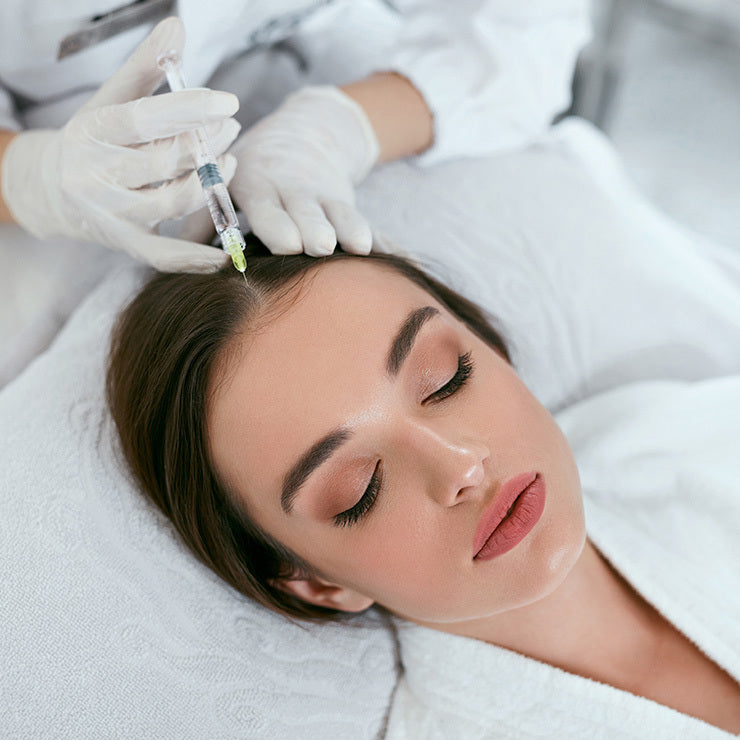
Dutasteride Mesotherapy London
Dutasteride Mesotherapy in London is one of the most effective treatments for male and female pattern hair thinning, delivered at Dr Ophelia's Harley Street clinic as part of a precise, consultant led programme. Dutasteride is injected directly into the scalp in targeted microinjections, thickening hairs that have already miniaturised and protecting remaining follicles from further DHT driven shrinkage, while avoiding the side effects of oral tablets.
Dr Ophelia was one of the first practitioners to offer this treatment in the UK and brings many years of experience to a procedure now widely imitated but rarely delivered with the same expertise. She is a Consultant Dermatologist with a PhD in Hair Follicle Bioengineering from a Nobel Prize winning laboratory in Tokyo, and founder of the tertiary Hair Clinic at University College London Hospital. Every patient is managed by her personally, and her expertise extends to scarring conditions including llichen planopilaris and frontal fibrosing alopecia
What is Dutasteride Mesotherapy?
- Powerful anti androgen, delivered locally
- Thickens already miniaturised hairs
- Combined with PRF for stronger results
- Personally managed by a Consultant Dermatologist throughout
Dutasteride Mesotherapy places small, precise amounts of dutasteride directly into the scalp, targeting follicles affected by androgenetic alopecia. Dutasteride is one of the most potent inhibitors of DHT, the hormone responsible for follicle miniaturisation. Taken orally it is absorbed systemically and can affect libido, mood, and hormonal balance, but injected it stays concentrated around the follicle while reducing systemic exposure. It is most often combined with PRF Hair Treatment and is also used for selected patients with lichen planopilaris and frontal fibrosing alopecia, discussed later on this page.
How Does Dutasteride Mesotherapy Work?
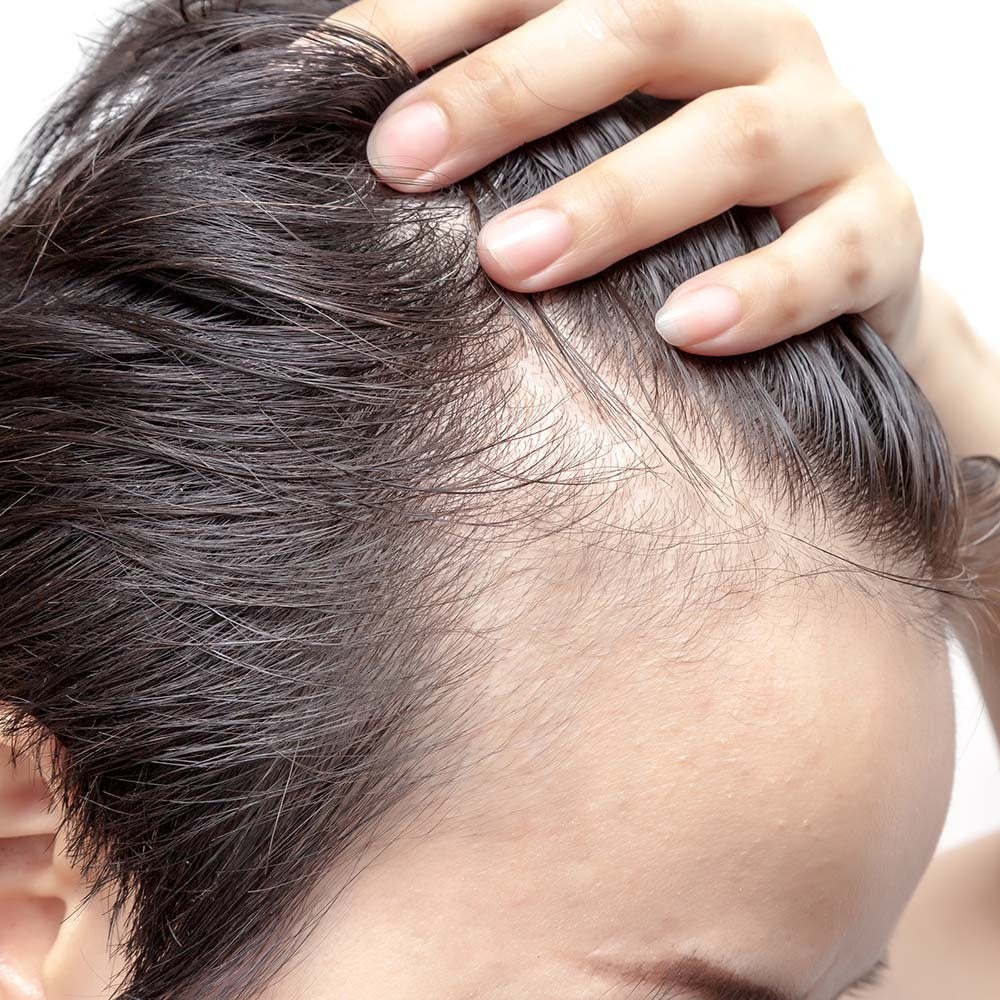
Pattern hair loss is driven primarily by DHT, dihydrotestosterone, which binds to receptors in susceptible follicles and causes them to gradually miniaturise. As they shrink, hairs become finer, shorter, and weaker, leading to reduced density and eventually loss of visible growth.
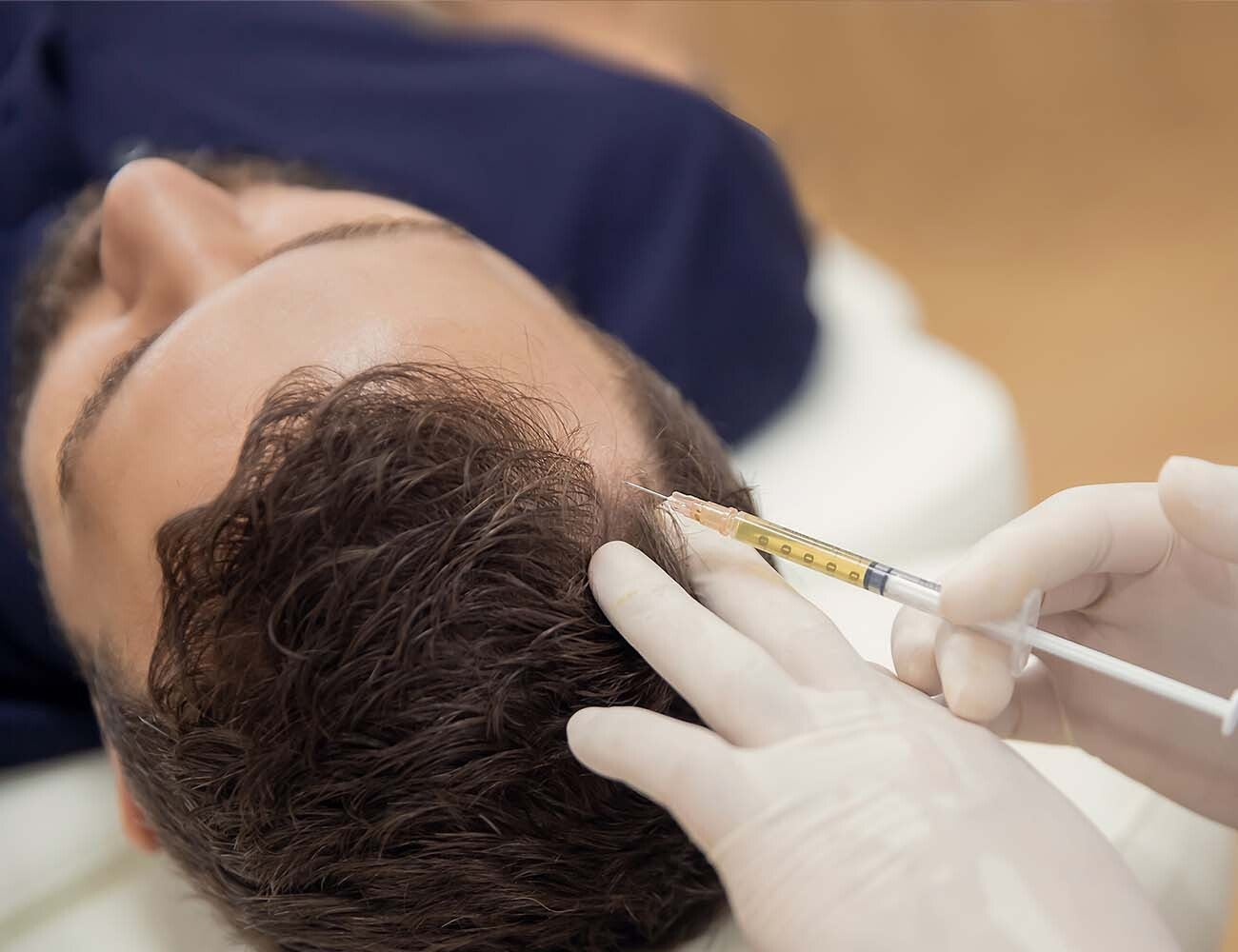
Dutasteride inhibits both type 1 and type 2 of the 5 alpha reductase enzyme that converts testosterone into DHT, making it more comprehensive than finasteride, which inhibits only type 2. Injected locally, it delivers a concentrated effect to the follicles that need it while minimising systemic absorption. Dr Ophelia typically recommends an initial course every two to four weeks for eight treatments, often alongside PRF, with periodic top ups to sustain results.
Benefits of Dutasteride Mesotherapy
Key benefits include:
- One of the most potent DHT blockers, with minimal systemic absorption
- Thickens hairs that have already miniaturised, not only preventing further loss
- A structured course of 8 sessions, spaced 2 to 4 weeks apart, for an optimal response
- Frequently combined with PRF Hair Treatment for a dual mechanism approach
- Delivered by Dr Ophelia personally at every visit, never delegated
- Objective, data led monitoring using HairMetrix and the Global Hair Device
- One of the longest established Dutasteride Mesotherapy practices in the UK
- Specialist experience using dutasteride for complex scarring conditions including LPP and FFA
Conditions Dutasteride Mesotherapy Can Treat
Dutasteride Mesotherapy is most effective for hair loss driven primarily by DHT, and may suit:
- Male and female pattern hair loss
- Androgenetic alopecia
- Diffuse thinning with a hormonal component
- Thinning crown and receding hairline
- Reduced density where follicles remain viable but miniaturised
- Eyebrow thinning, in selected cases
An accurate diagnosis is essential, since not all thinning is driven by DHT. Patients are frequently referred to Dr Ophelia by other dermatologists, GPs, and trichologists to confirm a diagnosis before treatment.
Dutasteride for Lichen Planopilaris and Frontal Fibrosing Alopecia
Dr Ophelia also uses dutasteride for selected patients with lichen planopilaris (LPP) and frontal fibrosing alopecia (FFA), two scarring forms that are difficult to treat and have no single agreed protocol.
The evidence has grown substantially. The largest published series, a retrospective study of FFA patients, found oral dutasteride produced significantly higher rates of disease stabilisation at 12 months than other treatments, with a clear dose dependent response, and an earlier study in postmenopausal women reported nearly half achieved complete arrest at 12 months. Several authors now consider it among the most effective options for FFA.
The mechanism in LPP and FFA goes beyond DHT blockade, with suggested antifibrotic, oestradiol, and immune modulating effects that help in an autoimmune, scarring condition. In Dr Ophelia's experience it has proven valuable where disease has progressed despite standard anti inflammatory treatments, used within a wider, individualised plan. This is the kind of complex diagnosis where her expertise makes a difference, particularly for patients told elsewhere that little can be done.
What to Expect: Step by Step Treatment Process
Your scalp is assessed using HairMetrix and the Global Hair Device, with objective measurements and photography for comparison.
A plan specifies the treatment areas, course length, typically 8 sessions, and whether it will be combined with PRF, prescription hair growth tonics, or other therapies.
The scalp is cleansed and a numbing cream applied for comfort.
Small, precise amounts are injected by Dr Ophelia personally, with the pattern designed around your areas of thinning.
You receive clear guidance, including avoiding intense exercise, heat, hair washing, or harsh products briefly.
Progress is reviewed using HairMetrix and Global Hair Device imaging, and a maintenance strategy is agreed, which may include periodic top ups, PRF, or prescription tonics.

Results and Downtime
- Immediately after treatment: You may notice mild redness, tenderness, or small injection marks, which settle quickly.
- 24 to 48 hours: Any sensitivity improves, and you may be advised to avoid harsh products or strenuous exercise briefly.
- 6 to 12 weeks: Many patients notice reduced shedding as follicles respond.
- 3 to 6 months: Improvements in quality, thickness, and density become noticeable, with HairMetrix confirming improvement before it is visible.
- 6 to 12 months: With a completed course, often combined with PRF, most patients see meaningful improvement, and for LPP or FFA this is the timeframe over which stabilisation or regrowth appears.
Results vary depending on the underlying cause, genetics, hormonal factors, and consistency with the plan. Downtime is minimal, and most patients return to normal activities immediately.
Pricing and Number of Sessions
Dr Ophelia typically recommends an initial course of 8 sessions, spaced 2 to 4 weeks apart, often alongside PRF, followed by a maintenance plan. Some lower cost providers are not run by doctors and may not deliver treatment personally at every visit. Pricing reflects the expertise, personal delivery, and monitoring involved, and is confirmed at consultation with a clear personalised breakdown.
Why Dr Ophelia for Dutasteride Mesotherapy in London?
- One of the first practitioners to offer Dutasteride Mesotherapy in the UK
- PhD in Hair Follicle Bioengineering from a Nobel Prize winning laboratory in Tokyo
- Founder of the tertiary Hair Clinic at University College London Hospital
- Every patient managed personally by Dr Ophelia, with objective monitoring using HairMetrix and the Global Hair Device
For patients dealing with thinning, an accurate diagnosis matters more than anything, and it is where most have been let down. Many of Dr Ophelia's patients are referred by other dermatologists who recognise that hair loss requires specialist expertise built from years of dedicated focus. As one of the very first to offer the treatment in the UK, she has refined the technique, dosing, and patient selection, and every patient is monitored objectively so the plan is based on data. For patients who have struggled elsewhere, including those with scarring alopecias told nothing can be done, her combination of pioneering experience, academic credentials, personal care, and objective monitoring is one of the most comprehensive approaches in the country.

HELP
Frequently Asked Questions: Dutasteride Mesotherapy London
Injected, it stays concentrated around the follicle, giving a strong targeted effect with fewer systemic side effects than oral use.
A concentrated dose around miniaturised follicles reduces the local DHT effect, helping them produce thicker, stronger hair.
She was one of the first to offer it in the UK and has refined the technique over many years.
A structured course spaced 2 to 4 weeks apart gives follicles consistent exposure for an optimal initial response.
Dutasteride targets the hormonal driver while PRF supports regeneration, making the combination highly effective.
Periodic mesotherapy top up sessions provide a valuable alternative with minimal systemic exposure.
A growing body of evidence supports its use in LPP and FFA, used as part of an individualised plan for selected patients.
No. This use is off label and based on limited studies, so it is one option within a wider plan.
Yes, every injection is performed by Dr Ophelia personally.
Every patient is assessed using HairMetrix and standardised photography, so decisions are based on measurable data.
They recognise that complex hair loss requires specialist expertise from years of dedicated focus.
Yes, but many lower cost providers are not run by doctors or monitored objectively.
Yes, for women with DHT related female pattern hair loss, subject to individual assessment, since it is not appropriate in certain circumstances including pregnancy.
A numbing cream is applied beforehand, and most patients feel only mild pinching or pressure.
In selected cases, yes, depending on the underlying cause.
She formulates her own prescription hair growth tonics for ongoing maintenance.
Book Your Dutasteride Mesotherapy Consultation in London
If you are experiencing male or female pattern hair thinning, or suspect a complex scarring condition such as lichen planopilaris or frontal fibrosing alopecia, book a consultation at Dr Ophelia's Harley Street clinic in London. Your hair loss pattern and medical history will be assessed by a Consultant Dermatologist with a PhD in Hair Follicle Bioengineering, with every session personally delivered and supported by objective monitoring.