
CCCA
BOOK A CONSULTATIONWhat is Central Centrifugal Cicatricial Alopecia (CCCA)?
- Scarring hair loss condition
- Most common in women of African ancestry
- Begins at the crown
- Early diagnosis is essential
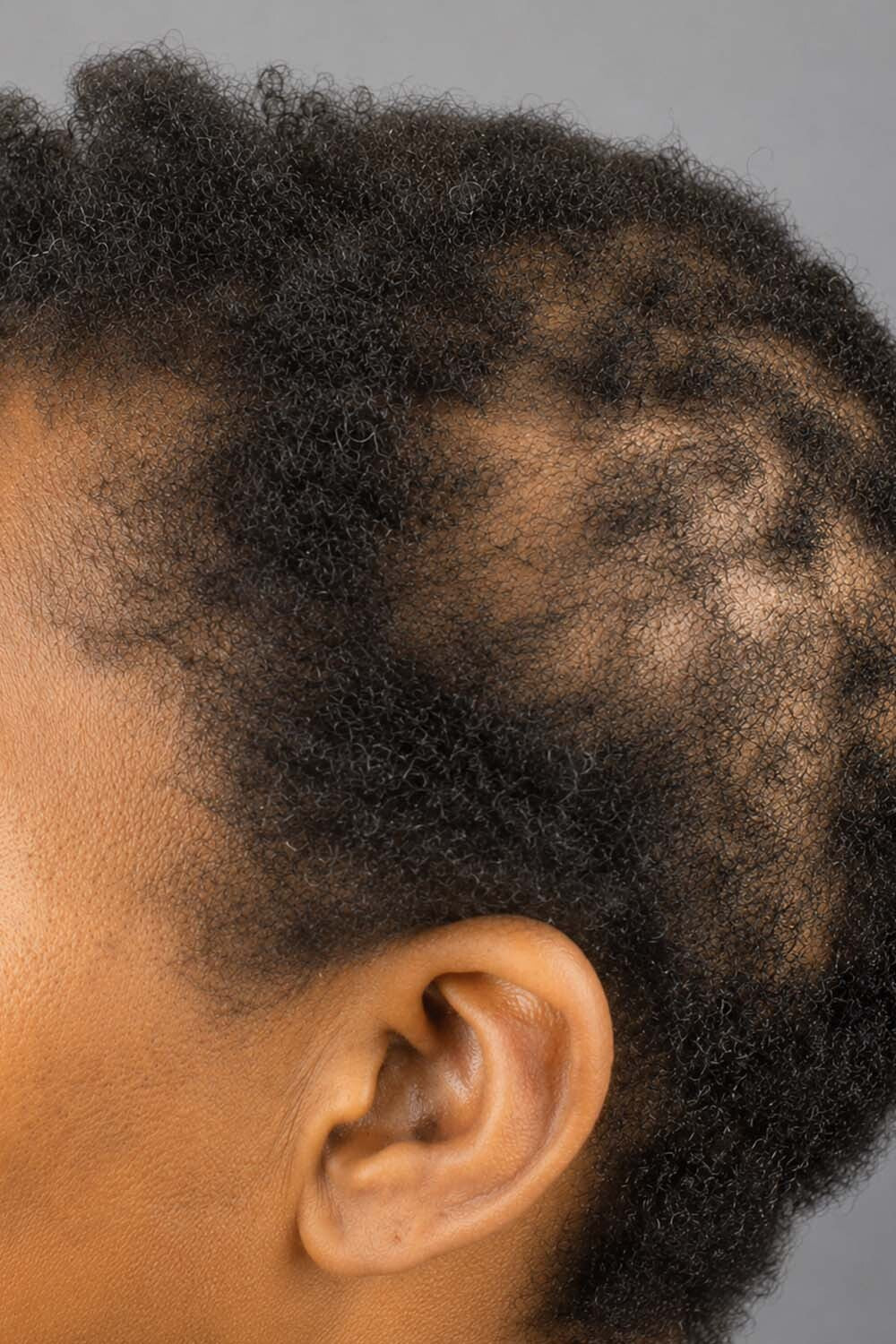
Central Centrifugal Cicatricial Alopecia (CCCA) is one of the most common causes of scarring hair loss in women of African and Afro-Caribbean ancestry. In this form of cicatricial alopecia, sustained inflammation around the hair follicles progressively destroys them and replaces them with scar tissue, causing permanent hair loss if not treated early. It is significantly underdiagnosed, as early symptoms can be subtle and specialist experience is not always accessible.

Hair loss typically begins at the crown or vertex and spreads outwards in a centrifugal pattern, hence the name. Patients may notice increased scalp visibility, reduced density, or excessive breakage centrally. Some experience tenderness, itching, burning, or soreness, though many have no symptoms at all, making regular monitoring important for those at risk.
The exact cause is not fully understood, but CCCA is multifactorial, with genetic predisposition, inflammation, and certain hair care practices all playing a role. Genetic variants increase susceptibility and it frequently runs in families. Practices common in Afro-textured hair care, including chemical relaxers, tight braiding, weaves, and heat styling, have been implicated, although their precise role is still being studied.
Because the scarring is irreversible and scarred follicles cannot regenerate, early diagnosis and treatment are critical. Any woman of African or Afro-Caribbean ancestry who notices progressive thinning at the crown, increased scalp visibility, or unexplained breakage should seek specialist assessment promptly.
What are the treatment options for CCCA?
- Anti-inflammatory medications
- Corticosteroid injections
- Oral treatments
- Hair care guidance
- HairMetrix monitoring
The goals of treatment are to reduce inflammation, halt or slow progression, relieve symptoms, and preserve as many healthy follicles as possible. It is most effective started early, but even in advanced cases it can stabilise the condition and improve quality of life.
Following assessment, Dr Ophelia will develop a personalised plan based on the stage and severity of your condition, your scalp health, hair care practices, and lifestyle. Treatments may include potent topical anti-inflammatory medications, intralesional corticosteroid injections targeting active inflammation, and oral medications such as lymecycline or doxycycline, with metformin and hydroxychloroquine for resistant disease. Co existing conditions such as seborrhoeic dermatitis are also addressed, as uncontrolled inflammation can accelerate progression.
An equally important component is an honest review of hair care practices. Dr Ophelia has extensive experience with women of African and Afro-Caribbean ancestry and understands its cultural significance. Her approach is collaborative and practical, helping each patient find safer alternatives that protect the scalp, including guidance on protective styles, heat and chemical treatments, and appropriate products.
Nutritional status and general health are also reviewed, as deficiencies in iron, vitamin D, and other micronutrients can influence scalp inflammation and follicle health. Advanced imaging using HairMetrix and the Global Hair Device objectively measures hair density and fibre calibre at each visit, so plans adapt as the condition responds.
In patients whose disease has been stable with burned-out scarring and no active inflammation, hair transplantation may restore density. Dr Ophelia will discuss this where appropriate and refer to transplant surgeons with expertise in Afro textured hair.
Why should I see Dr Ophelia Veraitch for CCCA treatment in London?
- Consultant dermatologist, PhD in hair follicle bioengineering
- Specialist scarring alopecia expertise
- Trained at Guy's, St Thomas' and Lewisham (ethnically diverse London teaching hospitals). Deep cultural understanding. Collaborative guidance on Afro-textured hair care
- HairMetrix and Global Hair Device. Objective disease monitoring at every visit
CCCA demands not only specialist dermatological expertise but also genuine cultural understanding. The hair care practices of women of African and Afro-Caribbean ancestry are deeply personal, often rooted in identity and heritage, and advice given without that understanding risks being irrelevant or alienating. Dr Ophelia Veraitch has built her career in some of London's most ethnically diverse clinical environments, bringing the expertise and cultural awareness that effective CCCA management requires.
She trained at Guy's and St Thomas' NHS Foundation Trust and Lewisham Hospital, major teaching hospitals serving diverse populations. With her PhD in Hair Follicle Bioengineering and her role as founder of the tertiary Hair Clinic at University College London Hospitals (UCLH), she is among the most experienced CCCA specialists in the UK, and regularly receives referrals for complex or diagnostically challenging cases.
Every patient with suspected CCCA undergoes a comprehensive assessment, including scalp examination, trichoscopy, and where indicated a scalp biopsy to confirm the diagnosis and assess active inflammation versus established scarring. Advanced imaging with HairMetrix and the Global Hair Device provides an objective baseline, so subtle changes can be detected and acted upon early.
Crucially, her hair care guidance is collaborative rather than restrictive, aiming to protect the scalp and support treatment without requiring women to abandon the practices that matter to them.
Dr Ophelia understands the anxiety a diagnosis of scarring alopecia can cause, and takes time to explain the condition clearly, set honest expectations, and develop a realistic long term plan that preserves as much hair as possible, controls disease activity, and ensures every patient feels genuinely supported.
HELP
Frequently Asked Questions — CCCA Treatment
CCCA stands for Central Centrifugal Cicatricial Alopecia: "central" refers to the crown where hair loss begins, "centrifugal" to its outward spread, and "cicatricial" to the permanent scarring in which inflammation destroys follicles. This is why early diagnosis and treatment matter.
CCCA most commonly affects women of African and Afro-Caribbean ancestry and is one of the most prevalent causes of scarring hair loss in this population, most often diagnosed between the thirties and fifties. Genetic factors play a significant role and it often runs in families; men can also develop it, though less commonly.
Follicles destroyed by scarring cannot regenerate, so established hair loss cannot be reversed. However, treatment can halt or slow progression and preserve intact follicles, and once disease has stabilised, hair transplantation may restore density in scarred areas.
The relationship between chemical relaxers and CCCA is still being researched; some studies show an association, but relaxers are likely one of several contributing factors rather than a direct cause. Dr Ophelia will review your hair care history and advise on modifying your routine.
Protective styles are not inherently harmful, but excessive tension from tight braids, weaves, or extensions can cause scalp inflammation and mechanical stress that may worsen CCCA in susceptible people. Dr Ophelia takes a practical, non prescriptive approach, helping patients reduce scalp stress without abandoning styles they value.
CCCA is diagnosed through clinical consultation, scalp examination, and trichoscopy, and in some cases a small scalp biopsy. Accurate diagnosis is essential because CCCA can resemble other forms of hair loss, and imaging with HairMetrix and the Global Hair Device allows precise monitoring.
Treatment typically combines anti-inflammatory approaches: potent topical corticosteroids, intralesional corticosteroid injections, and oral medications such as lymecycline, doxycycline, metformin or hydroxychloroquine. The choice depends on the degree of inflammation, extent of disease, and previous response, and Dr Ophelia adjusts the plan at each visit.
Genetics play a significant role and the condition frequently runs in families, with several variants linked to increased susceptibility. Not everyone with a family history develops CCCA, but a first degree relative with it is reason to seek early assessment, particularly with crown thinning or scalp symptoms.
Stabilisation, meaning halting further progression, is the first and most important sign that treatment is working, often within three to six months, though the timeline varies. Improvement in density may take longer, and Dr Ophelia monitors response using HairMetrix and the Global Hair Device, detecting objective changes before they are clinically visible.
Both disproportionately affect women of African and Afro-Caribbean ancestry and can coexist. Traction alopecia results from mechanical tension and mainly affects the hairline and edges, whereas CCCA begins at the crown; accurate diagnosis is essential because the two require different management.
Hair transplantation is not appropriate while CCCA is actively inflamed, as transplanted follicles would be affected by the same process. Once disease has been stable for a sustained period with no active inflammation, it may restore density, and Dr Ophelia can refer to surgeons experienced with Afro-textured hair.
CCCA is a medical condition causing permanent hair loss that requires accurate diagnosis, prescription medications, and long term monitoring. Trichologists are not medically qualified to diagnose, request biopsies or blood tests, or prescribe treatment, whereas a Consultant Dermatologist with scarring alopecia expertise can provide a complete service, including scalp biopsy, prescription medications, and objective imaging.