Alopecia Areata
BOOK A CONSULTATION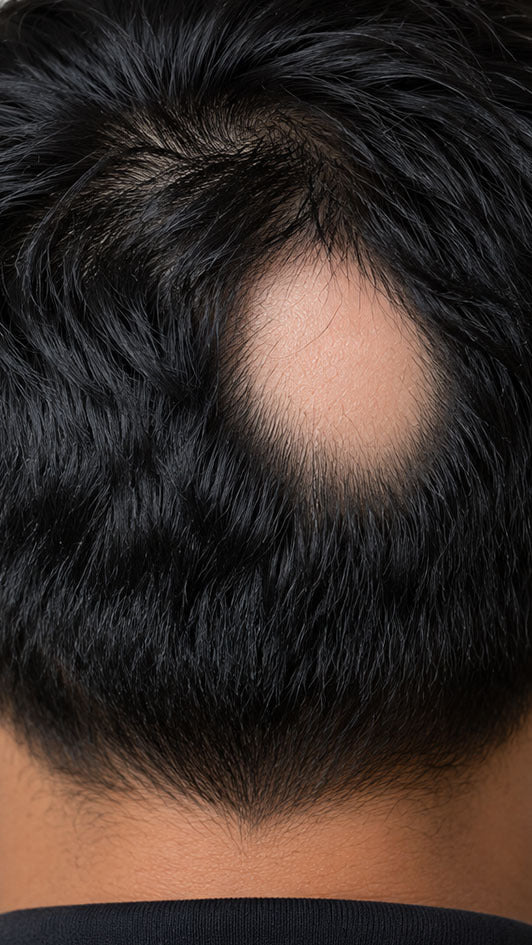
What is alopecia areata?
- Autoimmune hair loss condition
- Affects scalp, brows, lashes and body
- Affects children and adults
- New JAK inhibitor treatments available
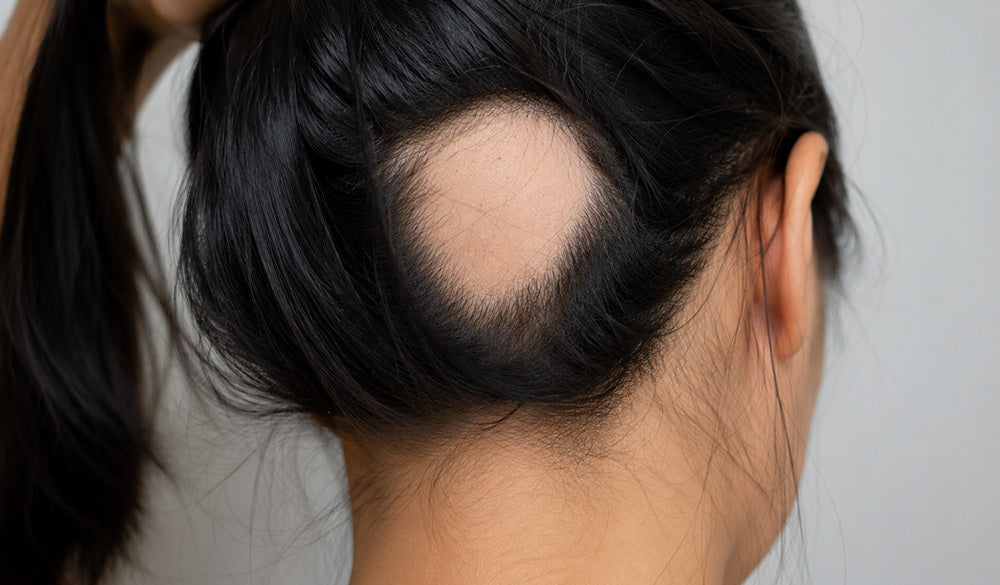
Alopecia areata is an autoimmune condition in which the immune system mistakenly attacks the hair follicle, causing hair loss. One of the most common autoimmune conditions worldwide, it affects around two percent of people at some point and can develop at any age, including young children. It typically presents as well defined, smooth patches on the scalp, but can also affect the beard, eyebrows, eyelashes, and body hair, and in more extensive forms progresses to alopecia totalis (complete loss of scalp hair) or alopecia universalis (loss of all body hair). The cause is a breakdown in the follicle's immune privilege: T lymphocytes target it, forcing it into a prolonged resting phase. Crucially, the follicles are not destroyed in most cases, which is why spontaneous regrowth is possible and why suppressing the immune response can restore hair even after significant loss.
The condition is unpredictable: some patients have a single patch that resolves within months, others relapse and remit for years, and a proportion develop progressive, extensive hair loss requiring sustained treatment. The extent of hair loss, the age of onset, associated autoimmune conditions such as thyroid disease or vitiligo, nail involvement, and a family history all influence the likely course, making specialist assessment essential for any patient whose alopecia areata is more than a single, self resolving patch. Although not physically harmful, its psychological impact can be profound, and Dr Ophelia addresses both the medical and emotional dimensions of the condition.
What are the treatment options for alopecia areata?
- JAK inhibitors for severe cases
- Intralesional steroid injections
- Topical and oral therapies
- SOS appointments for new patches
- HairMetrix monitoring
Treatment has been transformed by Janus kinase (JAK) inhibitors, which target the specific immune pathway driving follicle inflammation. For moderate to severe or treatment resistant disease they are the most significant advance in decades, with trials showing substantial regrowth in many patients, including those with long standing extensive hair loss.
For localised or early stage disease, intralesional corticosteroid injections remain one of the most effective options, suppressing the local immune response and stimulating regrowth within weeks. Their effectiveness is time-sensitive: treating a new patch promptly gives the best chance of limiting spread before the follicle has been resting too long, which is why Dr Ophelia's clinic operates an urgent appointment system so patients can be seen and treated quickly.
Additional options include topical high potency corticosteroids and calcineurin inhibitors; oral corticosteroids for acute, rapidly progressive hair loss; and adjunctive treatments including topical minoxidil, melatonin, and finasteride, with oral spironolactone or finasteride in selected patients. Stress management, gut microbiome health, and physical wellbeing are discussed as part of a holistic approach. Treatment response is monitored using HairMetrix and the Global Hair Device, which give objective measurements of hair density and fibre calibre over time, with a baseline VISIA skin analysis where relevant.
Why should I see Dr Ophelia Veraitch for alopecia areata treatment in London?
- Consultant dermatologist, PhD in hair follicle bioengineering. Founder of UCLH tertiary hair clinic
- JAK inhibitor prescribing expertise. Experience with the newest and most effective treatments
- SOS appointments for new patches. Prompt steroid injections when they matter most
- HairMetrix and Global Hair Device. Objective monitoring at every visit
In alopecia areata, the quality and availability of the treating dermatologist can make a tangible difference to outcomes. The landscape has changed profoundly with JAK inhibitors, but not all dermatologists have the training or specialist setting to prescribe and monitor them safely, and many who treat hair loss within a general practice have limited exposure to current treatments. Dr Ophelia Veraitch trained at leading London teaching hospitals, holds a PhD in Hair Follicle Bioengineering, and founded the tertiary Hair Clinic at University College London Hospitals (UCLH), where she developed specialist services for the most complex hair loss conditions in the country. She regularly receives referrals from other dermatologists for cases requiring specialist JAK inhibitor expertise.
A key distinction of her practice is availability for urgent appointments, which matter enormously. Because Dr Ophelia is fully dedicated to her specialist private practice and not dividing her time between NHS and private commitments, she can see patients when a new patch appears - a responsiveness unusual in UK specialist dermatology that makes a measurable difference for those with an active, relapsing condition.
Every patient receives a thorough initial assessment covering their hair loss history, associated conditions, dermoscopic examination, baseline imaging with HairMetrix and the Global Hair Device, and blood tests where relevant, ensuring a tailored plan. Dr Ophelia understands the profound distress alopecia areata can cause and takes time to explain it honestly, set realistic expectations, and provide continuous support, aiming not just for the best regrowth but for each patient's confidence in their care.
HELP
Frequently Qsked Questions - Alopecia Areata Treatment
Many patients achieve significant regrowth with appropriate treatment, and newer medications including JAK inhibitors have transformed what is achievable in extensive disease. Because the follicles are not destroyed in most forms, regrowth remains possible even after long standing loss.
JAK inhibitors are oral medications that block the Janus kinase pathways involved in the immune attack on hair follicles, with trials showing substantial regrowth in moderate to severe disease, including alopecia totalis and universalis. Dr Ophelia has extensive experience prescribing them and will assess whether they suit you.
Intralesional corticosteroid injections suppress the local immune activity around affected follicles and work best given early, before follicles have been resting too long, so treating a new patch promptly can limit its size and improve regrowth - which is why Dr Ophelia's clinic offers urgent appointments.
Regrowth is possible in many cases because alopecia areata does not destroy the follicle, with the likelihood depending on the extent and duration of loss, the age of onset, nail changes or associated conditions, and individual response. A single small patch treated early has a good chance of regrowth, while more extensive loss may require sustained JAK inhibitors or other immunosuppressive therapies.
These are all forms of the same autoimmune condition, classified by the extent of loss: alopecia areata is patchy loss, alopecia totalis is complete loss of scalp hair, and alopecia universalis is complete loss of hair from the scalp, face, and body. All three share the same immune mechanism and can respond to treatment, including JAK inhibitors.
Yes. Alopecia areata can develop at any age, including young children, and early diagnosis and treatment help limit progression and support the emotional impact on a child's confidence. Dr Ophelia treats all age groups and takes particular care with younger patients, ensuring medications are age-appropriate and that child and parents are supported.
Stress does not directly cause alopecia areata, but it can trigger flares in those already genetically predisposed, and many patients notice new patches coinciding with periods of stress. Managing stress and overall wellbeing is part of a holistic treatment plan, and Dr Ophelia discusses lifestyle factors with every patient.
Genetics play a significant role and the condition can run in families, with several genetic variants shared with other autoimmune conditions. Having a first degree relative increases the risk, though most with a family history are not affected, and a family history of thyroid disease, vitiligo, or rheumatoid arthritis is also relevant and discussed at assessment.
Alopecia areata is primarily a clinical diagnosis, made through a detailed history and scalp examination, with dermoscopy adding information and helping assess disease activity. A scalp biopsy may be recommended where the diagnosis is uncertain, blood tests where relevant, and advanced imaging with HairMetrix and the Global Hair Device gives an objective baseline of hair density and calibre.
Yes. Alopecia areata can affect any hair-bearing area, including the eyebrows, eyelashes, beard, and body hair, and loss of eyebrows and eyelashes can be particularly distressing. Treatment includes topical therapies and, in appropriate patients, JAK inhibitors, which restore eyebrow and eyelash regrowth as well as scalp hair.
While a GP can provide an initial assessment and basic treatments for mild alopecia areata, the full range of effective treatments, particularly JAK inhibitors for moderate to severe disease, requires specialist expertise and monitoring, and the condition can be confused with other causes of hair loss. A Consultant Dermatologist with specialist expertise in hair disorders offers the full range of diagnostic and treatment options, including urgent appointments for flares, objective monitoring, and access to the newest evidence based therapies.